Rock-Pitched vs Natural-Cleft Stone: Know the Difference
Rock-pitched vs natural-cleft stone distinguishes a deliberately worked face from a surface separated along a stone's natural structure.
By Marwaa Team · Editorial standards · Published
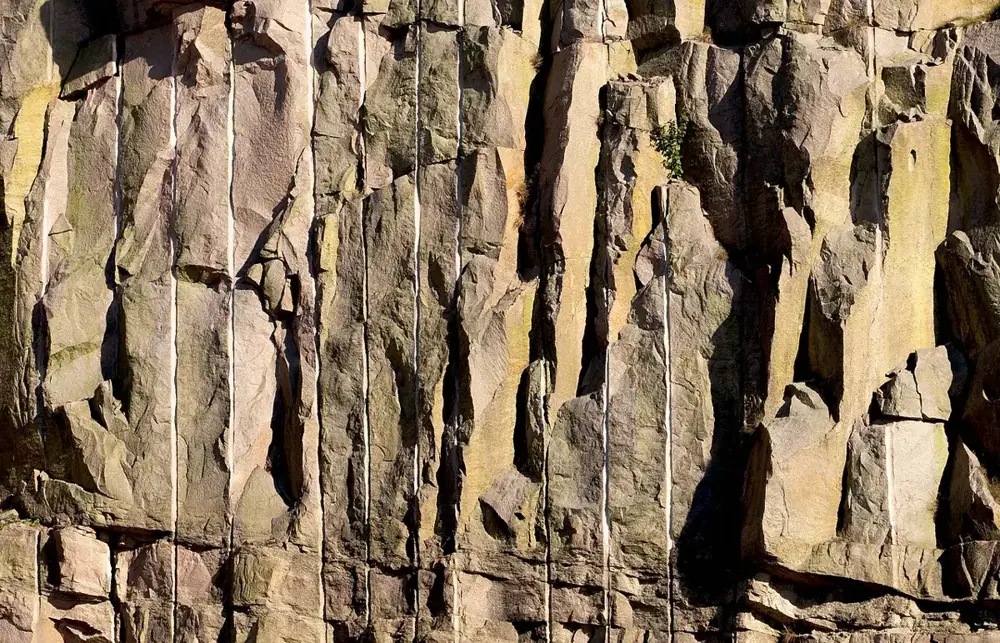
Illustrative stock photograph: Rocks and texture in Rixö granite quarry 3.jpg by W.carter · CC0. Resized and converted to WebP. The photograph does not represent Marwaa’s work or a featured service location.
Rock-pitched vs natural-cleft stone distinguishes a deliberately worked face from a surface separated along a stone's natural structure. They can both look irregular, but they are not interchangeable process descriptions. Granite rock-pitched edges should not be sold as proof of a naturally layered cleavage surface. Confirm the material, how the texture is formed and where it belongs on the finished component.
What does rock-pitched vs natural-cleft stone mean?
Rock pitching produces an intentionally rugged face or edge through stone working. Natural cleft generally refers to a surface exposed by separation along the stone's natural structure. Similar-looking roughness does not mean the same origin.
The Natural Stone Institute glossary listing distinguishes stone-finish terms. The definitions help buyers ask clearer questions. They do not require every supplier to use the same catalogue shorthand without explanation.
Some layered stones are associated with natural-cleft surfaces. Granite has its own material characteristics and quarry terminology. Do not call every split or chiselled granite edge natural cleft merely because it looks unpolished.
Why irregular appearance can mislead
A rough edge can look as if it came directly from the quarry, even after deliberate working. The maker may shape its perimeter and projections to suit the component. That work is part of producing the intended appearance.
Natural-cleft surfaces also vary. The word natural does not promise a perfectly flat or identical face. Material selection and any additional working still matter. A product description should explain what the buyer is actually receiving.
Ask whether an image shows the supplied finish or a general style. Lighting can exaggerate projections, while a small front view can hide them. A close view and an overall component view answer different questions.
How does the texture relate to size?
An irregular edge needs a clear relationship to the component dimensions and visible face. The buyer should understand which reference defines the agreed outline. Do not assume every projection sits on the same plane as a polished margin.
For measurable order details, use the edge-profile specification guide. This article concerns the origin and meaning of the surface, not another dimensional record.
A texture can also reduce the apparent space around an inscription. The design should show the usable field rather than treating the full outside width as equally suitable for fine lettering. Keep layout decisions linked to the actual component.
Where can a description go wrong?
Natural can become a vague quality claim. It says little about whether the final part suits the design. Equally, deliberately worked does not mean artificial stone or inferior craftsmanship. Material identity and surface production are different matters.
Do not borrow a layered-stone description to explain granite splitting behaviour. The quarry direction guide covers rift, grain and hardway separately. Visible roughness cannot identify those directions by itself.
The catalogue offers a starting point for comparing shapes. Confirm the actual finish when a proposal moves to production. If a supplier proposes a different route to a similar look, review whether the process itself matters to the order.
The useful description names the stone, worked or cleft surface and agreed visible result. That helps families understand the appearance and helps dealers avoid an unsupported story about how it was formed. It also keeps a rustic design choice from being mistaken for permission to accept any irregularity.
The two broad faces of a cleft piece need not define a uniform thickness merely because one face looks flat in a photograph. Where fit matters, the actual component requirements still need a clear drawing and review.
Practical distinctions
| Question | Evidence or explanation | Limit to keep clear |
|---|---|---|
| Rock pitching | A deliberately worked rugged face or edge | Not proof of natural layering |
| Natural cleft | Separation related to the stone structure | Not a promise of identical surfaces |
| Order description | Material, extent and accepted result | Natural is not a complete quality grade |
Key Takeaways
- Rock pitching and natural cleft are different surface descriptions.
- Rough appearance does not identify geology, splitting direction or product quality.
- Tie the material and finish description to the accepted component reference.
Frequently Asked Questions
Is rock-pitched granite artificial stone?
No. Rock pitching describes work on the surface, not replacement of the stone material.
Does every rough edge count as natural cleft?
No. Irregular appearance alone does not establish how the face formed.
Can a rough photo show quarry splitting direction?
Not reliably. Splitting terminology and visible texture need separate explanation.
Discuss a trade project
For a bulk memorial order, send Marwaa the intended material, design and unresolved requirements. Ask for an order-specific response before approving production.
Read More
- Granite Finishes Explained: Polished, Rock Pitch, P2, P3, P5 and BRP
- Granite Rift, Grain and Hardway: What the Terms Mean
A Note on This Guide
This guide does not identify geological planes from photographs or set acceptable projections for a particular edge. This educational guide does not replace project-specific advice from the responsible supplier, designer or installer. Confirm cemetery requirements where the proposed product or alteration needs approval.
Published by Marwaa Team for Marwaa Memorials (marwaamemorials.com) · Published 2026-11-25 · Updated 2026-11-25 Marwaa Memorials is a factory-direct exporter of bulk granite monuments and headstones, shipping to monument dealers, funeral homes, and importers across North America.
Related guides
Grave Markers for Green and Natural Burial Sites
Granite Finishes Explained: Polished, Rock Pitch, P2, P3, P5 and BRP

Monument Finish Schedule: Specify Every Stone Face
Granite Petrography: What a Stone Examination Can Show

Monument Product Alt Text: Describe Useful Differences