Grave Markers for Green and Natural Burial Sites
What markers natural and green burial grounds allow — flat local stone, wood, shared memorial walls or no marker with GPS records — and how to plan a memorial.
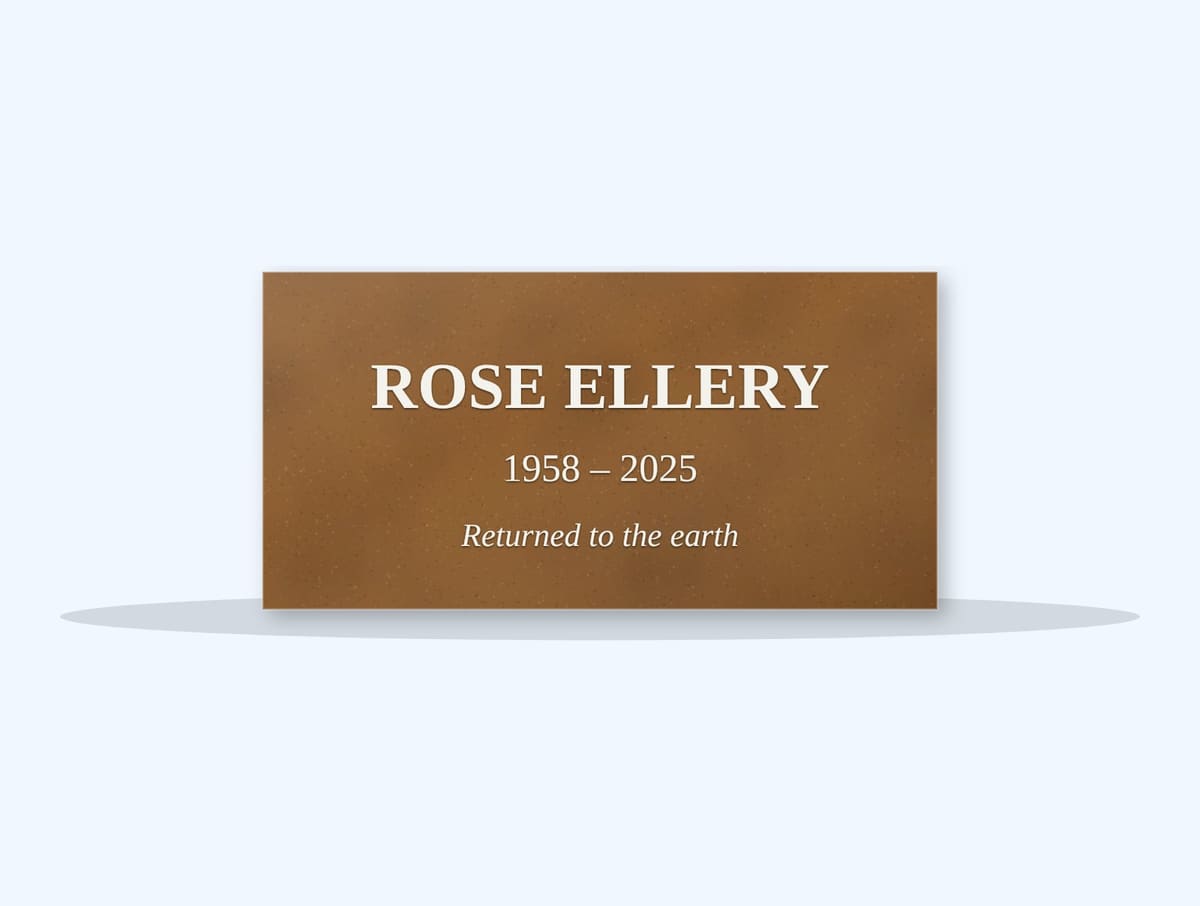
Green or natural burial grounds aim to keep the landscape natural. Their rules on markers are usually stricter than traditional cemeteries.
What is commonly allowed
| Option | Notes |
|---|---|
| No individual marker | Grave located by GPS and site records |
| Flat natural stone | Often local, unpolished stone laid flush |
| Wood marker | Biodegradable, sometimes temporary |
| Shared memorial wall or boulder | Names engraved in one central place |
| Native tree or shrub | Planted as the memorial in some sites |
Each site sets its own rules — ask before planning anything.
Hybrid cemeteries
Some traditional cemeteries have green sections with their own marker rules, so you may be able to choose a small flat granite marker there. Ask the cemetery.
Engraving on natural stone
Natural boulders and fieldstones can be engraved with names and dates. Lettering is often simpler and deeper to read well on a rough surface.
Recording the location
Natural burial grounds often avoid visible markers, so location records matter:
- GPS coordinates are usually recorded by the burial ground.
- A communal memorial wall may list names.
- A flat fieldstone sits flush with the ground.
- A native tree or shrub may be planted as the marker.
Ask how families find graves decades from now before you choose.
Questions to ask a natural burial ground
Natural burial grounds differ widely. Before choosing one, ask:
- Are any markers allowed? Some permit flat fieldstones; others allow none.
- What materials? Local stone, untreated wood or granite flush with the ground.
- How are graves located in future — GPS, maps or a memorial wall?
- Can family visit freely and leave flowers?
- Is the land protected by a conservation easement?
Hybrid sections in conventional cemeteries often allow small granite markers, giving a natural setting with a permanent name.
Key Takeaways
- Natural burial grounds often limit or forbid conventional headstones.
- Flat natural stone, wood, shared walls and GPS records are common.
- Check the site's rules first.
Next Step
For family memorials at home, see garden memorial stones.
Frequently Asked Questions
Can you have a headstone in a natural burial ground?
Often not a conventional one. Many sites allow flat natural stone, wood markers, shared memorials or no marker at all.
How do you find a grave without a marker?
Natural burial sites usually record each grave's location with GPS.
Can a natural stone be engraved?
Yes. Boulders and fieldstones can be engraved, usually with simple, deep lettering.
How do you find a grave in a natural burial ground?
Most record GPS coordinates; some have communal name walls or allow flush fieldstones.
Ready to get pricing for your granite monument?
Request pricing, factory specifications, and DAP delivery timelines from our team.
Related guides

Green Granite Headstones

Home Burial on Private Property

Double-Depth Burial Explained

Can You Replace a Flat Grave Marker With an Upright Headstone?
On-Site Cemetery Engraving Explained