
Monument Finish Schedule: Specify Every Stone Face
Write a monument finish schedule that identifies each face, edge and margin, with drawing references and clear acceptance questions.
By Marwaa Team · Editorial standards · Published · Updated

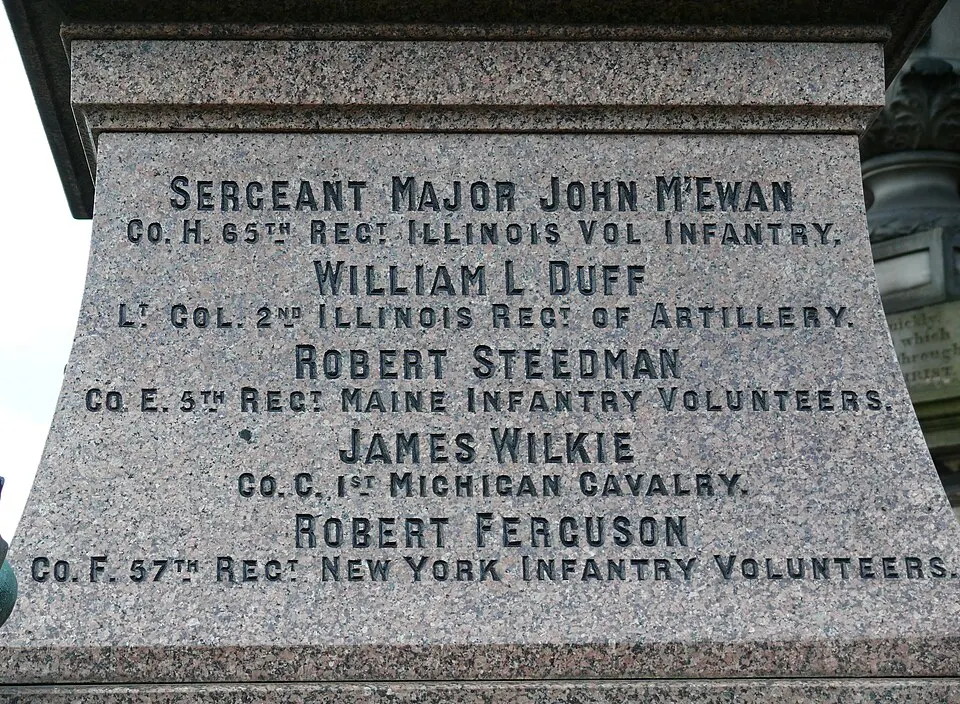
Illustrative stock photograph: Granite slabs.jpg by Kni ptz · CC BY-SA 4.0. Hosted by Wikimedia Commons. The photograph does not represent Marwaa’s work or a featured service location.
A monument finish schedule identifies the finish required on each stone face, edge and margin. Pair a labelled drawing with written finish descriptions and agreed references. This lets the buyer, fabricator and inspector discuss the same surface instead of interpreting a short code differently. It also makes exceptions visible before the stone reaches production.
What belongs in a monument finish schedule?
A useful schedule connects each surface to a drawing label and a specific instruction. Start with the complete assembly, then list its separate parts. A tablet, base and vase can have different exposed surfaces even when they share one granite reference.
Write the part mark first. Then name the face from an agreed viewing direction. “Left end” needs a reference viewpoint; otherwise two people standing on opposite sides can read it differently. Add a small direction sketch where the form makes ordinary front-and-back labels uncertain.
Include transitions, not only large faces. A polished margin around a textured panel is a separate design choice. Record where the margin stops and how its boundary appears on the accepted drawing. An attractive catalogue image does not supply those details by itself.
How should finish codes be translated?
Keep the supplier's code, but expand it into words for the actual product. Terms such as P2, P3 or BRP are useful trade shorthand. They should not force the receiver to guess which two or three faces the supplier means on an unusual design.
Our finish overview explains common terminology. Use that background to ask a precise order question, rather than replacing the supplier's confirmed drawing with a general explanation. The approved face schedule should control this order.
| Surface reference | Written instruction | Acceptance reference |
|---|---|---|
| Tablet face A | Agreed polish and lettering zone | Labelled drawing and sample |
| Tablet face B | State the actual finish | Reverse view |
| Top and ends | Identify each treatment | Profile and finish detail |
| Base exposed sides | List individual surfaces | Base drawing |
| Concealed contacts | Refer to fabrication written specs | Approved technical detail |
This is a document structure, not a recommended finish spec. The designer and fabricator must supply the actual treatments.
Where do mixed finishes create ambiguity?
Mixed finishes need boundary instructions. Consider a base with a polished top and a textured front. If the drawing does not show the transition, one party may expect a narrow polished border while another expects the texture to reach the top edge.
Ask whether textured areas have a defined projection or contour that affects overall sizes. Do not invent a tolerance to solve an aesthetic disagreement. Have the supplier explain how the finished outline will be represented and checked.
Also name decorative recesses, lettering panels and portrait areas. They may need a different treatment from the surrounding face. A note saying “as picture” is weak if the picture was lit dramatically or shows another material. Save the specific reference that the buyer actually reviewed.
Bush hammering and shot blasting use different mechanical actions, with the actual material and final sample defining the expected texture. See Bush-Hammered and Shot-Blasted Granite Surfaces.
How does the schedule support inspection?
The inspector should record the observed finish against each scheduled surface. A general statement such as “polish accepted” does not show whether the reverse, ends and base received their required treatment. Use the part and face labels in photographs and on the check record.
Check conditions should suit the question being asked. A finish sample helps with appearance, while a drawing with sizes helps locate a boundary. Neither proves the other. Ask for a clearer reference when a check cannot resolve the spec reliably.
Avoid classifying every natural mark as workmanship failure. The material approval record and the finish schedule answer different questions. Keep them separate, then review them together when a disputed feature crosses that boundary.
What changes require a revised schedule?
Revise the schedule when a face becomes exposed, a portrait moves or an edge profile changes the finish boundary. Update the drawing and the schedule together. A corrected email attached to an obsolete drawing leaves the workshop with competing instructions.
For example, adding reverse lettering may require a different reverse-face treatment. The change can also affect the price and the approved appearance. Ask the supplier to state those effects before the buyer authorizes the revised work.
Keep the superseded schedule in the history folder and make the current revision obvious. The proof revision workflow provides a practical model. For trade orders, the same discipline should cover production drawings as well as inscription proofs.
What should the buyer receive at completion?
Ask for a record that links the shipped part marks to the final finish schedule. Keep unresolved exceptions visible rather than closing the file because the packing date is near. The buyer should know whether an item conforms, needs review or has an authorized deviation.
The Marwaa catalogue can show the design discussion, but the final order needs its own named documents. That distinction keeps a catalogue shorthand useful without turning it into an accidental manufacturing instruction.
Key Takeaways
- A monument finish schedule should label every relevant part and surface.
- Supplier finish codes need a written meaning for the actual drawing.
- Finish changes belong in the same revision set as production changes.
Frequently Asked Questions
Does P3 identify the same faces on every monument?
Do not assume it does on every product. Ask the supplier to name the three faces on the actual drawing.
Should concealed faces appear in the schedule?
Yes, when their treatment matters. Reference the approved production specs rather than choosing a decorative finish yourself.
Can a catalogue photo replace a finish schedule?
No. Use it as a reference, then name the for this order surfaces and agreed treatments.
For a dealer or importer order, request a bulk monument quotation with the relevant drawing and the acceptance points that still need agreement.
Read More
- Granite Finishes Explained
- How to Tell if a Granite Monument Is High Quality
- Headstone Proof Revision Control
A Note on This Guide
This schedule is an order-communication aid. It does not select structural joint treatments or show a cemetery rule. Confirm technical details with the fabricator and any site specs with the approving party.
Background reference: the Natural Stone Institute standards directory helps readers locate material and application standards relevant to their project.
Published by Marwaa Team for Marwaa Memorials (marwaamemorials.com) · Published 2026-11-21 · Updated 2026-11-21 Marwaa Memorials is a factory-direct exporter of bulk granite monuments and headstones, shipping to monument dealers, funeral homes, and importers across North America.
Related guides

Concealed Monument Faces: Record the Finish Requirements

Granite Edge Profiles: Write a Measurable Specification
Why Do Graves and Headstones Face East?

Granite Chamfers and Radiused Edges: How They Differ

Granite Monument Packing List: Reconcile Every Crate
