Granite Chamfers and Radiused Edges: How They Differ
Granite chamfers and radiused edges change a sharp corner in different ways.
By Marwaa Team · Editorial standards · Published
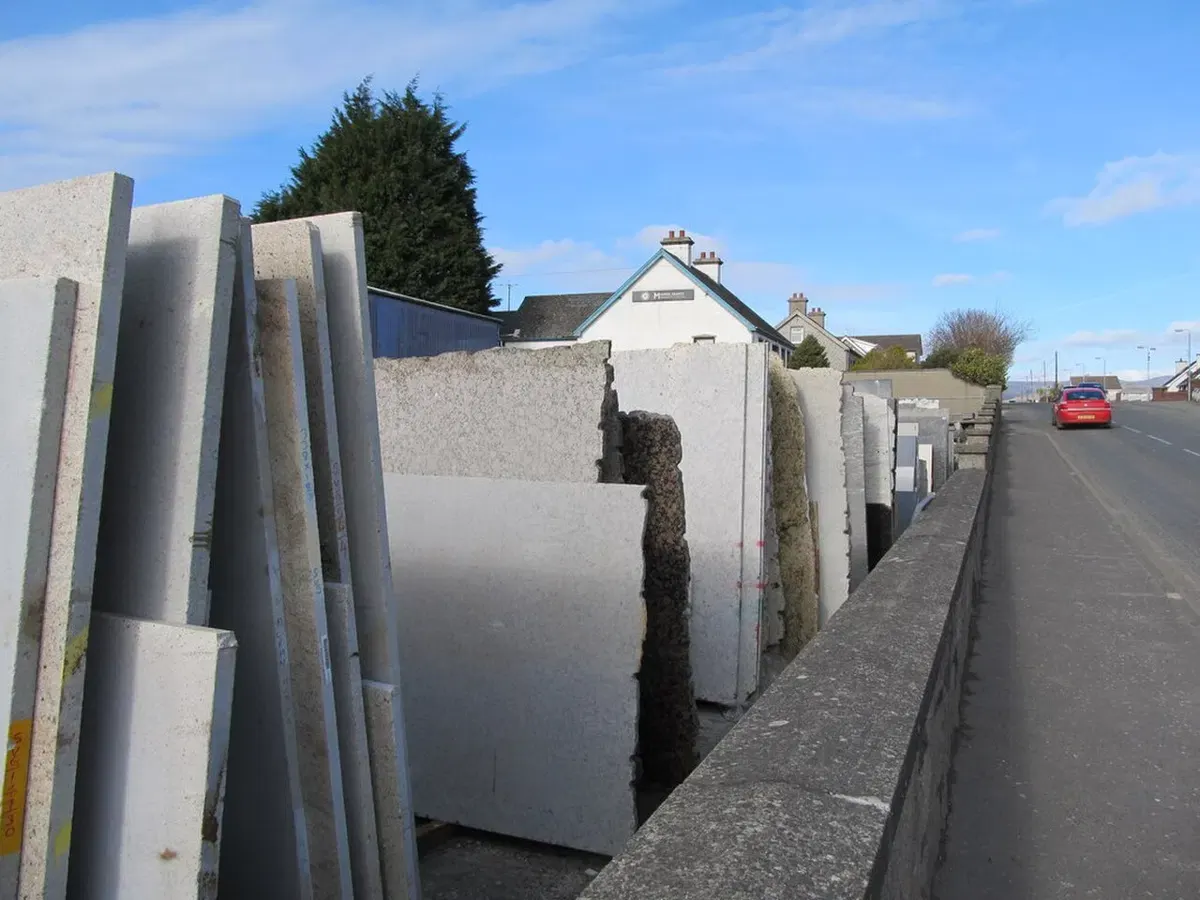
Illustrative stock photograph: Stocks of dressed and polished Mourne Granite and Italian Marble at Mourne Granite, Kilkeel - geograph.org.uk - 2316517.jpg by Eric Jones · CC BY-SA 2.0. Resized and converted to WebP. The photograph does not represent Marwaa’s work or a featured service location.
Granite chamfers and radiused edges change a sharp corner in different ways. A chamfer makes a small flat bevel; a radius makes a curve. Eased edge can be an ambiguous sales term unless the intended shape is shown. Define the actual edge geometry, relevant faces and finish, then review it on the proposed component without assuming a tiny edge change solves every damage or handling risk.
What distinguishes granite chamfers and radiused edges?
A chamfer removes the corner through a flat angled face. A radius replaces it with a curved transition. Both alter the original sharp intersection, but their sections and visible highlights differ.
Research on granite edge finishing discusses shaped tools and material response. It helps explain why edge making is a production process. Its experimental settings and results should not be borrowed as universal monument requirements.
The words bevel, eased and rounded can be used loosely. A supplier's familiar name may describe a different section from the buyer's expectation. Show the shape instead of assuming the label is precise enough.
Why the section affects appearance
A narrow flat bevel creates a distinct line of light. A curve produces a softer transition. On a dark polished stone, even a small feature can be visible against another finish. That can support or change the intended design.
The effect also depends on where the edge runs. A top edge, base front and carved opening do not occupy the same visual role. Ask whether a proposed treatment continues around corners or stops at a defined point.
An edge sample should represent the actual scale and finish. A greatly enlarged diagram explains geometry, but may exaggerate its visual importance. A full component image can provide the missing context.
What can the change reasonably achieve?
Removing a sharp arris can change how an edge responds to contact, but it does not make stone unbreakable. Material condition, geometry, packing, handling and later use still matter. Avoid a promise that a named edge eliminates chips.
A radius is not automatically better than a chamfer for every application. It may change the visible style or interact with another feature. The responsible designer and maker should review the actual purpose.
A local edge alteration also does not approve a structurally questionable component. Keep appearance and technical adequacy separate. A decorative request should not quietly change an important mating surface or support detail.
How should the request reach production?
Label the relevant faces and show the intended section. If a dimension or tolerance matters, have the responsible party define it. A general blog cannot choose a safe or appropriate edge size for an unseen component.
The edge-profile specification guide addresses order records. Here the distinction is the physical shape itself, so the buyer understands what the drawing is trying to describe.
The catalogue helps locate a style, while the production drawing settles the particular treatment. If a supplier changes its edge name, compare the actual section before deciding that the product changed.
A future repair can also alter the edge if material is removed. Do not describe smoothing a chip as restoring the exact original profile unless that is supported. For a new order, a clear geometry and finish reference is the useful starting point. It lets the buyer compare the result without prescribing an unfamiliar tool path.
At a meeting of several edges, the transition itself may need clarification. Separate edge sections do not always show what a corner will look like. Ask the drawing author to resolve the intended junction.
Practical distinctions
| Question | Evidence or explanation | Limit to keep clear |
|---|---|---|
| Chamfer | A flat bevel replacing the corner | Not a curved section |
| Radius | A curved transition at the edge | Needs an actual shape and extent |
| Eased label | The supplier meaning and reference | May not identify one universal profile |
Key Takeaways
- A chamfer is flat while a radius creates a curve.
- Define the relevant edges, extent and finish rather than relying on eased alone.
- An edge treatment does not eliminate all damage or design risks.
Frequently Asked Questions
Does eased always mean a radius?
No. Ask for a section or clear reference because supplier usage can differ.
Does a radius prevent every chip?
No. Stone, geometry, handling and use still matter.
Can this guide choose an edge dimension?
No. The actual component and requirements need responsible design and production review.
Discuss a trade project
For a bulk memorial order, send Marwaa the intended material, design and unresolved requirements. Ask for an order-specific response before approving production.
Read More
- Granite Edge Profiles: Write a Measurable Specification
- Granite Finishes Explained: Polished, Rock Pitch, P2, P3, P5 and BRP
A Note on This Guide
No edge dimension, tolerance or damage-resistance guarantee is given for an unseen component. This educational guide does not replace project-specific advice from the responsible supplier, designer or installer. Confirm cemetery requirements where the proposed product or alteration needs approval.
Published by Marwaa Team for Marwaa Memorials (marwaamemorials.com) · Published 2026-11-25 · Updated 2026-11-25 Marwaa Memorials is a factory-direct exporter of bulk granite monuments and headstones, shipping to monument dealers, funeral homes, and importers across North America.
Related guides

Granite Edge Profiles: Write a Measurable Specification

How to Edge Around a Flat Grave Marker
Hand-Cut V Lettering: How the Production Route Differs

Monument Finish Schedule: Specify Every Stone Face
Importing Granite Monuments to Australia: What's Different