
Hand-Cut V Lettering: How the Production Route Differs
Hand-cut V lettering forms recessed strokes with a carver's tools rather than simply describing a font on a proof.
By Marwaa Team · Editorial standards · Published
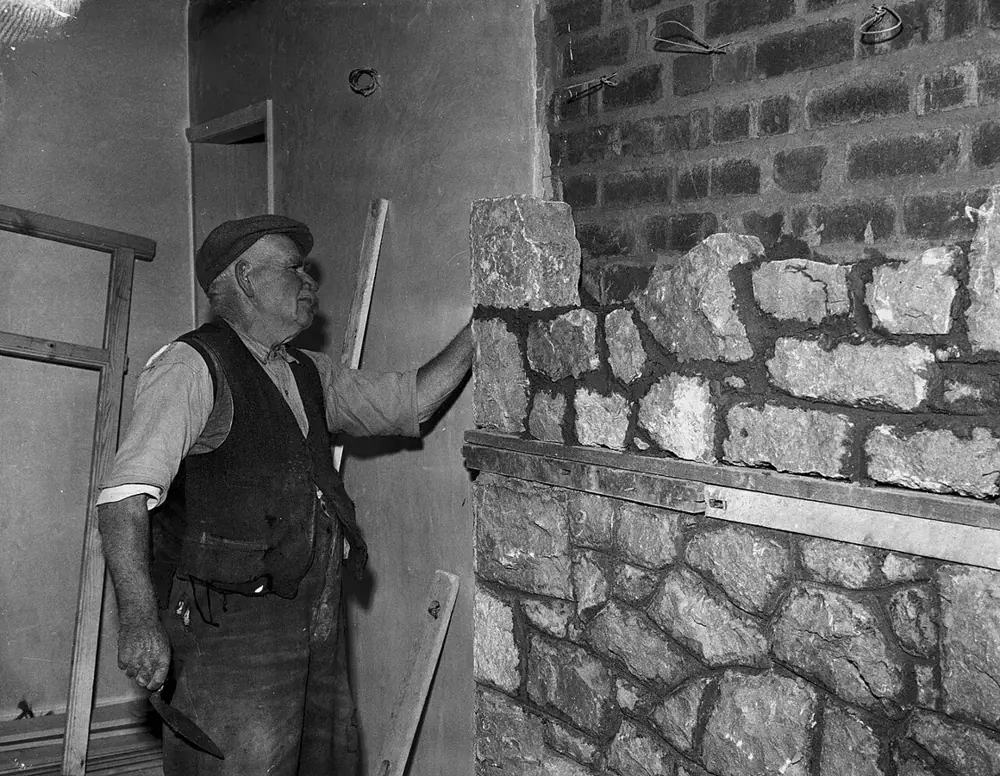
Illustrative stock photograph: Llangefni stone-mason (1489153).jpg by Geoff Charles · CC BY-SA 4.0. Resized and converted to WebP. The photograph does not represent Marwaa’s work or a featured service location.
Hand-cut V lettering forms recessed strokes with a carver's tools rather than simply describing a font on a proof. The V is a cross-sectional shape, while hand-cut identifies the making route. Similar-looking lettering can come from other processes. If the method matters to a commission, define it clearly and review the actual stone, scale and finished reference without treating hand work as an automatic quality guarantee.
What does hand-cut V lettering describe?
The two sloping sides of an incised stroke meet within the stone. That cross-section gives the V description. Hand-cut means a craftsperson forms the letter using hand-directed tools, commonly chisels. It is a statement about making as well as appearance.
Heritage Crafts' letter-cutting account describes the craft and its techniques. It helps distinguish a carved inscription from a typeface selection. This guide does not reproduce the technique as instructions for cutting a memorial.
The word hand can be used loosely in advertising. A hand-finished machine-cut letter and a letter formed by a carver are not identical process descriptions. Ask what work the supplier actually proposes if that distinction matters.
Why the material and size matter
A drawing defines an outline, but stone introduces grain, colour and resistance to the tools. The same letter design can require different treatment on another material or at another scale. A small name does not necessarily reproduce a larger example in miniature.
A carver may adjust proportions or fine details to suit the work. Those changes should preserve the accepted intent. Ask which aspects remain fixed and which involve interpretation before commissioning a sample or complete piece.
Jackie Perkins' methods page shows a working carver's relationship between materials and methods. It is evidence of that maker's practice, not proof that every V-shaped inscription follows the same route.
What does a proof establish?
A layout proof can settle wording, spacing and the proposed letter shapes. It may not fully show the carved section or the marks and variation of the finished work. A photograph or sample of relevant lettering answers a different question.
Do not require every naturally occurring variation to disappear merely because a digital outline looks mathematically uniform. Equally, hand work should not excuse a departure from agreed wording or an unwanted broken edge. The reference and scope of acceptance still matter.
The raised and recessed lettering guide explains the broader form choice. This guide concerns the production route within recessed lettering, not a claim that only one method can make a V-like section.
Agree what will be supplied
State whether the commission requires a particular craft process or simply a finished appearance. These are different purchasing requirements. A buyer who cares about the making route should not rely on a catalogue font name to convey it.
For bulk or custom work, confirm whether the producer offers the requested route before approving the order. Ask how repeat pieces will relate to the reference without demanding a promise of identical tool marks.
Later additions deserve attention as well. A new date may need to relate to the original cut, spacing and surface. Keep the accepted design and maker information. The aim is a clear account of the work and its intended character, rather than using handmade as a substitute for a defined result.
The sides of a V-shaped cut catch light differently as the view changes. That helps explain why depth and section can matter even when the outline remains fixed. It does not establish that a deeper cut is always more readable or more suitable. Compare the actual lettering under useful views rather than judging a depth claim in isolation.
Practical distinctions
| Question | Evidence or explanation | Limit to keep clear |
|---|---|---|
| V section | The shape of the recessed stroke | Does not alone identify the making method |
| Hand-cut route | What the craftsperson actually forms | Different from a vague hand-finished label |
| Reference | Relevant material and scale | Digital outlines do not show every carved feature |
Key Takeaways
- V-cut describes a recessed shape and does not prove a hand-cut process.
- Define any required craft method separately from the desired appearance.
- Review relevant finished lettering rather than relying on a font preview alone.
Frequently Asked Questions
Does V-cut always mean hand-carved?
No. A section description alone does not identify the production route.
Does hand-cut guarantee better quality?
No. The work still needs to meet the agreed design and purpose.
Can later dates be matched automatically?
Do not assume so. Keep the original reference and discuss the proposed addition with the responsible maker.
Discuss a trade project
For a bulk memorial order, send Marwaa the intended material, design and unresolved requirements. Ask for an order-specific response before approving production.
Read More
- Raised vs Recessed Headstone Lettering: Which Should You Choose?
- Headstone Fonts and Lettering Styles: A Practical Guide
A Note on This Guide
This guide describes commissioning distinctions, not chisel technique or a guarantee of identical hand-cut pieces. This educational guide does not replace project-specific advice from the responsible supplier, designer or installer. Confirm cemetery requirements where the proposed product or alteration needs approval.
Published by Marwaa Team for Marwaa Memorials (marwaamemorials.com) · Published 2026-11-25 · Updated 2026-11-25 Marwaa Memorials is a factory-direct exporter of bulk granite monuments and headstones, shipping to monument dealers, funeral homes, and importers across North America.
Related guides
Cut Stencils and Photoresist in Headstone Production

Raised vs Recessed Headstone Lettering: Which Should You Choose?

Hand Holding a Flower on a Headstone: Meaning

Headstone Fonts and Lettering Styles: A Practical Guide

Praying Hands on a Headstone: Meaning and Design Ideas
