
Cut Stencils and Photoresist in Headstone Production
Cut stencils and photoresist protect selected stone surfaces during blasting, but their images are made differently.
By Marwaa Team · Editorial standards · Published
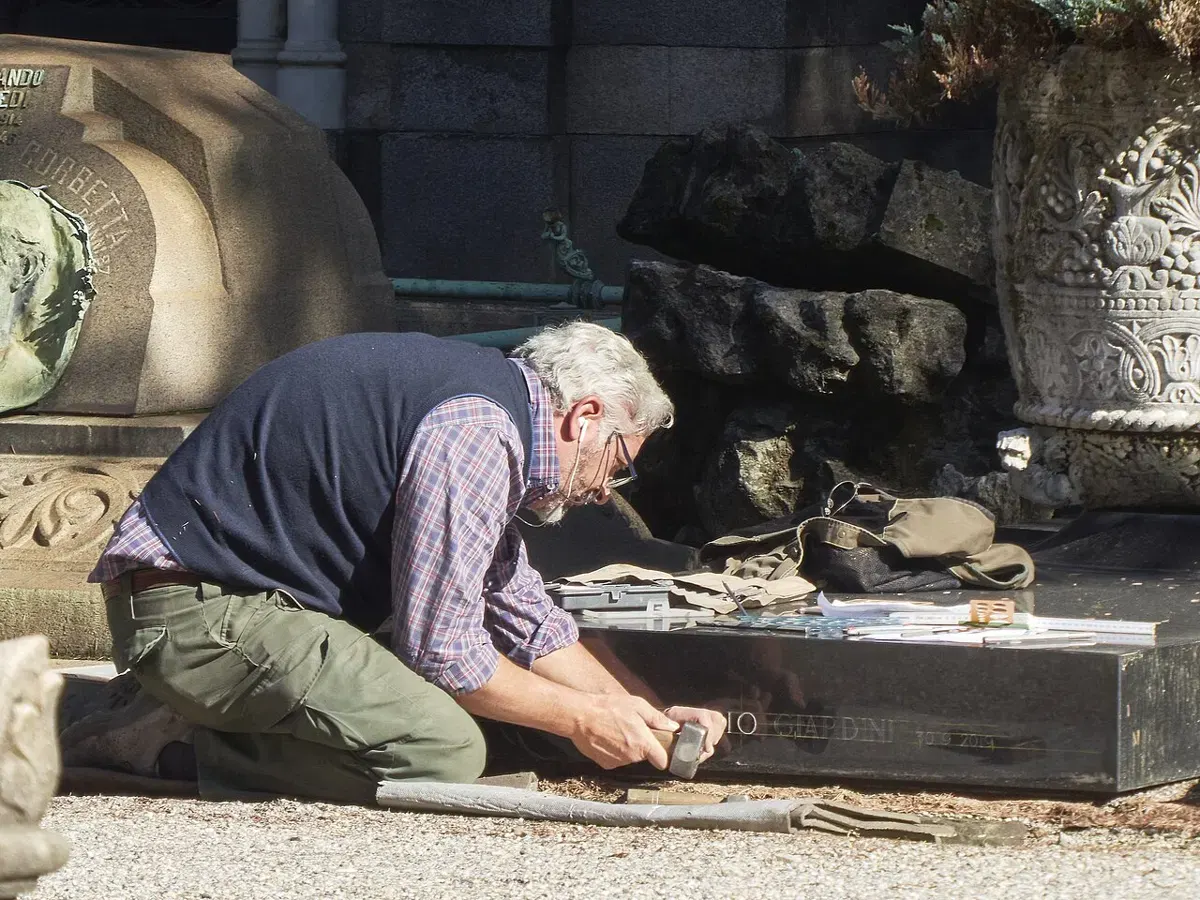
Illustrative stock photograph: Stone Engraving - Origins of the Haweswater Reservoir - geograph.org.uk - 3140548.jpg by Martin · CC BY-SA 2.0. Resized and converted to WebP. The photograph does not represent Marwaa’s work or a featured service location.
Cut stencils and photoresist protect selected stone surfaces during blasting, but their images are made differently. A cut stencil receives openings through physical cutting; a photoresist image is formed through a light-based preparation process. Neither mask approves the inscription wording. Match the resist system to the artwork, stone and intended treatment, and distinguish mask preparation from the final engraved result.
How do cut stencils and photoresist differ?
Both act as a barrier. The workshop removes or opens selected areas so abrasive can reach the stone. What remains protects the surrounding surface. The way the openings are made is the key distinction.
A cut resist may be prepared by hand or a controlled cutter. Unwanted sections are removed while necessary islands remain in place. Photoresist uses an image-based exposure process appropriate to its product. It does not need to follow the same cutting and removal route.
Celadon's stencil product description and Rayzist's photoresist range illustrate different systems. Their product thicknesses and instructions are specific offerings, not a universal memorial specification.
Why artwork translation matters
A printed black shape does not automatically tell the workshop which area to remove. The relationship between protected and exposed regions must match the intended treatment. Reversing that relationship can change the entire appearance.
Small enclosed areas deserve attention. In a letter such as an O, the inner area must remain where the design requires it. Fine lines, tight gaps and photographic dots create other demands. A system suitable for broad text may not be the right route for every image.
A vector file and a photograph carry different information. They may require different preparation even when both appear sharp on a screen. Ask the producer what final production file it needs instead of assuming any high-resolution image can become any mask.
The stone surface affects the system
A mask must work on the actual surface. Smooth polished stone and an uneven texture do not present identical conditions. Product choice, application and process control belong together.
A thicker resist should not be described as automatically better. Its suitability depends on the detail and work intended. Likewise, fine image capability does not mean unlimited blasting depth. Ask about the particular system rather than selecting from one attractive product feature.
Do not prescribe exposure or blasting settings from this explanation. The maker's instructions and the workshop's assessed operation govern the work. The buyer's useful role is to make the required image and surface outcome clear.
Keep approvals separate
A correctly prepared mask can still contain a wrong name. Family approval of words also does not prove that the file has transferred correctly into a mask. These checks have different purposes.
Use the production stencil test guide when the transfer needs a defined check. This article explains the mask routes, rather than creating another approval record.
For a trade design, identify whether the request is broad lettering, a detailed motif or a tonal image. That lets the producer explain its proposed route before it prepares the work. If it adapts the artwork, review what changed and why. A mask is an intermediate tool; its success should support the accepted finished memorial, not become a substitute for that outcome.
Orientation is another transfer question. A mask image can be reversed at an intermediate stage without changing the intended final design, but the workflow must resolve that correctly. Label the intended finished view. A buyer should approve what the stone will show, rather than trying to interpret an unfamiliar intermediate film by instinct.
Practical distinctions
| Question | Evidence or explanation | Limit to keep clear |
|---|---|---|
| Cut resist | Openings produced through cutting | Small protected areas must remain correctly located |
| Photoresist | Image formed through a compatible exposure route | Product instructions and image preparation matter |
| Approval | Words, layout and production transfer | One approval does not cover all three |
Key Takeaways
- Cut stencils and photoresist create protective images through different routes.
- Match the complete resist system to the surface and intended work.
- Mask preparation cannot replace approval of the actual wording.
Frequently Asked Questions
Does photoresist mean a photograph is printed on the granite?
No. The mask controls where the later process reaches the stone.
Is a thicker mask always best?
No. The intended depth, detail, surface and product system all matter.
Does a successful mask confirm the name is correct?
No. Wording approval and production-transfer checks answer different questions.
Discuss a trade project
For a bulk memorial order, send Marwaa the intended material, design and unresolved requirements. Ask for an order-specific response before approving production.
Read More
- Headstone Stencil Tests: Check the Production File
- Headstone Vector Artwork: A Supplier Handoff Package
A Note on This Guide
This explains resist routes. It supplies no exposure settings, blasting recipe or claim that a particular product suits every stone. This educational guide does not replace project-specific advice from the responsible supplier, designer or installer. Confirm cemetery requirements where the proposed product or alteration needs approval.
Published by Marwaa Team for Marwaa Memorials (marwaamemorials.com) · Published 2026-11-25 · Updated 2026-11-25 Marwaa Memorials is a factory-direct exporter of bulk granite monuments and headstones, shipping to monument dealers, funeral homes, and importers across North America.
Related guides

Headstone Stencil Tests: Check the Production File
Hand-Cut V Lettering: How the Production Route Differs
Cut-Out Memorial Shapes: Design the Empty Space
Bush-Hammered and Shot-Blasted Granite Surfaces
Memorial Sandblasting Media: Compare the Actual Process
