
Headstone Stencil Tests: Check the Production File
Use a headstone stencil test to check the approved production file, fine-detail limits, transferred text and revision identity before engraving.
By Marwaa Team · Editorial standards · Published · Updated

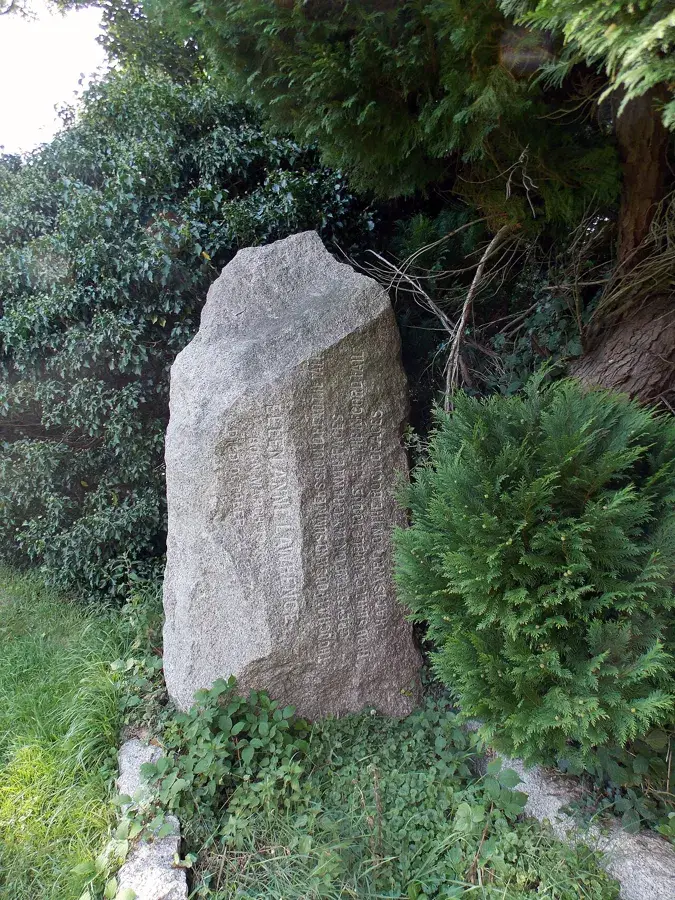
Illustrative stock photograph: Steinmetz graviert Schrift1.jpg by Reiner Flassig · CC BY-SA 2.0 de. Hosted by Wikimedia Commons. The photograph does not represent Marwaa’s work or a featured service location.
A headstone stencil test checks whether the intended artwork transfers into the proposed production method without losing important detail. Connect the test to the final approved text and drawing. It is a workshop verification stage, not a replacement for family proofreading or permission to change an inscription without approval.
What should a headstone stencil test check?
A stencil test should focus on the features that may change between the approved layout and the production file. Fine strokes, enclosed letter shapes, small symbols and tight spacing can need specific attention. Ask the fabricator which details justify a test for this design.
Keep wording approval separate from what the workshop can make. A family may approve the correct name and still need to review an adjusted layout if the workshop proposes a different font treatment. The workshop should not silently simplify meaningful details and call the result the same approved design.
The accepted drawing should name the actual size and placement. A test at a different scale may answer a different question. Record the scale and whether the test represents the full inscription or selected details only.
Cut stencils and photoresist form their protective images through different routes, while wording approval remains separate. See Cut Stencils and Photoresist in Headstone Production.
How should files be identified?
Use a single production reference that links the text, artwork and current proof. File names should distinguish a review image from the file used for output. “Final” copied into several names does not tell the operator which version is current.
Ask how converted text is checked. A font change, changed punctuation mark or missing accent can appear during a file conversion even when the source text is correct. Keep a readable reference that the operator can compare with the actual transferred design.
| Test point | Compare with | Record |
|---|---|---|
| Names and dates | Accepted transcription | Exact characters checked |
| Font and symbols | Current proof | Any changed detail |
| Small openings | Agreed test scope | Features needing review |
| Layout position | Dimensioned drawing | Full or partial test |
| File identity | Production register | Issued version and date |
The table organizes review. It does not prescribe a machine setting or minimum stroke size.
Which changes need a fresh proof?
A change that alters the buyer's accepted appearance or wording needs a clear review decision. This includes a different font, moved line, removed symbol or changed line break. Even a technically sensible adjustment can matter to a family if it changes the inscription's character.
Ask the fabricator to explain the reason and show the proposed result. A useful message names the affected characters and offers an option rather than saying the design “does not work.” Record the accepted choice in the complete replacement proof.
Do not treat a production test as a chance to add undecided text. New wording needs the same deliberate transcription and approval process as the original inscription. The proof revision guide helps keep that distinction visible.
How do you review a representative test?
Start by checking that the test contains the difficult features of the actual design. A simple sample word tells little about an intricate emblem or a different script. Ask why the selected test is sample and what has not been evaluated.
Photographs should show both context and detail where possible. A close view can help name a changed shape, while a full view shows whether spacing remains balanced. Keep the original image files so later reviewers do not rely on a compressed screenshot.
The engraving methods guide covers the broader choices. The test record belongs to the specific method and file selected for this order.
Who releases the file for production?
The supplier should name its internal release responsibility, while the named buyer approves any design changes that need acceptance. A customer's silence after receiving a test should not be described as a new instruction unless that process is actually agreed.
Record the released file version and unresolved exclusions. If only a selected detail passed its test, say so. A local success should not become an unsupported statement that every part of the complete memorial has been inspected.
What should be retained afterward?
Keep the accepted production reference, test record and any revised proof together. Link the finished check photographs to that version. If an other inscription is requested later, those records may help the new provider understand the original work without guaranteeing a perfect match.
For trade planning, the Marwaa catalogue names product forms. The actual engraving scope still needs its own approval packet. A short, traceable stencil test is useful when it resolves a real production question and leaves the family-approved inscription intact.
Key Takeaways
- A headstone stencil test checks the selected production method and file.
- A workshop adjustment that changes appearance needs a clear buyer decision.
- The released test record should name its scope and current revision.
Frequently Asked Questions
Does a stencil test replace proofreading?
No. It supplements the accepted wording and layout checks; the family still needs to approve the exact inscription.
Can a test use a different size from the final design?
It can answer a limited question, but its scale and limitations must be recorded.
Should the fabricator change a difficult symbol without asking?
A proposed change to the accepted design should be shown and approved through the agreed revision process.
For a dealer or importer order, request a bulk monument quotation with the relevant drawing and the acceptance points that still need agreement.
Read More
A Note on This Guide
This article describes check records, not engraving instructions or equipment settings. The workshop must decide right production methods for the actual material and design.
For measurement-language background where a test uses size acceptance, see NIST metrological traceability guidance.
Published by Marwaa Team for Marwaa Memorials (marwaamemorials.com) · Published 2026-11-21 · Updated 2026-11-21 Marwaa Memorials is a factory-direct exporter of bulk granite monuments and headstones, shipping to monument dealers, funeral homes, and importers across North America.
Related guides
Cut Stencils and Photoresist in Headstone Production

Granite Test Reports: Confirm Which Stone Was Tested

Granite Monument Lead Times: Production, Shipping and Delivery Timelines [2026]
Leaving Monument Software: Can You Use the Export?

Concealed Monument Freight Damage: Build the Evidence File
