
Personal Scenes on Headstones: Prepare the Artwork
Prepare a personal scene headstone engraving brief with source photos, meaningful features and clear choices about simplification.
By Marwaa Team · Published · Updated
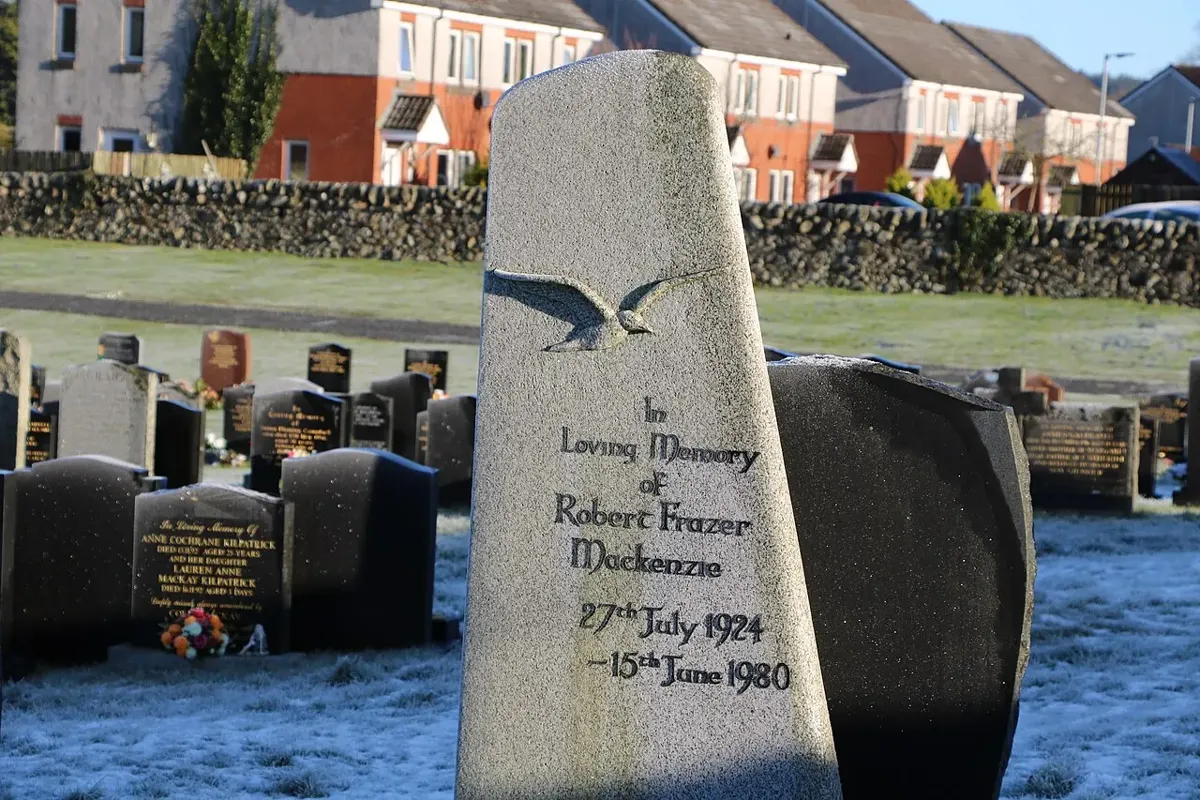
Illustrative stock photograph: Headstone, Newton Stewart Cemetery - geograph.org.uk - 7386372.jpg by Billy McCrorie · CC BY-SA 2.0. Resized and converted to WebP. The photograph does not represent Marwaa’s work or a featured service location.
Personal scene headstone engraving works best when the family identifies the place and the few details that make it recognisable. Supply source photographs, explain what may be simplified and ask the designer to assess the intended size and stone. A meaningful scene does not need every photographed object. The brief should distinguish a documented view from an imagined combination of places or dates.
A cottage, field, shoreline or familiar workshop can carry more meaning than a generic symbol. The challenge is to communicate that meaning without asking a small engraving to reproduce the entire scene. Begin with the relationship between the place and the person, then choose its visual priorities.
Which part of the scene must remain recognisable?
Name the main feature before discussing technique. It might be a roofline, a particular tree or the view from a favourite path. Supply a photograph that clearly shows that feature, rather than several attractive images with no explanation of what matters.
A designer can make a more useful proposal when the priorities are explicit. If the exact building is important, say so. If the family wants the feeling of a lakeside setting rather than a documentary view, describe that as an artistic interpretation. Both can be valid choices, but they require different reviews.
How should reference photographs be organised?
Identify which photograph supplies each feature and whether the images show the same place and period. A collage of a childhood house and a later garden should not be presented as a single historical photograph. Label any intentional combination in the brief.
Keep source and permission questions with the image record. A photograph found online may show the desired location but still raise reproduction questions. Ask whether the family can supply its own suitable view or obtain the details needed to use the selected source.
What can be simplified without losing the meaning?
Ask the designer to separate essential shapes from background texture. A clear roof profile may matter more than individual bricks. Open water may communicate a shoreline better than a dense pattern of reflections. These are proposals to discuss, not a rule that every scene should become a silhouette.
Review simplification at the planned size and in the planned method. A large screen can make tiny details seem important simply because they are visible there. The supplier should explain which details may remain readable and where a quieter treatment could help.
How should the scene relate to the inscription?
Plan the name and dates alongside the scene rather than squeezing the text into whatever space remains. The composition should make clear whether the scene is a small accompanying image or a main part of the stone face.
For a dealer or supplier, record the approved artwork file and the family’s named priorities. A workshop should not have to choose between a detailed original and a simplified proof without knowing which version the family accepted. Link those decisions to the full full drawing.
Review worksheet
| Review item | Decision to record |
|---|---|
| Meaning | Place and relationship to the person |
| Essential feature | The feature that must remain identifiable |
| Sources | Which image supplies each part of the scene |
| Interpretation | Documentary view or labelled artistic combination |
| Simplification | Details removed, retained or restyled |
| Layout | Relationship to names, dates and future space |
For the specific form and visual trade-offs, see Memorial Map Engraving: Place, Scale and Meaning.
A worked review example
A family wants a coastal cottage and the small boat used on holidays. The clearest cottage photograph has a car in front, while the boat appears in a different view. The designer proposes a combined scene and labels it as an interpretation.
The family approves the roofline and boat shape but removes a busy fence and dense water reflections. They then review the scene beside the text. Its meaning remains clear without claiming that the engraving reproduces one particular photograph.
Before the file moves to production
Check the approved scene against the written priorities. Confirm the correct location, any directional feature and any intentionally combined elements. Then review its physical dimensions and the complete full layout.
The products collection can help explain the proposed memorial form, while a trade quotation should identify the actual artwork preparation required. Keep image preparation separate from promises about manufacturing or installation dates. The accepted artwork is one part of a larger order, not a substitute for its other specifications.
The Marwaa product collection provides context for the proposed memorial form. Confirm the actual product and artwork specification in the order record.
Key Takeaways
- A personal scene brief should name its meaningful features before listing decorative detail.
- Combined photographs should be identified as an artistic interpretation.
- The accepted scene and inscription should be reviewed on the same full layout.
Frequently Asked Questions
Should every detail in a scene photograph be engraved?
Not necessarily. Identify the essential features and ask the designer to assess simplification for the proposed size and method.
Can photographs from different places be combined?
They can be discussed as an artistic interpretation, clearly identified and reviewed rather than presented as one historical view.
Should the scene be approved before the wording?
Review the full composition together so the scene does not crowd the inscription.
Next step
For a dealer-led memorial project, request a trade quotation with the agreed design brief and the questions that still need assessment. This is a quotation enquiry, not a retail checkout or approval to engrave.
Read More
Sources and scope
A Note on This Guide
The scene brief is an editorial design aid. The supplier must assess the material and method, and the cemetery must confirm any relevant design limits. The illustrative photograph on this page is not the family scene described in the example.
Published by Marwaa Team for Marwaa Memorials (marwaamemorials.com) · Published 2026-11-21 · Updated 2026-11-21 Marwaa Memorials is a factory-direct exporter of bulk granite monuments and headstones, shipping to monument dealers, funeral homes, and importers across North America.
Related guides
Adding Headstone Lettering: Prepare the Survey Brief

Mountain Scene Headstones

Beach Scene Headstones

Forest Scene Headstones

Farm Scene Headstones
