Restored Memorial Portraits: Keep Identity Intact
Review a restored headstone portrait with a feature ledger that separates recovered detail from reconstruction and checks likeness.
By Marwaa Team · Editorial standards · Published · Updated

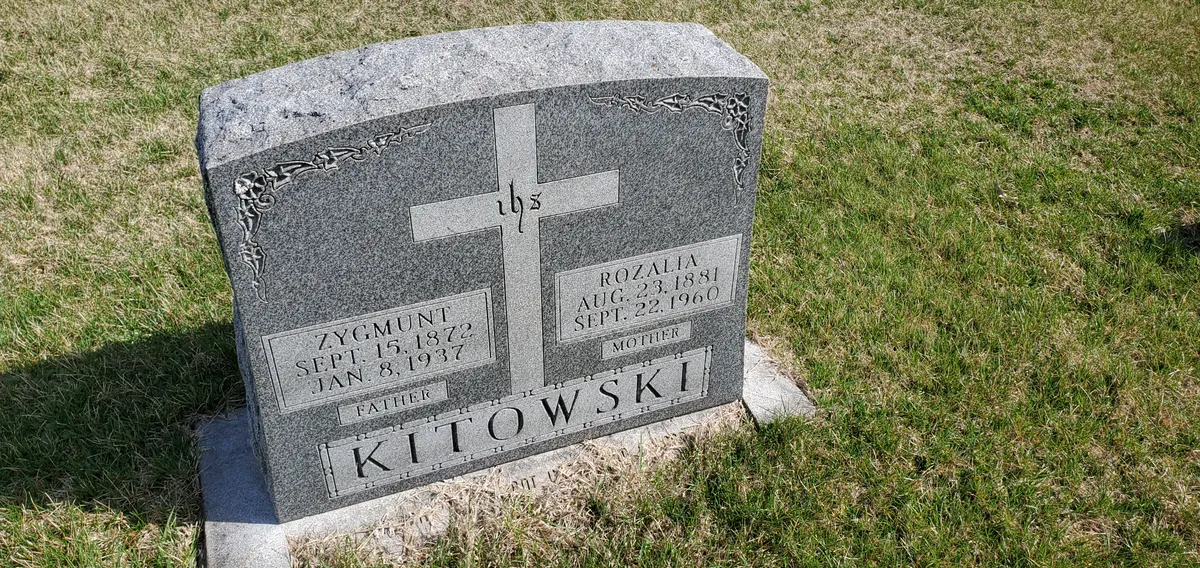
Illustrative stock photograph: Oak Hill Cemetery - Bailey Headstone (1878-1940).jpg by RickObst · CC BY 4.0. Hosted by Wikimedia Commons. The photograph does not represent Marwaa’s work or a featured service location.
A restored memorial portrait should distinguish recovered image detail from rebuilt detail. Compare the accepted source, the restoration and the proposed engraving image side by side. Ask for a feature ledger where the original is unclear, and decide which uncertain features should remain understated. A sharp-looking result is not necessarily a more accurate likeness, and the family can choose a less altered treatment.
This review begins after the source image and reproduction questions have been recorded. Its purpose is likeness. We suggest judging a restoration by the person’s identifiable features, rather than by how smoothly the editor has removed every mark or shadow.
What came from the photograph and what was reconstructed?
Ask the retoucher to identify regions recovered from a better scan, clarified through tonal adjustment or newly rebuilt. These categories are not interchangeable. A scan can reveal recorded detail; an invented edge or repaired missing eye may involve interpretation.
Keep the original scan untouched. Compare the working restoration against it at a useful size, without letting a heavily enlarged screen view become the only reference. The family needs a practical explanation of uncertainty, not technical confidence that hides where the source is missing.
Which features carry the person’s identity?
Make a short likeness list before discussing cosmetic cleanup. It might include the angle of a smile, a familiar hairline or a particular pair of glasses. Ask reviewers to name what looks different instead of requesting a generally nicer portrait.
If a uniform insignia, jewellery item or scar is unclear, ask whether a second reliable photograph can help. Do not rebuild an achievement or personal feature simply because it appears plausible. The family may prefer to omit the uncertain detail or keep a softer treatment.
Bronze portrait options can use modelled relief or a photo-based surface; ask what the actual product terms mean. See Bronze Bas-Relief vs Photo-Rendered Memorial Portraits.
How can alternatives be compared fairly?
Ask for two versions that differ in a named decision, such as limited surface cleanup versus rebuilt background and clothing. Keep the crop and scale consistent when comparing them. Otherwise, a larger face or brighter screen can influence the choice without addressing the actual restoration.
A side-by-side comparison is more useful than a sequence of edits labelled final. Record the family’s choice by filename and explain any remaining concern. If reviewers disagree about likeness, request another reference or a restrained option rather than averaging incompatible instructions.
For the specific form and visual trade-offs, see Cameo Portrait or Etched Memorial Photograph?.
Does the restoration suit the intended memorial method?
Review the chosen restoration again in the proposed portrait method and full full layout. A detail that is convincing in a colour print may not remain distinct in a small monochrome representation. Ask the supplier to assess the actual image and size rather than promising that the editor’s preview transfers unchanged.
Keep responsibility clear between the retoucher, designer and engraver. A family may approve identity in one file while the engraving provider prepares another output. The work record should link those files and show which changes occurred between them.
A fired ceramic portrait needs coordinated approval of the image, manufactured shape and attachment arrangement. See How Fired Ceramic Memorial Portraits Are Made.
Mechanical impact marking and laser marking use different tool actions, so confirm the actual offered portrait route. See Diamond-Impact and Laser Portraits on Granite.
Review worksheet
| Review item | Decision to record |
|---|---|
| Source evidence | Original scan and any verified second photograph |
| Feature | Eyes, mouth, hairline or another identifying detail |
| Treatment | Recovered, adjusted, reconstructed or left uncertain |
| Alternative | Comparable version with the decision isolated |
| Family response | Specific likeness comments and named reviewer |
| Production link | Chosen restoration and final-method proof reference |
A worked review example
An old print has a damaged patch beside one eye. A restoration makes both eyes equally crisp, but a relative says the expression has changed. The editor identifies the repaired region as rebuilt and offers a version that leaves it softer.
The family compares both versions with a second photograph from the same period. They choose the restrained option and note the unresolved area. The final review checks that the engraving preparation has not added the sharper rebuilding back into the image.
Before the file moves to production
Save the chosen source, the feature ledger and the final-method proof as separate records. Check that filenames identify their roles. If a later editor receives the project, the record should explain why an apparently less polished version was deliberately selected.
Do not approve an image merely because a service describes it as enhanced or restored. Ask what changed, whether the evidence supports it and whether the result still looks like the person. That decision deserves time; there is no need to accept a rebuilt feature just to complete the artwork conversation.
For broader visual planning, the Marwaa Design Studio can help explain the proposed arrangement. Its preview is a discussion aid, not a substitute for the supplier’s final proof.
Key Takeaways
- A restored portrait should identify rebuilt details rather than presenting them as recovered facts.
- Likeness comments work best when they name specific facial features.
- The selected restoration should be checked again in the proposed memorial method.
Frequently Asked Questions
Does sharper always mean more accurate?
No. Apparent sharpness may come from reconstruction. Ask which details were present in the source.
What if the family disagrees about the likeness?
Collect specific feature comments and reliable references, then compare clearly labelled alternatives.
Can the family choose a less altered portrait?
Yes. Discuss a restrained treatment and ask how it will work with the intended memorial method.
Next step
Use Choosing a Photo for a Headstone Portrait as the next review step. Bring the unresolved points to your chosen memorial professional before authorizing production.
Read More
- Choosing a Photo for a Headstone Portrait
- Headstone Photos: Ceramic Portraits vs Laser Etching
- Headstone Portrait Permissions
Sources and scope
A Note on This Guide
This is a family likeness-review method, not an image-authentication service. It does not claim that missing photographic evidence can be recovered. Source permissions and cemetery approval remain separate from the portrait’s appearance.
Published by Marwaa Team for Marwaa Memorials (marwaamemorials.com) · Published 2026-11-21 · Updated 2026-11-21 Marwaa Memorials is a factory-direct exporter of bulk granite monuments and headstones, shipping to monument dealers, funeral homes, and importers across North America.
Related guides
Memorial Portrait Medallions: Choose the Shape

Memorial Portrait Backgrounds: What Should Change?

Landscape vs Portrait Headstones
Cameo Portrait or Etched Memorial Photograph?

How to Choose the Best Photo for a Headstone Portrait