
How Fired Ceramic Memorial Portraits Are Made
Fired ceramic memorial portraits place an image on a ceramic piece through a process that includes firing.
By Marwaa Team · Editorial standards · Published · Updated
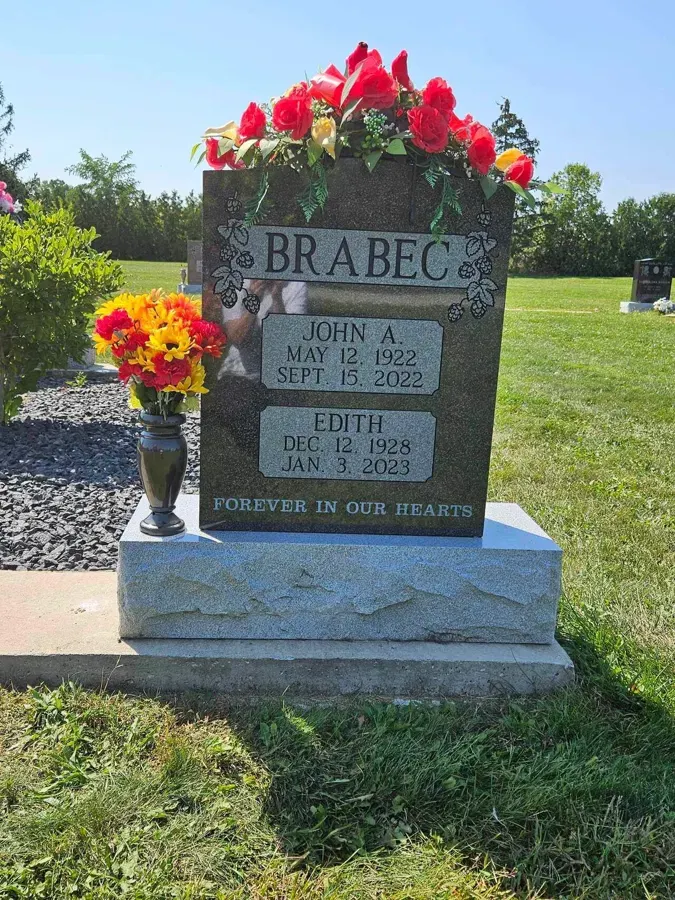
Illustrative stock photograph: Brabec headstone.jpg by Landhistory · CC BY-SA 4.0. Resized and converted to WebP. The photograph does not represent Marwaa’s work or a featured service location.
Fired ceramic memorial portraits place an image on a ceramic piece through a process that includes firing. Printing, pigments and surface systems vary by producer. The finished piece is supplied for attachment to the memorial. Review the source image, crop, colour treatment, ceramic shape and attachment as separate parts of the order rather than treating one approved picture as approval of everything.
What are fired ceramic memorial portraits?
A ceramic portrait is a separate object carrying an image. It differs from a portrait marked directly into granite. The ceramic may be oval, round, rectangular or another offered shape. Its placement becomes part of the memorial design.
A maker prepares the image, applies it through its chosen system and fires the work. FK Memorial Portraits describes its production route. This illustrates one maker's approach. It does not mean all ceramic portraits use identical materials or stages.
Fired is a meaningful process description, but not a blanket guarantee. Ask what the product is and which written conditions apply. A warranty belongs to its issuer and stated terms, not every item in a product category.
Vitreous enamel, ceramic portrait bodies and enamel paint are different product descriptions; confirm the substrate and manufacturing route. See Vitreous Enamel and Ceramic Memorial Images.
Image decisions come before firing
Start with a clear, authorized photograph. The maker may crop it, remove a background or adjust colour and tone. These choices affect the person's likeness before any physical production begins.
An old photograph may require repair. Understand when missing areas are interpreted rather than recovered. If several sources are combined, check that the face and expression remain familiar. A polished preview can look attractive while changing something important to relatives.
Review the crop within the actual ceramic shape. An oval removes areas that might remain in a rectangle. Approval of the full rectangular image should not be treated as approval of a later, unseen crop.
Why colour review needs care
Displays, lighting and ceramic production represent colour in different ways. A screen proof helps establish the general treatment. It does not support an unlimited promise of exact colour matching.
Skin tone is particularly sensitive. Strong warming or smoothing can make the person look less familiar. Ask how the maker handles colour review and what reference is available. Avoid dramatic enhancement without checking the intended likeness.
Black-and-white treatment is a choice as well. Contrast and shadow change the impression of a face. Consider the selected treatment alongside the memorial stone rather than assuming that removing colour settles the appearance.
Ceramic and stone form an assembly
A separate piece needs an agreed position and attachment arrangement. It might sit on a surface or within a prepared recess. Those choices affect its edge appearance and the work needed for any later replacement.
Do not select an adhesive from a general online suggestion. The particular ceramic, stone, backing and outdoor conditions need compatible products and professional practice. The installer should receive the supplied portrait's requirements.
A trade enquiry should clarify whether Marwaa is supplying the portrait, preparing the stone around it or coordinating with another supplier. Otherwise a correctly made piece may arrive without a suitable place in the memorial.
Plan records and possible replacement
Keep the approved image and proof where the responsible people can find them, with suitable permission and access controls. Record the maker, shape and relevant product details. Do not rely only on a screenshot from an old message.
A replacement may need more than the outside dimensions. Edge form, image treatment and mounting can matter. A new maker cannot be expected to reproduce an unidentified item precisely from a distant photograph.
The useful buying decision connects the picture, manufactured object and finished monument. Approval of one does not settle the others. Clear scope helps the portrait suit both the person remembered and the physical design.
Compare the decisions
| Area | What to establish | Why it matters |
|---|---|---|
| Image | Approved crop and expression | Review within the final shape |
| Ceramic product | Actual maker and system | Check written terms rather than broad promises |
| Attachment | Position and compatible support | Coordinate responsibilities before cutting |
Key Takeaways
- Approved crop and expression. Review within the final shape.
- Actual maker and system. Check written terms rather than broad promises.
- Position and compatible support. Coordinate responsibilities before cutting.
Frequently Asked Questions
Is the image etched into the stone?
No. A ceramic portrait is a separate manufactured piece fitted or attached through an agreed arrangement.
Do all fired portraits have the same warranty?
No. Read the terms for the actual product and issuer.
Should the crop be approved before production?
Yes. Check the crop within the intended shape, along with expression and any restoration.
Discuss the trade requirement
For a bulk memorial project, send the intended material, design and use to Marwaa. Ask for a clear response to the questions that affect your order before approving production.
Read More
- Headstone Photos: Ceramic Portraits vs Laser Etching vs Bronze Frames
- Memorial Accessory Holes: Check the Approved Drawing
- Restored Memorial Portraits: Keep Identity Intact
A Note on This Guide
This guide does not guarantee a pigment system, service life or mounting method for an unidentified ceramic product. This is general educational guidance for dealers and other buyers. The people responsible for the project should resolve material, cemetery and technical requirements for the actual order.
Published by Marwaa Team for Marwaa Memorials (marwaamemorials.com) · Published 2026-11-23 · Updated 2026-11-23 Marwaa Memorials is a factory-direct exporter of bulk granite monuments and headstones, shipping to monument dealers, funeral homes, and importers across North America.
Related guides
Do Ceramic Headstone Photos Fade?
Replacing a Cracked Ceramic Headstone Portrait

How to Clean a Ceramic Photo on a Headstone

How Are Headstones Made? From Quarry Block to Cemetery
Vitreous Enamel and Ceramic Memorial Images
