Memorial Portrait Medallions: Choose the Shape
Choose a memorial portrait medallion shape using the actual crop, likeness and full composition, while keeping product dimensions separate.
By Marwaa Team · Editorial standards · Published
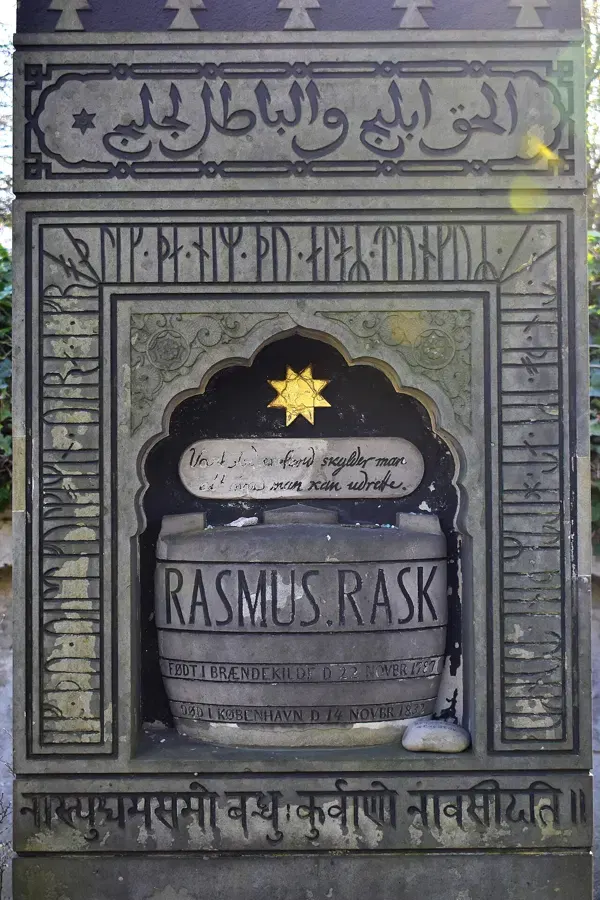
Illustrative stock photograph: 2023-04-19 Gravestone Rasmus Rask 02.jpg by Bärbel Miemietz · CC BY-SA 4.0. Resized and converted to WebP. The photograph does not represent Marwaa’s work or a featured service location.
A memorial portrait medallion shape should follow the source image, the desired crop and the complete stone composition. An oval, round or rectangular frame can change which features remain visible even when the portrait size seems similar. Compare the actual image in each proposed shape. Do not select by a shape label alone or assume the visible image dimensions are the full product dimensions.
This is a choice about the picture’s shape and visual role. The opening, fixing and product specification require their own coordination. We suggest deciding the crop with the person’s likeness in view rather than fitting a face into an attractive catalogue outline.
What does the source image need?
Look at the space around the head, shoulders and any meaningful object. A narrow oval may crop differently from a wider rectangle. A circle can create another relationship between the face and surrounding space. None is automatically correct for every person.
Ask the image provider to show the actual crop rather than an approximate outline over the source. The family should know what will be omitted. A preferred shape should not force an important identifying detail out of the picture without discussion.
How does the shape relate to the memorial?
A vertical medallion, a circular accent and a wider portrait create different visual weights on the stone. Review the image beside the actual name and dates. The shape should have a role in the whole design rather than being judged as a separate jewellery-like object.
If another portrait is present, decide whether the two should share a shape or deliberately differ. Equal outer dimensions do not necessarily produce equal-looking faces. The family should compare the proposed images, not only the product sizes.
What needs to be kept distinct from the crop?
The visible portrait, the complete ceramic or other product and any frame can have different outer boundaries. Keep those distinctions clear. A crop approval is not an opening specification or a guarantee that another product fits the same space.
Ask the responsible professionals to coordinate the selected item with the stone. If the family changes shape after dimensions have been settled, tell the relevant parties. The visual choice and the physical product need to remain connected without the family prescribing a cutting detail.
What if no stock shape suits the photograph?
Discuss another crop, another source photograph or a different portrait method. Do not assume a custom shape is available or suitable. The provider should explain its actual options and limitations.
The family can choose a less tightly cropped portrait if that preserves the person’s appearance, but the complete design still needs review. A larger product may affect text space and site acceptance. The shape conversation should make those trade-offs visible rather than hide them in a later revision.
Compare the design choices
| Choice | What to consider |
|---|---|
| Oval | Review the actual head-and-shoulder crop |
| Round | Check the relationship between face and surrounding space |
| Rectangular | Consider a wider image or a different visual weight |
| Two portraits | Compare apparent face size, not only equal outer measurements |
| Product boundary | Visible image and full assembly remain distinct records |
A practical example
A family prefers a round portrait because the sample looks balanced. Its chosen photograph includes a meaningful pin near one shoulder. The circular crop removes the pin, while a slightly different rectangular crop keeps it.
The family compares both on the complete stone drawing and decides whether the pin is essential. After choosing the shape, it asks the relevant providers to coordinate the actual item. The crop decision does not become an improvised recess measurement.
Making the choice
Start with what must remain in the picture, then compare shapes. If a shape only works by changing the person’s pose or inventing missing clothing, ask about another source or crop. A simpler truthful portrait can be preferable to an elaborate forced fit.
For broad placement ideas, use the Design Studio. The accepted product and complete drawing still need the supplier’s own review and any required cemetery response.
Key Takeaways
- Portrait shape should be compared using the actual source image.
- Apparent face size matters alongside the product’s outer measurements.
- Crop approval does not establish an opening or attachment specification.
Frequently Asked Questions
Is an oval always best for a portrait?
No. Compare the actual source, crop and surrounding design.
Do equal medallion dimensions mean equal face sizes?
Not necessarily. Compare the prepared portraits themselves.
Can shape approval specify the stone opening?
No. The actual product and opening need separate professional coordination.
Next step
Read How to Choose the Best Photo for a Headstone Portrait to place this choice in the wider design. Then discuss the actual object, site and proposed work with the relevant memorial professional before making a commitment.
Read More
- How to Choose the Best Photo for a Headstone Portrait
- Photo Openings in Memorials: Coordinate the Layout
- Headstone Photos: Ceramic Portraits vs Laser Etching vs Bronze Frames
Further reference
National Park Service: complete-object documentation provides background relevant to the form or materials discussed. It is not a product approval, a Marwaa availability statement or permission for work at a particular site.
A Note on This Guide
This is an image-composition guide, not a portrait product, recess or attachment specification. Actual options depend on the provider and site. The illustrative stock photograph does not represent every shape discussed.
Published by Marwaa Team for Marwaa Memorials (marwaamemorials.com) · Published 2026-11-23 · Updated 2026-11-23 Marwaa Memorials is a factory-direct exporter of bulk granite monuments and headstones, shipping to monument dealers, funeral homes, and importers across North America.
Related guides
VA Medallion for a Privately Purchased Headstone

Headstone Shapes Guide: Serpentine, Gable, Heart and More

Restored Memorial Portraits: Keep Identity Intact
Headstone Portrait Permissions: Prepare the Photo File

Landscape vs Portrait Headstones