Diamond-Impact and Laser Portraits on Granite
Diamond-impact memorial portraits use repeated mechanical marks to represent an image on stone, while laser portraits use a different marking process.
By Marwaa Team · Editorial standards · Published
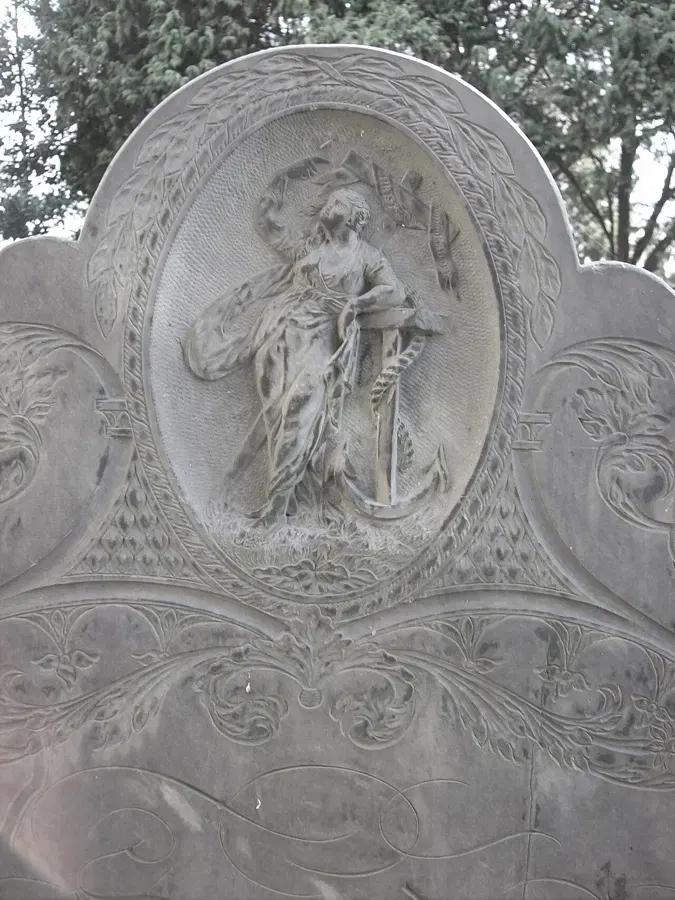
Illustrative stock photograph: "Hope", detail of gravestone, Narborough.JPG by Poliphilo · CC0. Resized and converted to WebP. The photograph does not represent Marwaa’s work or a featured service location.
Diamond-impact memorial portraits use repeated mechanical marks to represent an image on stone, while laser portraits use a different marking process. Both depend on a useful source image, preparation, material and scale. Machine descriptions vary, so confirm the actual tool action. A rotary diamond engraver is not automatically an impact machine, and no equipment label guarantees likeness or a particular outdoor result.
How are diamond-impact memorial portraits formed?
An impact system uses a point to make controlled marks. KASCO's producer listing describes a supplied impact-engraving route; its model claims are not universal process guarantees. The image emerges from their arrangement and visible contrast. This is a surface representation of a photograph, not a sculpted three-dimensional face.
Some equipment uses another mechanical action, such as rotary engraving. Those routes should not be grouped casually under diamond-impact merely because a diamond tool is involved. Ask the producer how the marks are formed.
CNC-STEP's engraving equipment illustrates the range of controlled engraving work. Its equipment information does not establish that every mechanical portrait machine operates identically. Treat the actual system description as the reference.
How does that differ from laser marking?
A laser transfers image information through its interaction with the surface. An impact system marks through mechanical contact. Both need image preparation, but their production files and settings are not automatically interchangeable.
A dark polished face can support visible contrast, yet a commercial colour name does not prove an identical result. Crystal pattern, finish and the system matter. Ask for an example on the proposed stone rather than a generic equipment demonstration.
The separate halftone and laser guide covers another route, where a prepared dot mask controls blasting. A dot-like final image does not prove which of these processes made it.
What limits come from the photograph?
The source must contain useful facial information. An out-of-focus face does not become precise because the machine can place many marks. Enlarging a file also cannot recover features never recorded in it.
Choose the intended expression and crop before production preparation. If an editor rebuilds missing detail, review that interpretation separately. A crisp result can look less like the person if it changes the eyes or mouth.
Rayzist's image-preparation discussion provides useful context for translating tone into marks, although its mask route differs from impact marking. It is not a shared operating procedure.
What should a trade buyer compare?
Review a full portrait and a relevant close view. The full view shows expression and likeness; the close view shows the mark character. Use the intended final size rather than only an enlarged screen view.
Ask how the portrait sits with the inscription on the complete stone. Space for a larger face can reduce room for wording. That is a layout decision to coordinate, not a reason to shrink the prepared image without review.
The factory discussion should confirm the route actually offered. Do not infer Marwaa equipment from this educational comparison. Where a method is important, identify it in the agreed scope. Where only the outcome matters, describe the accepted image and evidence clearly. No route should be sold as permanent proof of a likeness the family has not reviewed.
The physical surface also matters to a contact-based route. Ask whether the proposed equipment and setup suit the relevant face, including any curvature or unevenness. A demonstration on a small flat tile does not establish suitability for every shaped memorial. The producer should explain its capability without making the buyer invent a tool setup or support method.
Practical distinctions
| Question | Evidence or explanation | Limit to keep clear |
|---|---|---|
| Tool action | Impact, rotary or another stated method | Diamond does not identify the whole mechanism |
| Image source | Clear features and approved expression | Machine precision cannot replace missing evidence |
| Finished example | Same material and useful scale | A demonstration is not an order guarantee |
Key Takeaways
- Confirm the actual tool action rather than relying on a broad engraving label.
- Source information and image interpretation limit every portrait route.
- Review the complete portrait at its intended size and on relevant stone.
Frequently Asked Questions
Are rotary diamond and impact engraving the same?
No. They use different tool actions. Ask which route the producer proposes.
Can a precise machine restore a blurred face?
Not by itself. Missing detail may require interpretation, which needs review.
Does a dot pattern identify the method?
No. Several image routes can create dot-like marks or representations.
Discuss a trade project
For a bulk memorial order, send Marwaa the intended material, design and unresolved requirements. Ask for an order-specific response before approving production.
Read More
A Note on This Guide
This guide claims no machine-specific capacity, speed, exposure setting or service life. Confirm the actual offered portrait process. This educational guide does not replace project-specific advice from the responsible supplier, designer or installer. Confirm cemetery requirements where the proposed product or alteration needs approval.
Published by Marwaa Team for Marwaa Memorials (marwaamemorials.com) · Published 2026-11-25 · Updated 2026-11-25 Marwaa Memorials is a factory-direct exporter of bulk granite monuments and headstones, shipping to monument dealers, funeral homes, and importers across North America.
Related guides

Laser Etched Portrait Headstones on Black Granite: Photo, Layout and Care Guide [2026]
Halftone Sandblast vs Laser Memorial Portraits

Headstone Photos: Ceramic Portraits vs Laser Etching vs Bronze Frames

How to Choose the Best Photo for a Headstone Portrait
Diamond Wire and Bridge Saws in Monument Production