
Diamond Wire and Bridge Saws in Monument Production
A diamond wire and bridge saw perform different jobs in stone production.
By Marwaa Team · Editorial standards · Published
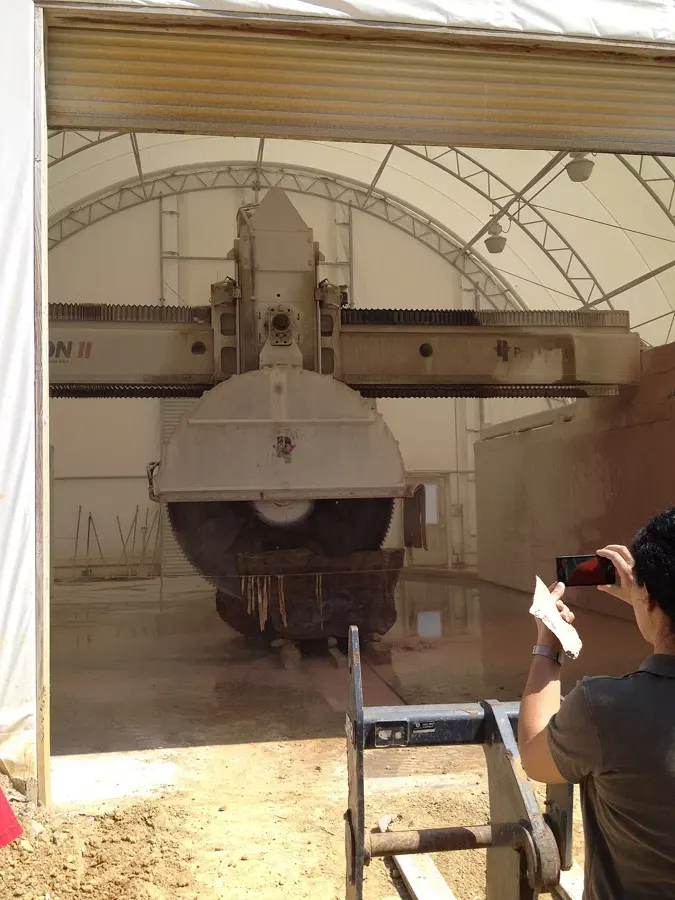
Illustrative stock photograph: Hokie Stone Saw.JPG by Eric T Gunther · CC BY 3.0. Resized and converted to WebP. The photograph does not represent Marwaa’s work or a featured service location.
A diamond wire and bridge saw perform different jobs in stone production. Wire saws use a moving cable fitted with cutting elements and can work large blocks or suitable shapes. A bridge saw carries a blade over the work and is often used for straight cuts. The right route depends on the stone, geometry, equipment and required finish, not on which machine name sounds more advanced.
Where do a diamond wire and bridge saw fit?
A monument begins as material larger than the finished part. The workshop must reduce that material, establish the shape and prepare the visible surfaces. Different tools may handle different stages. One machine does not have to make every cut from quarry block to finished tablet.
Diamond wire uses a moving cable with diamond-bearing cutting elements. A published study of wire-saw cutting describes the tool and the role of stone properties. A bridge saw generally moves a circular blade along a controlled path above the work. The bridge supports and guides the cutting assembly.
These broad descriptions explain the methods. They do not establish the exact equipment in any factory, or prescribe settings for a particular stone. A buyer should ask about the route proposed for the order rather than assuming a machine from a product photograph.
Why production can use several cutting stages
A large block may first become slabs or manageable blanks. Later cuts establish the component's length, width or profile. Carving, edge work and polishing can follow. Each stage leaves material and surfaces for the next stage to address.
For example, an early saw cut may not be the final visible face. The maker may leave enough material for later finishing. A slightly rough intermediate surface is therefore not a useful way to judge the final polish. The relevant question is whether the completed part meets the agreed shape and finish.
The sequence also affects how the shop handles the material. A cut can free a section that needs support. A thin feature may need a different sequence from a simple rectangular blank. Those are production decisions for the responsible workshop, not instructions a buyer should improvise from an online process description.
What differences matter to a trade buyer?
Start with geometry. Straight tablet cuts, curved shapes and detailed openings do not create the same demands. Machine reach, tool access and available stone size can affect the proposed method. A design that looks simple in a front view may need more work when its full depth is considered.
Next consider the required surface. A sawn back, polished front and carved edge each need different treatment. Specify the finished condition rather than assuming a cutting machine provides it automatically. Even an accurate cut can need later work to create the desired appearance.
Finally, consider repeat production. A shop should be able to explain how it transfers the accepted design into parts that fit the order. The explanation need not reveal every proprietary setting. It should make clear how shape, finish and part identity will be maintained.
Why machine labels are weak quality claims
A digital controller or newer machine does not remove the need for skilled judgement. Material selection, setup, tool condition, support and finishing still matter. Likewise, an established cutting method is not poor merely because another factory advertises a different machine.
Avoid selecting a supplier only from a list of equipment names. Ask for relevant completed work and a clear response to the design's difficult features. If a producer recommends a change, ask which part of the current shape creates the issue. That gives the buyer something concrete to review.
The factory overview can introduce a supplier's general production scope. Order-specific capability still needs to be discussed against the actual drawing. A broad claim to make monuments is not a promise to produce every carved opening or unusual profile.
Compare the proposed result before the route
A good discussion begins with the stone, final geometry and surface requirements. It then asks whether the proposed production route can deliver them. Reversing that order can trap a buyer into specifying a machine that has no clear benefit for the job.
Where a technical requirement really does depend on a process, state the reason and seek appropriate advice. Otherwise, keep the purchase focused on the accepted product and its evidence. The workshop can then choose a suitable cutting sequence without confusing a machine preference with a finished quality requirement.
Compare the questions before choosing
| Area | What it explains | Practical limit |
|---|---|---|
| Block reduction | How large material becomes workable pieces | Not necessarily the final surface |
| Shape cutting | How the component geometry is produced | Ask about difficult features |
| Finishing | How visible faces reach their specified state | Do not infer polish from the saw name |
Key Takeaways
- How large material becomes workable pieces. Not necessarily the final surface.
- How the component geometry is produced. Ask about difficult features.
- How visible faces reach their specified state. Do not infer polish from the saw name.
Frequently Asked Questions
Does a wire saw replace a bridge saw?
Not in every workshop or job. The methods can serve different stages, and the suitable route depends on the material and geometry.
Does CNC control guarantee a better monument?
No. Control systems support a process, but material choice, setup, handling and finishing still affect the result.
Should a dealer specify the cutting machine?
Usually start with the required product. Specify a process only where it has a clear project reason and the responsible people have reviewed it.
Discuss the trade requirement
For a bulk memorial project, send the intended material, design and use to Marwaa. Ask for a clear response to the questions that affect your order before approving production.
Read More
- How Are Headstones Made? From Quarry Block to Cemetery
- How Thick Should a Headstone Be? 6" vs 8" Dies Explained
- Granite Relief Carving: Review a Production Sample
A Note on This Guide
This is a buying-level process explanation. It gives no cutting settings, machine safety procedure or claim that a named machine is used for every Marwaa product. This is general educational guidance for dealers and other buyers. The people responsible for the project should resolve material, cemetery and technical requirements for the actual order.
Published by Marwaa Team for Marwaa Memorials (marwaamemorials.com) · Published 2026-11-23 · Updated 2026-11-23 Marwaa Memorials is a factory-direct exporter of bulk granite monuments and headstones, shipping to monument dealers, funeral homes, and importers across North America.
Related guides
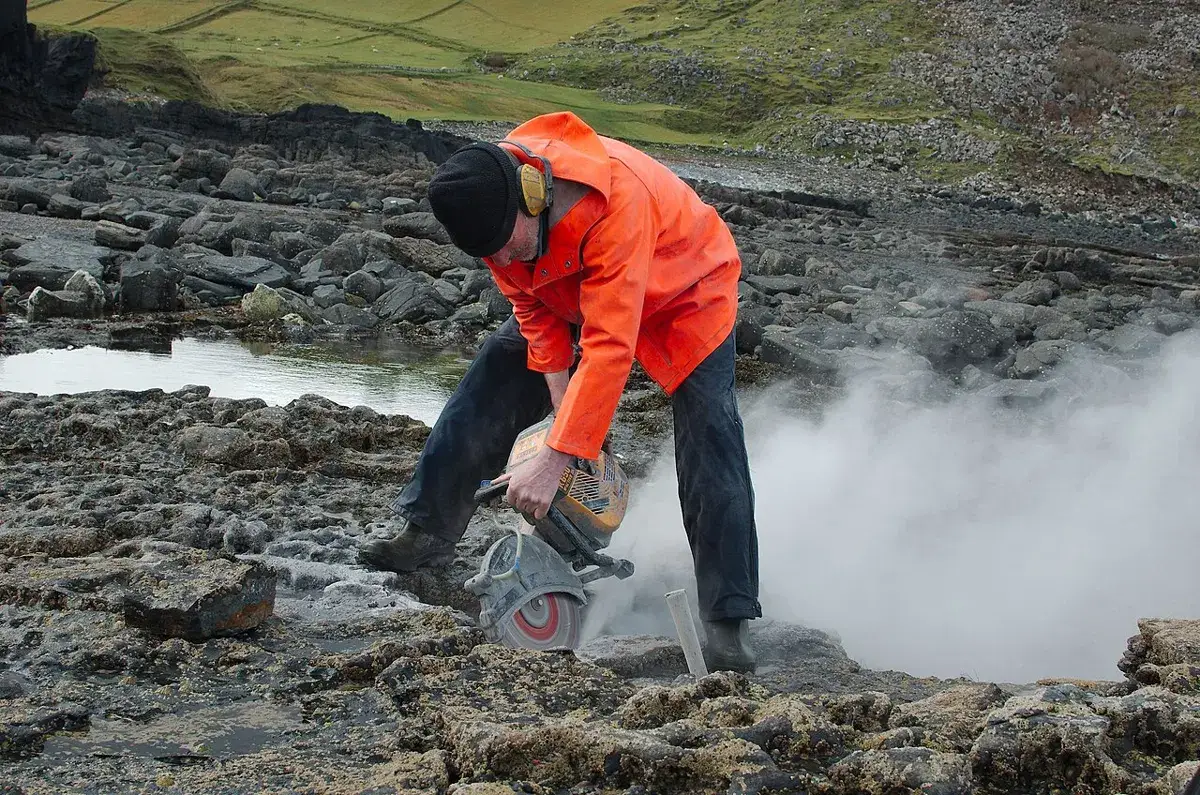
Granite Saw Kerf: Why Cutting Layout Affects Yield
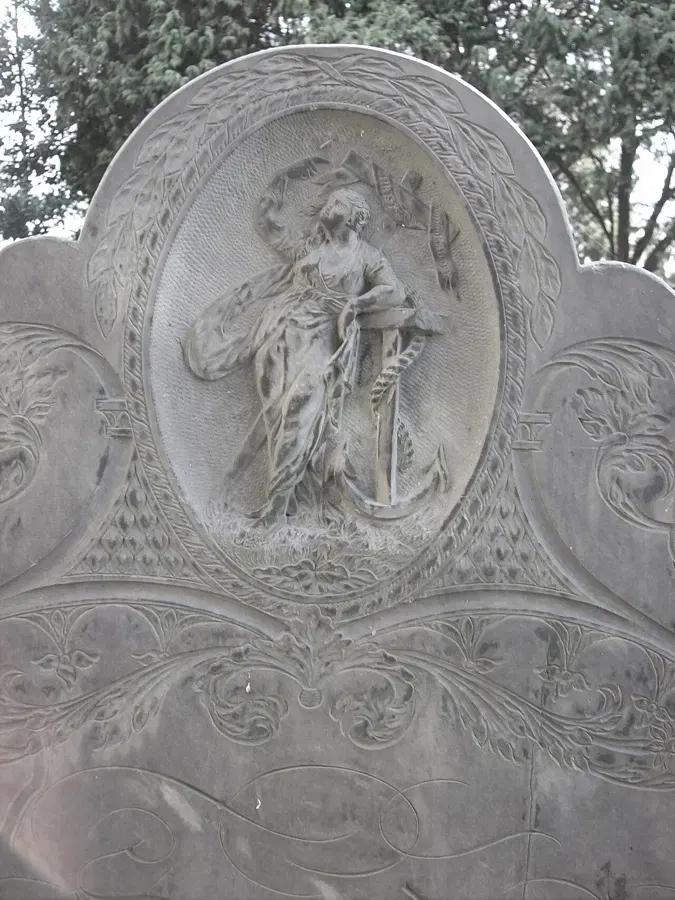
Diamond-Impact and Laser Portraits on Granite
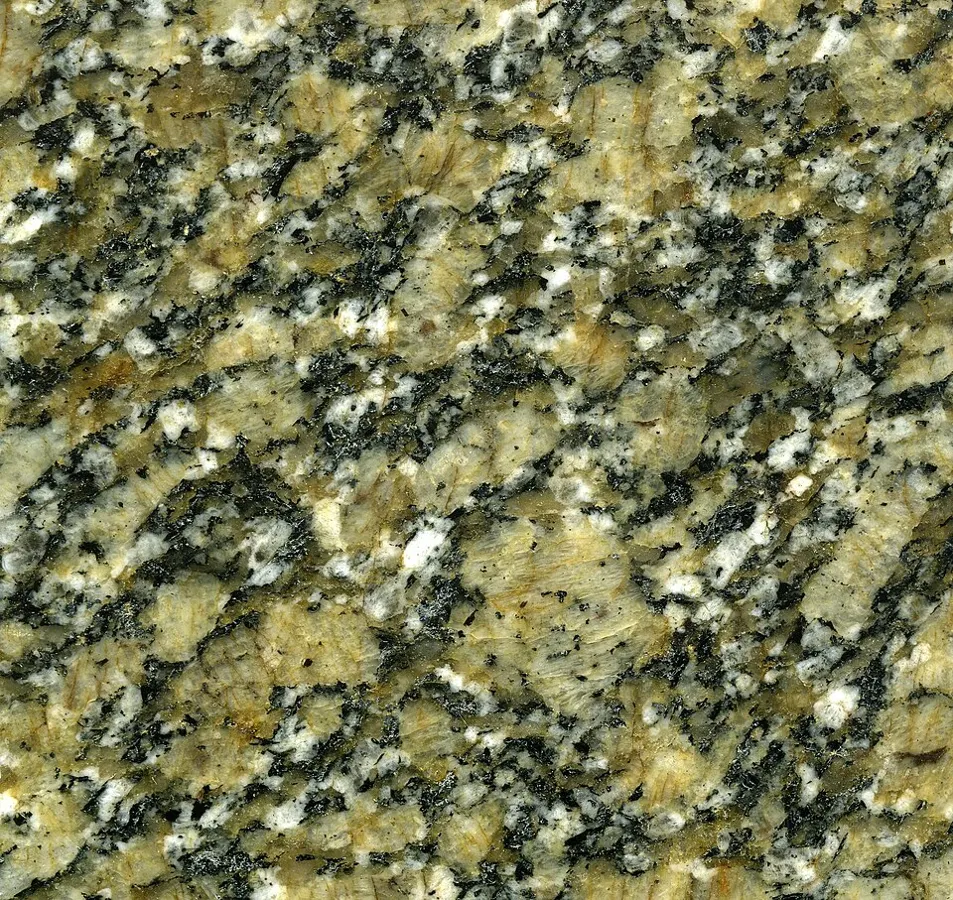
Best Granite for Headstones in Cold Climates (Canada and the Northern US)
Memorial Stones for Horses

Garden Memorial Stones: Remembering a Loved One at Home
