Granite Relief Carving: Review a Production Sample
Review a granite relief carving sample against the approved artwork, viewing priorities and written limits before authorizing repeat production.
By Marwaa Team · Editorial standards · Published · Updated
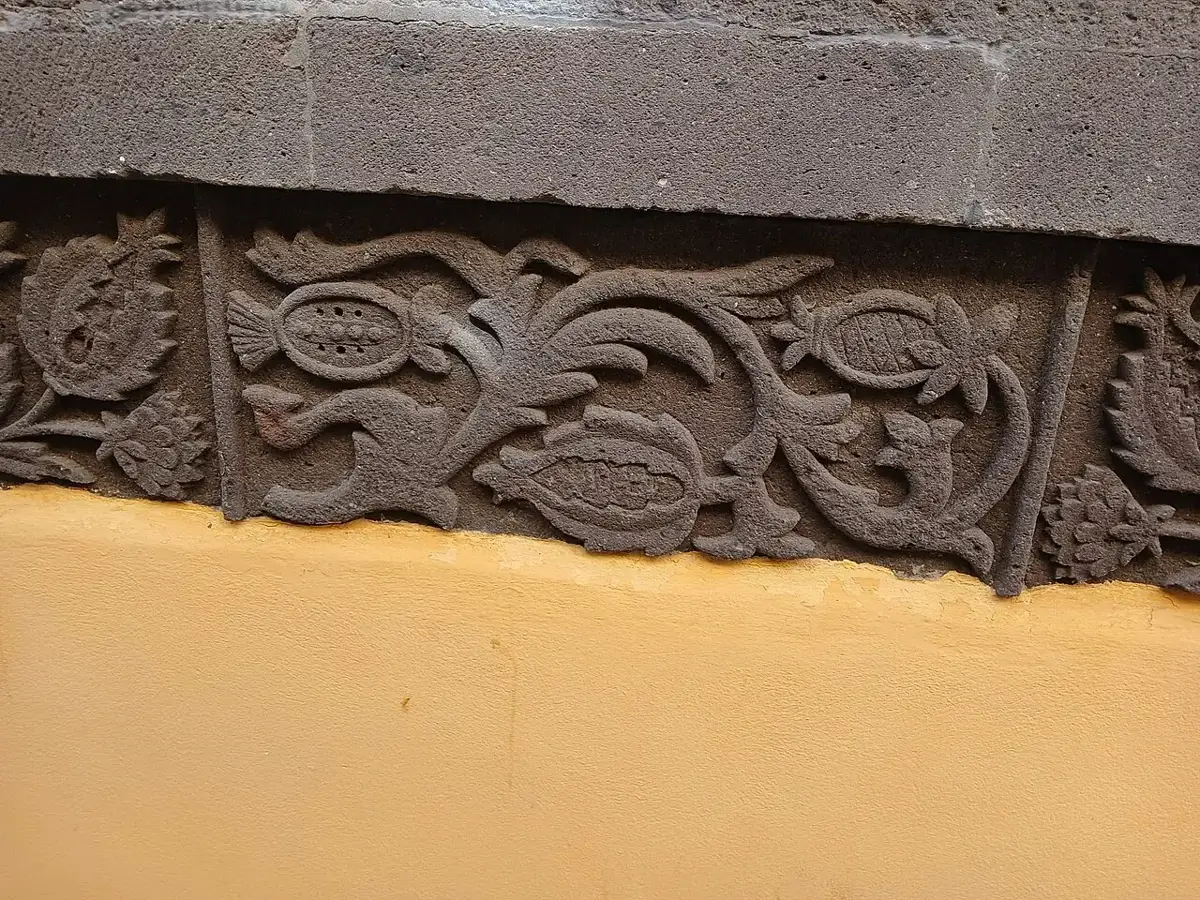
Illustrative stock photograph: Detalle en cantería de la Casa de Colón (Las Palmas de Gran Canaria, Las Palmas, España).jpg by Josesuarezsant · CC BY-SA 4.0. Resized and converted to WebP. The photograph does not represent Marwaa’s work or a featured service location.
A granite relief carving sample should show the particular details the buyer needs to accept before repeat work begins. Identify the artwork version, sample material and features under review. Review form, readable detail and placement separately, and record what the sample does not represent. A successful sample is a defined reference, not an unlimited approval.
What should a granite relief carving sample represent?
The sample should represent the production question that is difficult to settle on a flat drawing. That might be a face, folded fabric, a flower or the transition between a raised form and the background. State the intended question before commissioning the sample.
A small detail sample and a complete first piece have different limits. A detail may show the treatment of a petal without proving the shape and size of a complete figure. A full-size sample may show shape and size while still using a different material from the final order. Those distinctions belong in the record.
Do not describe the sample as approved for every product merely because the same motif appears on several designs. Scaling and placement can change what the buyer sees. Ask the fabricator which features remain representative at the intended production size.
A waterjet can create an inlay outline, but fit, support and joints still need review as part of the complete assembly. See Waterjet Stone Inlays for Memorials: Design Tradeoffs.
How should the artwork be linked?
Give the sample a reference to the accepted drawing or model version. Keep the original artwork and any workshop adaptation distinguishable. If a sculptor changes a feature to suit the stone, explain the change and ask the named reviewer to accept the revised interpretation.
Check image rights and permission separately from the carving assessment. A buyer accepting the quality of a carved emblem has not necessarily shown permission to reproduce the source artwork. The order should name the responsible party for supplying authorized material.
| Review area | Evidence to request | Decision to record |
|---|---|---|
| Proportion | Relevant full view | Relation to accepted model |
| Fine detail | Identified close view | Features retained or simplified |
| Background | Sample and drawing context | Accepted contrast or separation |
| Placement | Complete component view | Link to inscription |
| Repeatability | Fabricator's proposed reference | Scope of repeat approval |
This is a review matrix, not a carving-depth spec.
CNC roughing and later hand work can serve different roles within the same carving, with the accepted form guiding both. See CNC Roughing and Hand Finishing for Carved Memorials.
How do you make subjective feedback useful?
Name the feature before describing the concern. “The left leaf tip differs from artwork revision C” directs a useful discussion. “It needs more life” leaves the fabricator guessing about shape, texture and proportion.
Mark a reference copy rather than drawing over the only original. Ask the fabricator to explain whether a requested change affects another feature. Making a recess deeper, for example, may change the surrounding form; the buyer should not prescribe a cut without professional review.
Use a review of the accepted artwork, sample and proposed revision. Keep a numbered comment list so the next review can close each point. Avoid asking for a series of changes in separate informal messages that never become one coherent instruction.
Which viewing conditions matter?
A relief should be reviewed under conditions that answer its intended visual questions. A dramatic side light can emphasize depth while a flat view reveals shape and size. Ask for suitable complementary views instead of treating one flattering image as complete evidence.
Screens cannot reproduce the experience of viewing the finished material. If the artwork is central to the order, discuss whether a physical sample review or another agreed method is right. Record the limits of remote acceptance plainly.
The engraving-method comparison distinguishes broad decoration approaches. The relief sample review should remain focused on the actual carved design rather than promising that every method gives the same effect.
For the specific form and visual trade-offs, see Relief or Full-Round Memorial Sculpture?.
How should a production release refer to the sample?
Name the accepted sample, artwork revision and applicable item marks. State which comments remain open and which changes have been accepted. A sample with unresolved corrections should not be labelled the final control without explanation.
For a bulk run, ask how repeat pieces will be checked against the reference. Agreement on a representative sample does not remove the need to inspect later work. The check plan should name the significant details and the expected evidence.
What belongs in the closing record?
Keep the comment log, accepted sample views and final decision with the order. If the reference changes later, keep the earlier record so previous approvals remain understandable. The proof version method provides a useful administrative structure.
The factory overview gives production context. It does not replace a specific sample agreement. A careful release states the carving the buyer actually saw, the interpretation the fabricator will repeat and the questions that still require a decision.
Key Takeaways
- A granite relief sample should answer a defined production question.
- Artwork version, sample identity and approved attributes belong in one record.
- Repeat production still needs checks against the accepted reference.
Frequently Asked Questions
Does a small carving sample approve the whole monument?
Only if the agreement explicitly gives it that scope. Record what the sample represents and what it cannot show.
Should I request a particular carving depth?
Explain the intended appearance and have the qualified professional confirm a suitable detail rather than prescribing a cut from a photo.
How should revisions be communicated?
Use one numbered comment log tied to the sample and artwork version.
For a dealer or importer order, request a bulk monument quotation with the relevant drawing and the acceptance points that still need agreement.
Read More
A Note on This Guide
This is an artwork acceptance workflow. Carving sizes, material suitability and safe production methods remain the responsibility of the relevant professionals.
For background on selecting suitable stone evidence, see the Natural Stone Institute reference directory.
Published by Marwaa Team for Marwaa Memorials (marwaamemorials.com) · Published 2026-11-21 · Updated 2026-11-22 Marwaa Memorials is a factory-direct exporter of bulk granite monuments and headstones, shipping to monument dealers, funeral homes, and importers across North America.
Related guides

Headstone Symbols and Meanings: A Guide to Cemetery Carvings

First-Article Monument Approval Before a Bulk Run
Relief or Full-Round Memorial Sculpture?
Granite Samples for Headstones: Record What You Approve
Bronze Bas-Relief vs Photo-Rendered Memorial Portraits