Multiple Names on a Memorial: Set the Reading Order
Plan multiple names on a memorial with a clear reading order, date grouping, shared wording and an explicit future inscription area.
By Marwaa Team · Published · Updated

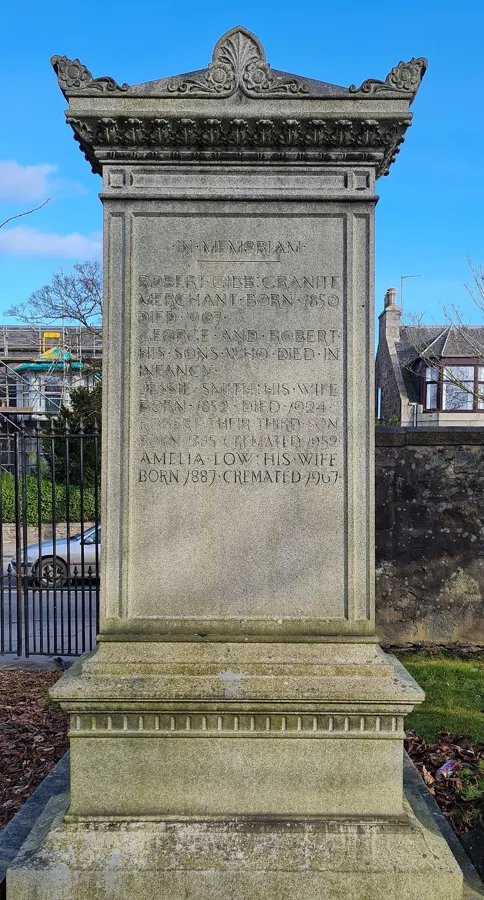
Illustrative stock photograph: Gravestone of John Menzies and Eupheme Wardlaw and son James, Inverkeithing.jpg by Harrybean07 · CC0. Hosted by Wikimedia Commons. The photograph does not represent Marwaa’s work or a featured service location.
A multiple-names full layout needs a clear reading order and an clear link between each name and its dates. Agree how shared surnames, relationships and commemorative names are presented before choosing decoration. Read the text without relying on family knowledge. A visitor should not have to guess which date belongs to which person or whether every named person is buried in that plot.
This guide concerns the relationship between inscription blocks. It does not choose a family hierarchy or decide who may be commemorated. Those decisions belong to the people with the appropriate authority, while the designer makes their agreed meaning clear.
What should a visitor understand first?
Decide whether the memorial begins with a shared family name or with individual records. Then identify the next reading step. A large surname can organise the design, but it should not leave the individual given names and dates disconnected below it.
Write a plain-language description of the intended reading order before looking at ornate layouts. For example, the family may want the viewer to read one complete person’s record before moving to the next. Another design may use paired name rows. The important point is the agreed relationship, not a universal formula.
How should dates attach to each person?
Keep each date pair visibly associated with the correct name. Check the design when one person has a longer name or a different date format. Apparent symmetry can hide an awkward association if text blocks overlap or share an unclear centre line.
Ask someone outside the immediate discussion to read the proof. If they assign a date to the wrong person, record that observation and ask the designer to clarify the grouping. Their confusion is useful evidence about the layout, not a judgment about the family’s decision.
What do shared words refer to?
Identify whether a relationship line or epitaph applies to one person, a pair or the whole family. Position and spacing should support that meaning. A single phrase between two records can appear shared even when the family intended it for only one.
Be clear about people commemorated without burial at that location. Ask the cemetery and the authorized decision maker which wording is suitable. A design should not make an unsupported factual implication simply because a name sits inside the same visual frame as the burial records.
How does the layout accommodate later additions?
Discuss future needs without guessing unknown dates or names. Ask the designer to show reserved zones as notes, distinct from production text. The initial arrangement should still read coherently before any later addition.
Do not assume a balanced empty column will remain suitable for every future request. The actual later inscription needs its own assessment. Keep the layout intention and source files in the family record so the next coordinator understands the earlier choices.
For the specific form and visual trade-offs, see Obelisk Inscriptions: Give Each Face a Purpose.
For the specific form and visual trade-offs, see Split-Stone Memorials: One Story Across Two Parts.
Review worksheet
| Review item | Decision to record |
|---|---|
| Opening element | Shared surname or individual first record |
| Reading sequence | Order in which complete records should be read |
| Date grouping | Each date visibly linked to its person |
| Shared wording | Which names each phrase refers to |
| Commemorative status | Meaning confirmed with the relevant parties |
| Future area | Reserved space, clearly not current production text |
A worked review example
A memorial includes two siblings and an older family surname above them. One sibling has a long middle name, so the first proof places its date nearer the neighbouring record. A reviewer reads the dates incorrectly.
The designer adjusts grouping instead of merely matching the outer width of both blocks. The family checks the new reading order aloud and visually. Its final approval states the complete name-date relationships, including the shared epitaph beneath both records.
Before the file moves to production
Check the proof both as individual blocks and as one page. Review punctuation, line breaks and the relationship labels. An accurate list of names can still communicate the wrong relationship through its arrangement.
Keep the agreed wording separate from a designer’s proposal so changes remain visible. Where later lettering is planned, save the intended grouping with the handover folder. A future provider should not need to reconstruct the family’s original reasoning from the blank spaces alone.
A clear reading order should remain understandable when one date is shorter or one surname appears only once above several records.
For broader visual planning, the Marwaa Design Studio can help explain the proposed arrangement. Its preview is a discussion aid, not a substitute for the supplier’s final proof.
Key Takeaways
- Multiple-name layouts must keep each person’s dates visibly connected to their name.
- Shared relationship lines and epitaphs need an explicit intended meaning.
- A future inscription plan is not approval of unknown future text.
Frequently Asked Questions
Must family names appear in birth order?
There is no single design order for every family. Agree the intended sequence with the appropriate decision maker and cemetery where relevant.
Why test the proof with another reader?
A new reader may reveal unclear links between names, dates and shared wording.
Can reserved space count as approval of future wording?
No. Future content and work need their own confirmed instructions and review.
Next step
Use Headstone Layout Tips as the next review step. Bring the unresolved points to your chosen memorial professional before authorizing production.
Read More
Sources and scope
A Note on This Guide
This is a communication and layout guide. It does not determine burial rights, authority to name a person or a cemetery’s accepted wording. Those questions should be resolved before the layout becomes a production instruction.
Published by Marwaa Team for Marwaa Memorials (marwaamemorials.com) · Published 2026-11-21 · Updated 2026-11-21 Marwaa Memorials is a factory-direct exporter of bulk granite monuments and headstones, shipping to monument dealers, funeral homes, and importers across North America.
Related guides
Listing Children's Names on a Headstone

Should Middle Names Be on a Headstone?
How to Include a Maiden Name on a Headstone

Readings and Poems for a Headstone Unveiling
How to Fit a Long Name on a Headstone