Split-Stone Memorials: One Story Across Two Parts
Plan a split-stone memorial with clear individual records, an understood shared idea and a deliberate visual role for the space between parts.
By Marwaa Team · Published
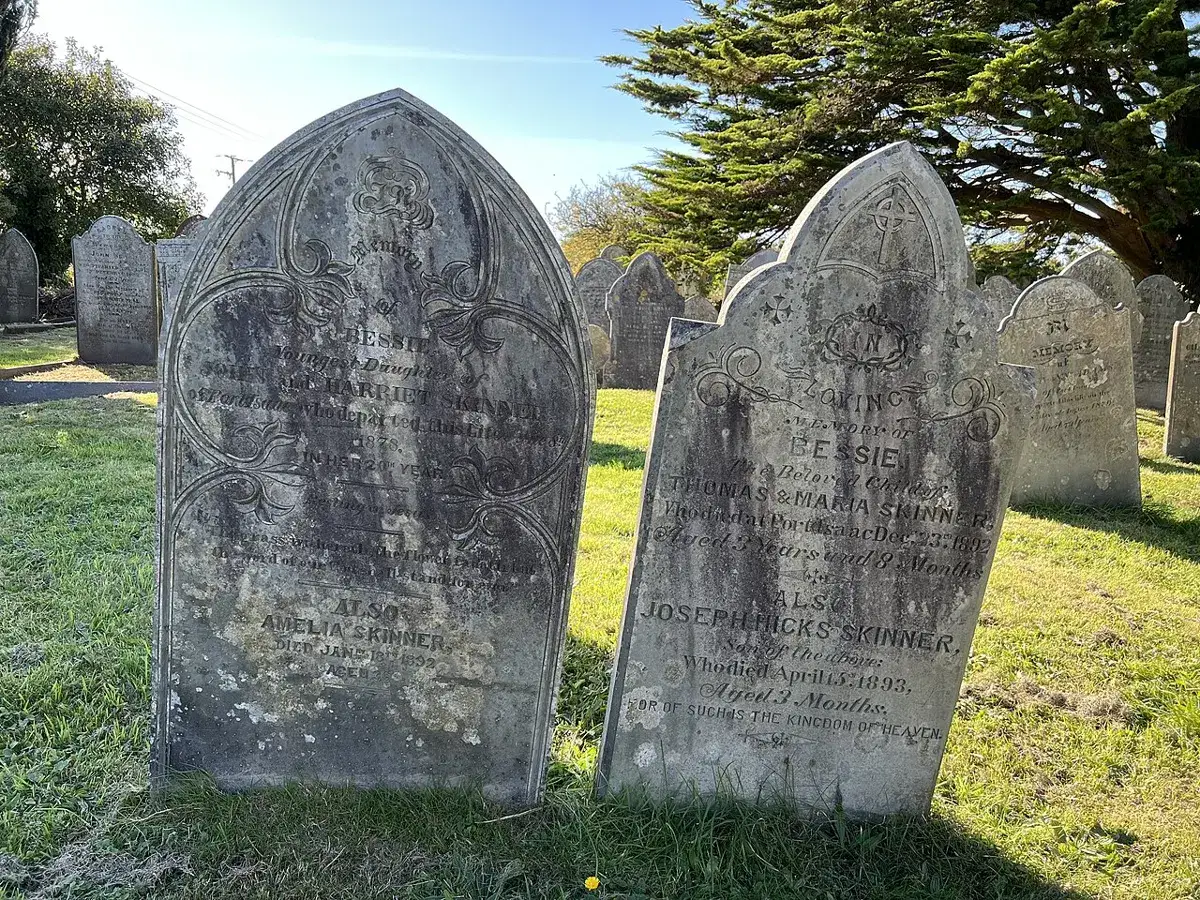
Illustrative stock photograph: St Endellion - Headstone Of Bessie Skinner 16 Metres To West Of Tower Of Church Of St Endelienta - 20240917160520.jpg by LavaLampBamboo · CC BY-SA 4.0. Resized and converted to WebP. The photograph does not represent Marwaa’s work or a featured service location.
A split-stone memorial design should explain how its separate parts belong to one composition. Decide whether each part carries a complete record, whether a shared element connects them and what the gap contributes visually. Do not assume the two parts must look identical or that a connection in a drawing proves a construction method. The actual object and setting need their own professional assessment.
A gap can separate two records, frame a symbol or form part of an abstract image. It can also create an unintended division. We suggest starting with the relationship the family wants to express rather than selecting two attractive pieces independently.
What makes the two parts one memorial?
Name the shared idea. It may be a dedication, a paired shape, a family name or an image that relates the two parts. The family should be able to explain that connection without relying on an assumption that viewers will read every gap in the same way.
The composition can be intentionally unequal. One part may carry a shorter inscription or another visual role. Balance does not require the same number of words on both sides. Ask the designer to show how the proposed relationship remains clear.
Should each side read on its own?
If each part carries a person’s record, keep that name and its dates clearly related. A visitor should not have to guess whether a nearby date belongs across the gap. A shared phrase can connect the parts while still leaving each identity readable.
If text spans the two parts, ask how the interruption affects the reading. A word split by a physical gap may create a deliberate effect, but it should not become an accident caused by separate page layouts. Use the actual inscription to judge that decision.
How much should the background participate?
An open gap may reveal sky, planting or another object behind it. The effect can change with the setting and the view. A studio photograph with a plain background should not be treated as a complete picture of the cemetery experience.
Ask whether the composition depends on one narrowly controlled view. If it does, discuss whether that view is realistic for visitors. The family can prefer an abstract relationship, but it should understand what the chosen site may add to it.
What should be kept apart from the aesthetic choice?
Separate the visual concept from stone selection, joining, support and safe installation. The responsible professionals must assess those matters for the actual object. This guide does not specify how the pieces are made or fixed.
The site operator needs the complete proposal, not two independent examples. Ask how the family’s approved design and the professionally reviewed arrangement will stay connected. A change to one part may affect the composition even if the text on the other side does not change.
Compare the design choices
| Choice | What to consider |
|---|---|
| Two complete records | Each identity remains clear on its own part |
| Shared element | Meaningful connection stated, not assumed |
| Intentional difference | Different text lengths or roles can still form a balanced whole |
| Gap | Its visual role and background considered |
| Actual construction | Professional assessment separate from the artistic relationship |
A practical example
A family chooses two related stone forms for a shared memorial. One person’s full name is much longer. The first drawing forces equal line counts and makes both sides harder to read.
The designer instead treats each name-date record as a complete group and uses a shared short dedication to connect them. The family accepts the visual relationship. The professionals then assess the actual proposed object and site without the family turning the drawing’s gap into an engineering instruction.
Making the choice
Ask whether a visitor can understand both the separate identities and the shared idea. If one is unclear, revise the composition before adding more decoration. The gap should do something deliberate, not merely divide available space.
The catalogue helps describe the general product context. It does not establish that a particular split form is available or suitable. Identify the actual proposal when discussing supply and site acceptance.
Key Takeaways
- A split design should make its shared meaning and separate identities clear.
- Equal visual roles do not require equal word counts.
- Aesthetic relationships do not specify construction methods.
Frequently Asked Questions
Must both parts have the same dimensions or text length?
Not as an aesthetic rule. The family and designer can discuss intentional differences, while professionals assess the actual object.
Can a shared word run across a gap?
It can be considered deliberately, but review the actual reading rather than allowing an accidental interruption.
Does the drawing tell the workshop how to join the pieces?
No. Construction and installation need the responsible professionals’ assessment.
Next step
Read Companion and Double Headstones: Sizes, Costs, Inscriptions and Buying Guide [2026] to place this choice in the wider design. Then discuss the actual object, site and proposed work with the relevant memorial professional before making a commitment.
Read More
- Companion and Double Headstones: Sizes, Costs, Inscriptions and Buying Guide [2026]
- Multiple Names on a Memorial: Set the Reading Order
- Headstone Layout Tips: Balance, Spacing and Hierarchy
Further reference
National Park Service: documenting complete objects and context provides background relevant to the form or materials discussed. It is not a product approval, a Marwaa availability statement or permission for work at a particular site.
A Note on This Guide
This is a composition guide, not a fabrication or installation specification. It does not prescribe joints, supports or dimensions. The actual object and cemetery acceptance require the appropriate professional and operator decisions.
Published by Marwaa Team for Marwaa Memorials (marwaamemorials.com) · Published 2026-11-23 · Updated 2026-11-23 Marwaa Memorials is a factory-direct exporter of bulk granite monuments and headstones, shipping to monument dealers, funeral homes, and importers across North America.
Related guides

Split Monument Shipments: Keep Backorders Traceable
How to Fit a Long Name on a Headstone

Headstone Wording for Mom and Dad on One Stone

Open Book Headstones: Meaning and Design Ideas
What to Write on a Pet Memorial Stone