
Monument Inland Freight: Rail or All-Truck Route?
Compare monument rail and all-truck inland routes by terminals, final drayage, receiving constraints and evidence rather than generic speed claims.
By Marwaa Team · Editorial standards · Published
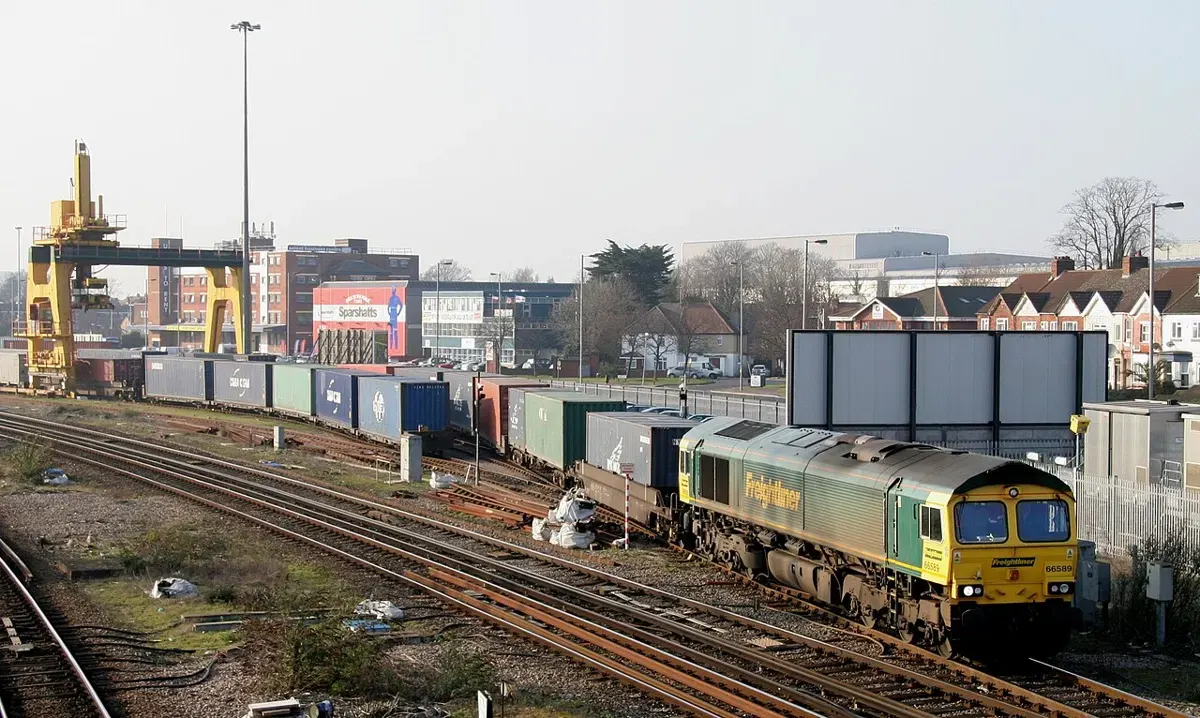
Illustrative stock photograph: 66 589 Shunts 4M99 into Millbrook container Terminal, Southampton.jpg by kitmasterbloke · CC BY 2.0. Resized and converted to WebP. The photograph does not represent Marwaa’s work or a featured service location.
Monument rail and all-truck routes should be compared from the arrival point to the same final receiver. Intermodal rail typically connects with road services at each end, so a rail quote is not necessarily a complete yard-delivered price. Ask the provider to assess the actual cargo, route and receiving requirements rather than assuming one mode always costs less or arrives sooner.
What does an intermodal rail proposal include?
An intermodal route uses more than one transport mode, commonly moving a container through rail and road legs. Ask whether the goods stay inside the same closed container or whether the proposal includes a cargo transfer. The two arrangements create different service and identification questions.
The Association of American Railroads' intermodal explanation provides the transport context. It does not establish a suitable route or loading arrangement for an individual monument shipment. The contracted providers must assess those details.
What can an all-truck proposal change?
An all-truck inland route may use a different terminal, vehicle arrangement and handoff sequence from the rail proposal. It can still involve local movements or cargo handling. Ask the provider to describe the journey rather than inferring a direct drive from the word truck.
Keep the departure and destination boundaries identical when comparing. A truck quote from a port and a rail quote from an inland ramp do not describe the same starting point. That difference can matter more than a headline transport price.
Which route questions deserve a table?
| Question | Rail-linked proposal | All-truck proposal |
|---|---|---|
| Starting boundary | Which terminal and release stage? | Which collection point and release stage? |
| Final road leg | Who arranges drayage from the ramp? | Which final vehicle and receiver apply? |
| Container continuity | Does the same unit stay closed? | Does the service include any cargo transfer? |
| Schedule evidence | What is confirmed and what is estimated? | What is confirmed and what is estimated? |
| Service exceptions | How are missed connections handled? | How are changed collection or delivery slots handled? |
Use the table to request information. It should not become an unsupported ranking of modes before current offers exist.
How do receiving constraints affect the choice?
Ask the final receiver what transport units and appointments it can accept. Then give that information to both providers. A lower-cost inland service can be unsuitable if it ends at a facility that cannot support the next agreed step.
Do not prescribe unloading equipment from a catalogue stone weight. The receiving professional needs actual package information and its own suitability review. Keep access and handling decisions separate from an office's commercial mode comparison.
What should the schedule comparison show?
Compare the complete planned sequence and its dependencies. A quoted rail segment may omit the time needed for local availability and drayage. A truck estimate may assume collection conditions that remain unresolved. Ask each provider to identify the assumptions, without demanding a universal transit-day promise.
If a customer has a desired installation date, state that requirement clearly but keep it separate from the current freight estimate. The dealer should not treat a route proposal as a confirmed cemetery booking.
How do you compare costs without inventing rates?
List only the accepted charges or service inclusions provided for the actual route. Include the relevant connections and final handoff. Leave unresolved costs open until the quoting party answers. A mode comparison is useful even before it produces a final numeric winner.
Ask which changes would require a revised offer. If a route switches terminal or final receiver, the earlier quote may no longer describe the same work. Keep the resulting commercial approval with the route version.
What supports a practical decision?
Maersk's transloading guide helps distinguish a cargo transfer from container continuity. Its warehousing service page explains possible intermediate services. Use these alongside the actual provider's route proposal, not as promised outcomes.
Discuss the supplier's proposed scope through Marwaa's delivery page. The chosen route should explain who connects each leg and what the receiver accepts. It should not depend on a broad claim that rail is always slow or trucking is always direct.
Key Takeaways
- Compare rail-linked and truck routes to the same final receiving boundary.
- Intermodal transport does not automatically mean the stone leaves its container.
- Current service scope and receiving ability matter more than generic mode claims.
Frequently Asked Questions
Does rail delivery reach the monument yard directly?
Ask whether a separate final road leg is required and included.
Does intermodal mean the stone is handled at every mode change?
Not necessarily. Confirm whether the closed transport unit changes mode or the goods transfer between units.
Which mode is always faster?
There is no reliable universal answer for every shipment. Compare current complete route proposals.
For a bulk monument programme, request a trade quotation with the product requirements and the route questions raised in this guide.
Read More
- Granite Monument Shipping: FCL vs LCL Containers, Ocean Freight Costs & Port Timelines [2026]
- Name the Delivery Point in a Monument Freight Quote
- Monument Warehouse Deliveries: Book a Useful Appointment
A Note on This Guide
This is a route-scope comparison, not a transport engineering assessment or a service-time promise. The actual carrier and receiving professionals must confirm suitability and current conditions.
Published by Marwaa Team for Marwaa Memorials (marwaamemorials.com) · Published 2026-11-23 · Updated 2026-11-23 Marwaa Memorials is a factory-direct exporter of bulk granite monuments and headstones, shipping to monument dealers, funeral homes, and importers across North America.
Related guides

Headstone Ideas for a Truck Driver

Headstone Ideas for a Tow Truck Driver
Monument Truck Weight: Payload Is Not the Only Limit

Choose a Monument Import Port by the Whole Route

Returning a Monument Across a Border: Plan the Route
