
How Is a Headstone Attached to Its Base?
How the upright stone is fixed to its base — setting compound, dowel pins and adhesives — why it matters for safety, and what to check if a stone moves.

An upright headstone isn't one piece: the die sits on a base, which sits on a foundation. How they're joined matters for safety.
Common methods
| Method | How it works |
|---|---|
| Monument setting compound | A putty-like compound bonds die to base and seals the joint |
| Dowel pins | Stainless steel pins in drilled holes stop sideways movement |
| Approved adhesives | Some installers use stone adhesives as well as or instead of compound |
Many cemeteries specify the method, and some require pins.
Base to foundation
The base sits on a concrete foundation, usually with setting compound or a mortar bed. See foundation requirements.
Signs of a problem
- The die rocks when pushed gently
- A visible gap at the joint
- The stone has shifted on the base
If you see these, tell the cemetery and see fixing a leaning headstone.
Key Takeaways
- Setting compound and pins are the usual methods.
- Cemeteries may specify how stones are set.
- A rocking die needs attention.
Next Step
Read the installation process.
Frequently Asked Questions
What holds a headstone on its base?
Usually monument setting compound, often with stainless dowel pins.
Are headstones glued to the base?
Some installers use stone adhesives, but setting compound and pins are more common.
What if my headstone moves on its base?
Tell the cemetery or a monument company — it needs resetting for safety.
Ready to get pricing for your granite monument?
Request pricing, factory specifications, and DAP delivery timelines from our team.
Related guides

Headstone Bases Explained
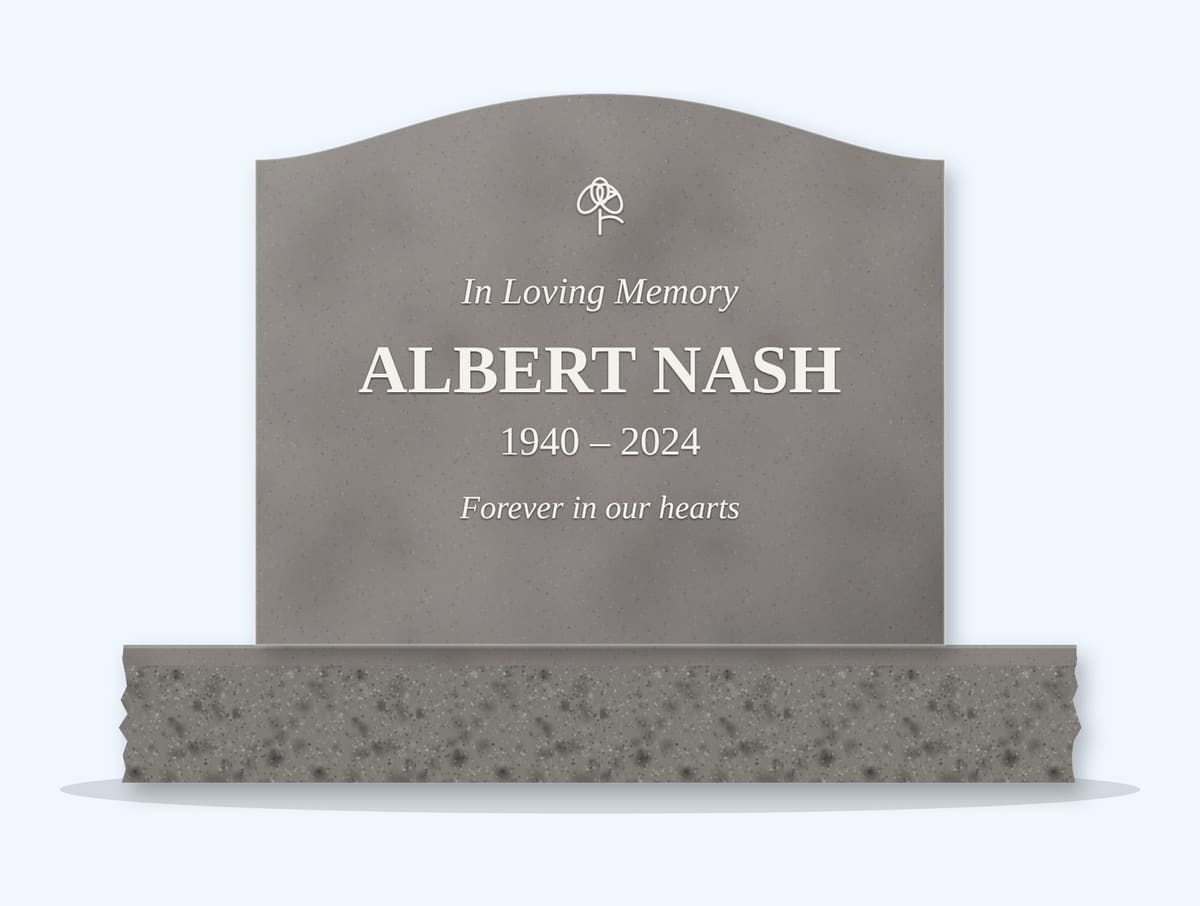
Parts of a Headstone Explained

Upright Headstones
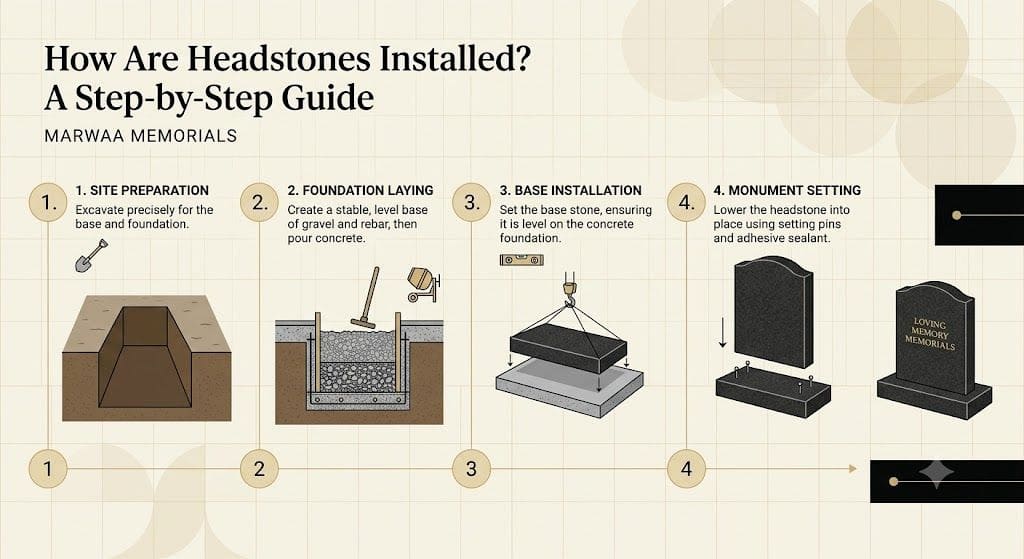
How Are Headstones Installed? A Step-by-Step Guide
Can a Cemetery Remove or Lay Down a Headstone?
