How Are Headstones Installed? A Step-by-Step Guide
What actually happens when a headstone is installed — cemetery approval, foundation work, curing time, and who does the setting.
Step 1: Cemetery approval
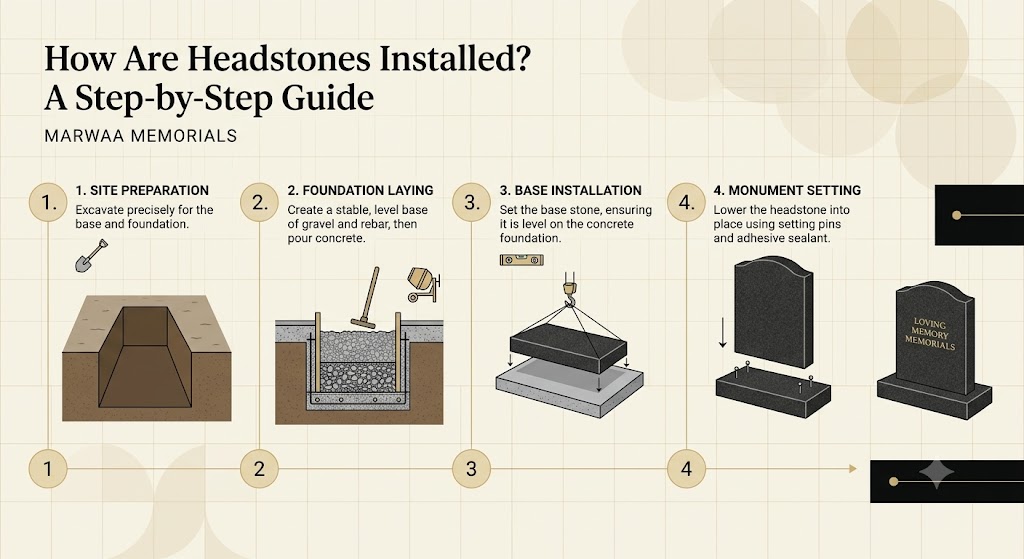
Before anything gets dug, the cemetery needs to sign off on the design and confirm it meets their specifications for size, material, and style. Most cemeteries require a formal authorization or permit before installation, and some also require proof that the headstone was measured against the specific plot.
This is also the point where you confirm who's doing the physical installation — more on that below — since not every cemetery allows an outside installer.
Step 2: Foundation preparation
A headstone needs a stable base, and how elaborate that base is depends entirely on the style:
- Upright monuments need the most substantial foundation — typically a poured concrete footing sized to the base of the stone, since these are the heaviest and most top-weighted style.
- Flat and flush markers usually need a simpler, shallower foundation, sometimes just a compacted gravel or thin concrete pad, since there's no vertical stone to stabilize.
- Slant markers fall in between, generally needing a small footing.
- Bevel markers are similar to flat markers but may need a slightly deeper pad depending on the cemetery's own standards.
Foundation dimensions are typically sized to the headstone itself, so an installer works from the exact measurements of your specific stone rather than a generic template. For companion and double headstones, the wider base changes the foundation math meaningfully — our companion headstone guide covers layout considerations that affect this.
Step 3: Curing time
Once the concrete foundation is poured, it needs to cure before the stone can be safely set on top — generally 24 to 48 hours, though this can run longer depending on weather and concrete mix. Rushing this step is one of the more common causes of a headstone shifting or settling unevenly later on.
Step 4: Setting the stone
Once the foundation has cured, the headstone is placed and secured — often using adhesive, anchoring pins, or dowels to lock the stone to its base. Larger upright monuments typically require specialized lifting equipment (a monument crane or marker raiser) simply because of the weight involved; a full-size upright headstone commonly weighs over 200 pounds before the base is factored in.
Who actually installs a headstone?
This is the part that surprises a lot of families: you generally have three options.
- The cemetery's own grounds crew — often required for certain sections, and cemeteries can typically charge a setting fee even if you purchased the headstone elsewhere.
- A monument company or your headstone's manufacturer — many, including us, coordinate installation directly or work with a cemetery-approved local installer.
- Self-installation — technically possible for small flat markers, but not recommended for anything upright. It requires proper tools, a level foundation, and at least two to three people to safely handle the weight, and most cemeteries still require you to follow their approval process even if you're doing the physical work yourself.
Whichever route you take, confirm it with the cemetery before you assume — some sections restrict installation to cemetery staff only, regardless of who sold you the headstone.
How long does the whole process take?
From order to a completed installation, most families are looking at several weeks to a few months once you factor in design approval, manufacturing, shipping, and the foundation curing time — not something that happens in days. Our production and lead times guide breaks down realistic timelines stage by stage, including why many monument professionals recommend waiting a few months after a burial before ordering in the first place, so the grave has time to settle.
How installation works with factory-direct, DAP delivery
Because we ship factory-direct under DAP (Delivered at Place) terms, your headstone arrives at your address or cemetery with freight, customs, and duties already handled — but the physical setting is a separate, local step that happens after delivery. Our team coordinates with you and the cemetery ahead of time on who's handling installation, so there's no confusion once the stone actually lands. Our DAP delivery guide covers exactly what's included in shipping versus what's arranged locally.
Key Takeaways
- Headstone installation happens in three main stages: cemetery approval, foundation preparation, and setting the stone once the concrete has cured.
- Upright monuments need a substantial poured concrete foundation; flat markers usually need only a shallow pad or compacted gravel base.
- Concrete foundations typically need 24 to 48 hours to cure before the stone can be safely set.
- Installation can be handled by the cemetery, a monument company, or (for small flat markers only) the family — confirm which your cemetery allows before assuming.
- Even with factory-direct shipping, on-site installation is a separate local step that needs to be arranged with the cemetery.
Next Step
Have questions about how installation works with your order? Request a quote and our team will walk through cemetery coordination and timelines with you directly.
Frequently Asked Questions
How long does it take to install a headstone?
The physical setting itself usually takes a day once the foundation has cured, but the full process — approval, foundation work, and curing — typically spans several days to a couple of weeks before the stone is fully in place.
Can I install a headstone myself?
For small flat markers, sometimes — but it requires proper tools, a level foundation, and enough people to safely handle the weight. Upright monuments generally require professional installation, and most cemeteries still require formal approval regardless of who does the physical work.
Do cemeteries charge to install a headstone bought elsewhere?
Often yes. Even if a cemetery can't refuse a headstone that meets their written specifications, they can typically charge a separate setting or installation fee.
Why does a headstone need to cure before installation?
The concrete foundation needs time to reach sufficient strength to support the weight of the stone without shifting or settling unevenly — rushing this step is a common cause of a headstone leaning or sinking later.
Ready to get pricing for your granite monument?
Request pricing, factory specifications, and DAP delivery timelines from our team.