Upright Headstones: Die and Base Sizes, Shapes and How to Choose
Everything to know before buying an upright headstone: die and base sizes, top shapes like serp, gable and half round, thickness, finishes and cemetery limits.
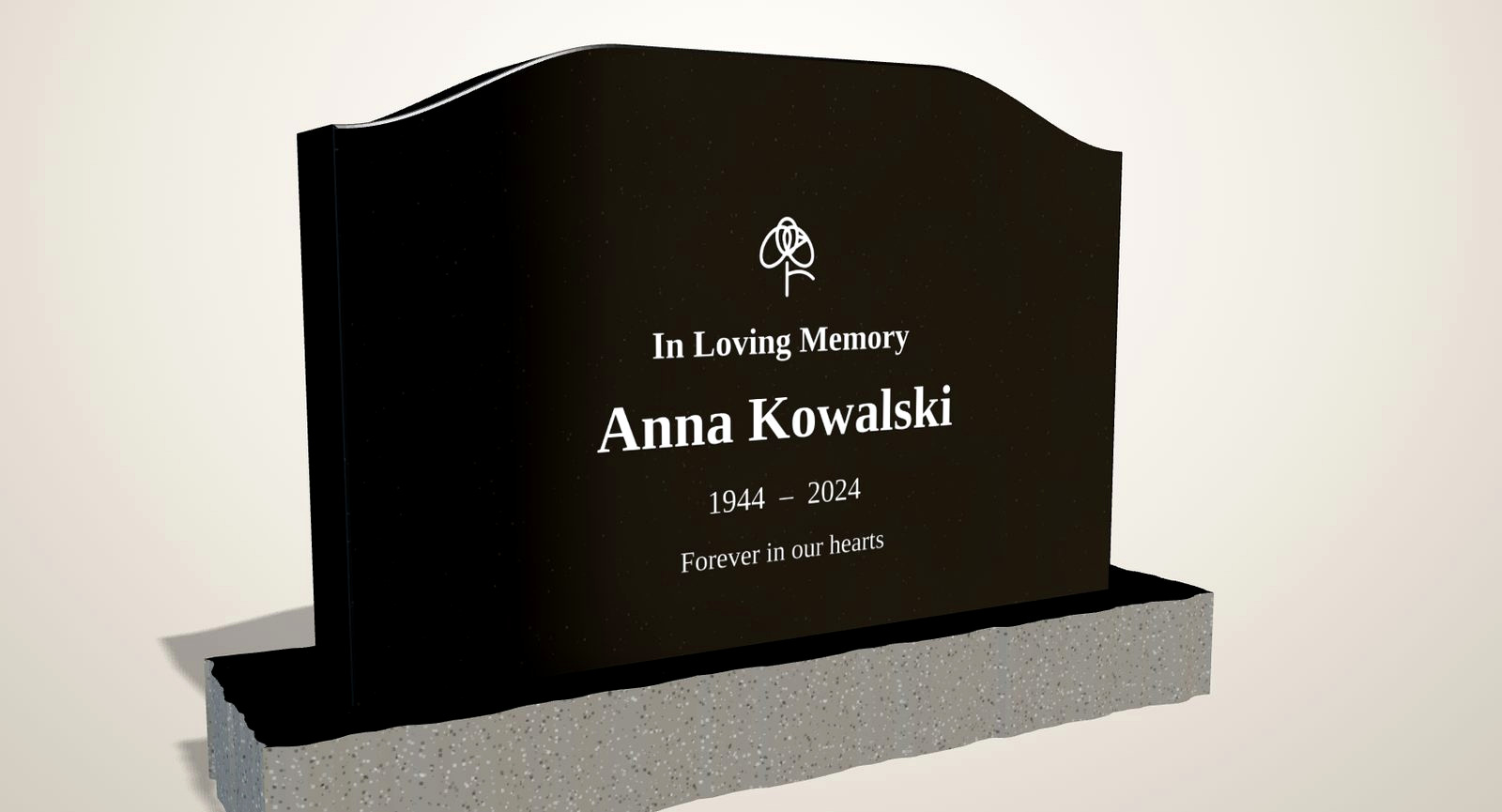
The upright headstone — an engraved stone standing on a base — is the classic memorial in most cemeteries. It offers the most space for names, dates, symbols and artwork, and it's the style families picture when they think of a headstone.
Die and base
An upright is usually two pieces:
- Die — the vertical, engraved stone.
- Base — the stone it sits on, usually wider and deeper than the die, often with a polished top and rock-pitched or polished sides.
The base spreads the weight, adds height and frames the die. Some designs, such as slant-front uprights or boulders, sit directly on a foundation without a base.
Common sizes
| Use | Die (W × D × H) | Typical base |
|---|---|---|
| Single | 24" × 6" × 24"–30" | about 36" × 12" × 6" |
| Single, larger | 30" × 6" × 30" | about 42" × 12" × 6" |
| Companion | 36"–48" × 6"–8" × 24"–32" | about 48"–60" × 14" × 6"–8" |
Dimensions are written width × depth (thickness) × height. Six inches is the most common thickness; eight inches suits larger or taller stones. Always check your cemetery's maximum height and width — see our headstone sizes guide.
Top shapes
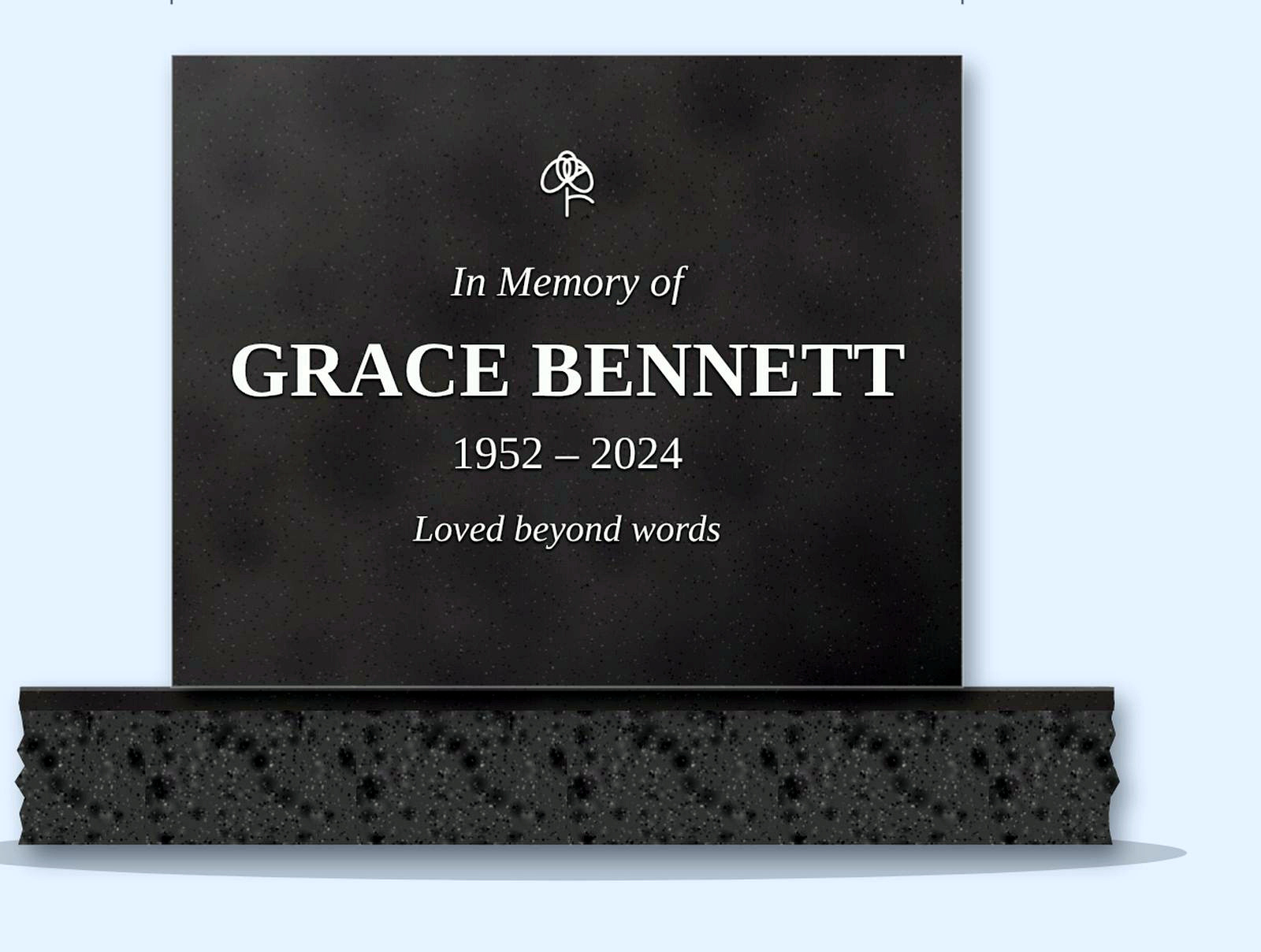
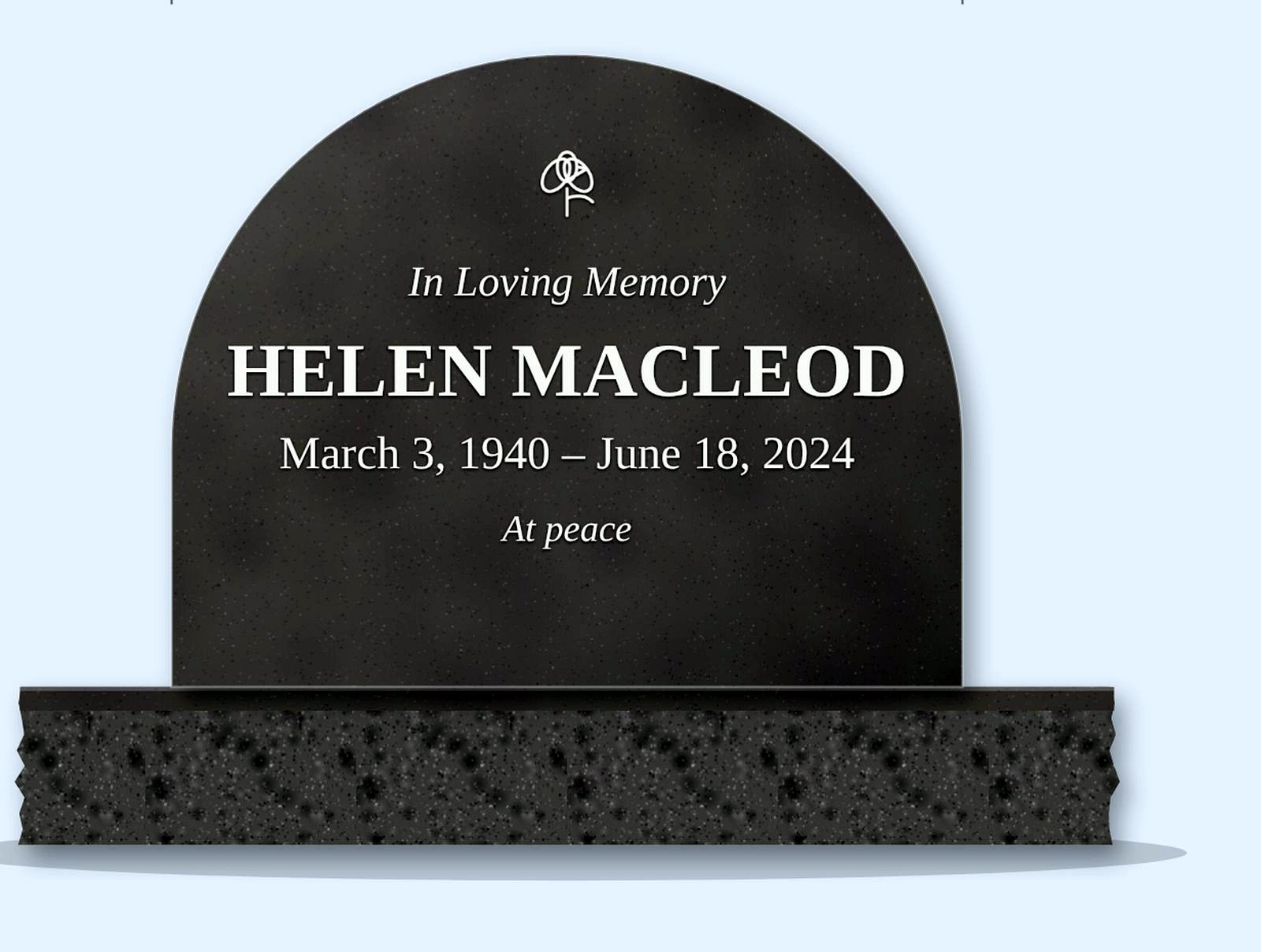
- Serp top — gentle S-curves rising to a flat centre; the most popular shape.
- Gable and cropped peak — pointed or flattened-point tops.
- Half round and arched — softly rounded tops.
- Hearts, ovals and custom shapes — personal designs.
- Rock-pitched tops — natural, rugged outlines.
Finishes
Polished faces give the best engraving contrast; rock-pitched edges add texture. Codes such as P2, P3 and P5 tell you which surfaces are polished — see granite finishes explained.
What affects price
- Size and thickness of the die and base.
- Granite colour — some colours are rarer than others.
- Number of polished surfaces.
- Engraving complexity, portraits and artwork.
- Delivery and installation.
Our headstone cost guide has price ranges.
Key Takeaways
- Uprights are a die on a base; the base is wider and deeper than the die.
- Common single sizes are around 24 × 6 × 24–30 inches; companion stones are wider.
- Serp top is the most popular shape; finishes are described by polish codes.
- Confirm your cemetery's size limits before choosing.
Next Step
Compare upright shapes in 3D in the Design Studio or browse our products.
Frequently Asked Questions
What is the standard size of an upright headstone?
A common single upright die is about 24 inches wide, 6 inches thick and 24 to 30 inches high, on a base about 36 × 12 × 6 inches. Cemetery limits vary.
Does an upright headstone need a base?
Most traditional uprights sit on a base, which spreads the weight and frames the stone. Some styles sit directly on the foundation.
What is a serp top headstone?
A serp (serpentine) top has gentle S-shaped curves rising to a flat centre. It is the most popular upright shape.
How thick should an upright headstone be?
Six inches is standard for most single uprights; eight inches is common for taller or wider companion stones.
Ready to get pricing for your granite monument?
Request pricing, factory specifications, and DAP delivery timelines from our team.