
Solid and Joined Stone Memorials: Know the Construction
Solid and joined stone memorials describe construction, not an automatic quality ranking.
By Marwaa Team · Published
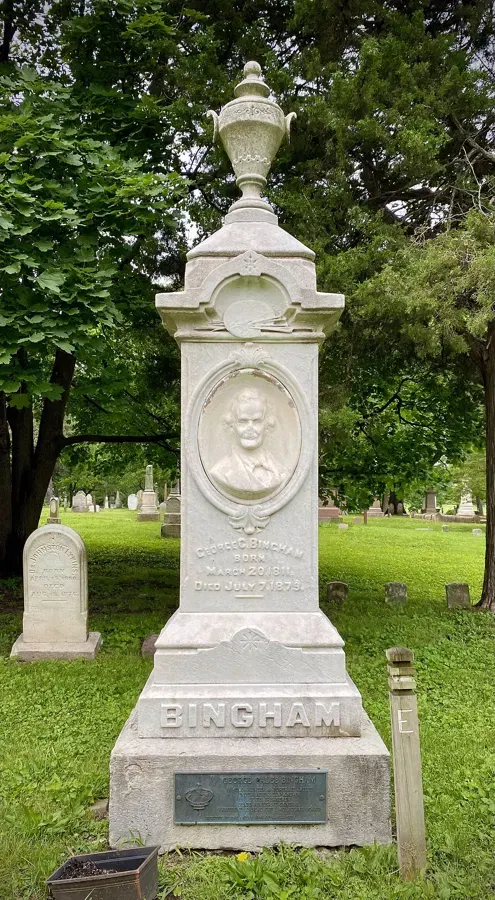
Illustrative stock photograph: George Caleb Bingham gravestone 2023.jpg by Smuckola · CC BY-SA 4.0. Resized and converted to WebP. The photograph does not represent Marwaa’s work or a featured service location.
Solid and joined stone memorials describe construction, not an automatic quality ranking. A feature may be carved from one block or made from separate pieces that form an assembly. Joined construction can be entirely intentional, including a tablet on a base. Buyers need clear component and joint information so appearance, handling, support and later work can be reviewed for the actual design.
What do solid and joined stone memorials mean?
Solid can be used loosely in sales descriptions. It may mean natural stone rather than a thin veneer, or it may mean that a particular feature comes from one block. Ask which meaning applies. A memorial can contain solid stone components and still be a multi-piece assembly.
A joined design uses separate parts. A tablet placed on a base is a familiar example. A large sculptural feature may also be assembled from several pieces. The existence of a joint does not alone prove inferior work. The joint's purpose and suitability matter.
A producer's single-block cross example illustrates one way to describe a solid feature. It is a product example, not a rule that every cross or monument must be made that way.
What changes when a form comes from one block?
A single block can create continuous material through a feature. The visible pattern may flow across surfaces without an assembly boundary. That can be attractive where the design relies on an uninterrupted form.
However, the block still has natural features and practical limits. Cutting openings or making thin projections can create demanding geometry. One-piece construction is not a guarantee against damage. Material condition, dimensions, handling and support still need proper review.
The required raw block can also affect availability and the production route. A maker may need to remove a large amount of material to create the final form. That does not automatically make it the best option for every design or order.
Why might a design use separate pieces?
Separate components can make some shapes easier to produce or handle. They may allow a piece to be replaced or finished before assembly. Large memorials may have practical transport and installation reasons for using several parts.
Each benefit brings questions. How are the pieces located? What supports them? Where will the joints appear? Who is responsible for the final assembly? A front-view sales image may not answer any of these.
A joined feature should not be described as a hidden shortcut if it was clearly designed and accepted as an assembly. The real concern is an undisclosed or unsuitable construction change. If a supplier proposes changing a one-piece feature into joined parts, the buyer should review that as a design change.
Show the components before approving the appearance
Ask for a view that identifies each part. The drawing should show where a seam falls and which surfaces remain visible. For a strongly patterned stone, the relative direction of the pieces can affect how the assembly reads.
Photographs can help with appearance, but they do not replace necessary technical details. A tightly cropped image can hide the base or a rear joint. A complete view gives the buyer better context for asking about the arrangement.
The Marwaa factory overview is a useful starting point for a trade discussion. A specific assembly still needs its own description. Neither a product category nor a general factory claim establishes the details of a custom design.
Keep assembly responsibility clear
Some parts leave the factory separate and are joined during installation. Other work may arrive already assembled. Packing, lifting and site access can differ between those routes. The order should make clear what will be supplied and what the installer must complete.
Do not invent a fixing detail because a similar-looking monument used one elsewhere. The actual design, stone and site conditions need review by the responsible professionals. Cemetery requirements may also affect what can be installed.
For future additions or repairs, knowing the component arrangement is valuable. A dealer can understand whether work concerns a separate part or an area continuous with the main block. The most useful promise is clear construction information, not a vague claim that solid always means better.
Compare the questions before choosing
| Area | What it explains | Practical limit |
|---|---|---|
| One-piece feature | Continuous stone through that feature | Still needs sound geometry and handling |
| Multi-piece assembly | Separate parts with planned interfaces | Joint purpose and responsibility must be clear |
| Supply arrangement | What arrives assembled or separate | Coordinate with the responsible installer |
Key Takeaways
- Continuous stone through that feature. Still needs sound geometry and handling.
- Separate parts with planned interfaces. Joint purpose and responsibility must be clear.
- What arrives assembled or separate. Coordinate with the responsible installer.
Frequently Asked Questions
Is a tablet on a base a joined memorial?
It is a multi-part construction. That is common and does not by itself imply poor quality.
Does solid mean the whole memorial is one block?
Not always. It can mean natural solid stone rather than veneer. Ask exactly what the description covers.
Can a supplier change a one-piece feature into joined parts?
That can affect appearance, handling and design. Review and agree the proposed change before production.
Discuss the trade requirement
For a bulk memorial project, send the intended material, design and use to Marwaa. Ask for a clear response to the questions that affect your order before approving production.
Read More
- Headstone Bases Explained: Sizes, Finishes and Second Bases
- How Thick Should a Headstone Be? 6" vs 8" Dies Explained
- Monument Trial Fit: Record the Interface Checks
A Note on This Guide
This explains construction choices at buying level. It does not provide joint dimensions, lifting advice or a fixing design. Those decisions need the actual component and site information. This is general educational guidance for dealers and other buyers. The people responsible for the project should resolve material, cemetery and technical requirements for the actual order.
Published by Marwaa Team for Marwaa Memorials (marwaamemorials.com) · Published 2026-11-23 · Updated 2026-11-23 Marwaa Memorials is a factory-direct exporter of bulk granite monuments and headstones, shipping to monument dealers, funeral homes, and importers across North America.
Related guides

Headstone Ideas for a Construction Worker
Waterjet Stone Inlays for Memorials: Design Tradeoffs
Granite Rift, Grain and Hardway: What the Terms Mean

A Keepsake Memorial Stone or an Outdoor Marker?

Ledger Stones and Full Grave Covers: A Complete Guide
