Silica Dust: Why Memorial Alterations Belong in a Workshop
Silica dust from memorial alterations is a concern when work such as cutting, grinding or drilling creates respirable dust.
By Marwaa Team · Editorial standards · Published · Updated
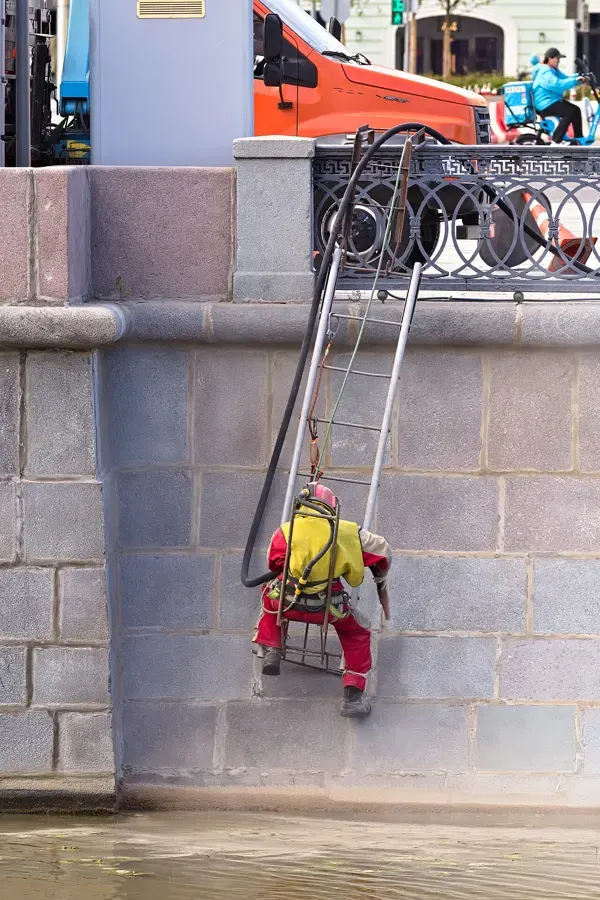
Illustrative stock photograph: Moscow, Bolotnaya Embankment, sandblasting granite, Aug 2026 01.jpg by Retired electrician · CC0. Resized and converted to WebP. The photograph does not represent Marwaa’s work or a featured service location.
Silica dust from memorial alterations is a concern when work such as cutting, grinding or drilling creates respirable dust. That is different from viewing or touching an intact finished memorial. Alterations should be planned by a competent professional with suitable controls for the actual task and site. Moving work to a workshop can help control it, but a workshop address alone does not prove safe practice.
Why does silica dust matter in memorial alterations?
Granite contains crystalline silica. Cutting, drilling and grinding stone can release dust that includes particles small enough to reach deep into the lungs. Some tasks can create hazardous exposure even when the visible dust does not seem dramatic.
OSHA's crystalline silica guidance explains the workplace hazard and control framework. CDC and NIOSH also describe the health risks of respirable crystalline silica. These sources concern exposure during work, not a claim that an untouched finished monument emits the same dust.
The distinction helps families and dealers focus on the activity. An installed memorial can need a new opening, edge change or fitting. The decision is about how to perform that work safely, not about avoiding ordinary visits to a cemetery.
Abrasive material is one part of the blasting system, and changing it does not remove dust generated from the stone. See Memorial Sandblasting Media: Compare the Actual Process.
Why a small alteration needs planning
A short task is not automatically a trivial exposure. Tool, material, method, duration and surrounding conditions all affect what happens. A buyer cannot judge the risk from the size of the requested hole alone.
Other people may be nearby at a cemetery. Work can also affect staff, visitors and adjacent memorials. Site access and the ability to contain or control dust matter alongside the final appearance of the alteration.
Do not ask an installer to improvise a dry cut merely because moving the stone seems inconvenient. The responsible employer or contractor should assess the task and select suitable controls. An online guide cannot make that assessment for an unseen site.
What can a workshop make easier?
A suitable workshop can provide a controlled area, appropriate equipment and established work practices. It may also allow the stone to be supported and handled more predictably than in a constrained cemetery location.
That is a practical reason to consider workshop alteration. It is not proof that every shop is safe. The actual controls, maintenance, training and work method remain important. The word workshop should never be used as a substitute for those things.
Some work may still be carried out on site by qualified people using appropriate arrangements. Whether that is suitable depends on the task and applicable requirements. Do not turn a preference for controlled work into a claim that every on-site activity is forbidden.
Questions a dealer can ask without designing the controls
Describe the intended alteration clearly. Is it a new fixing hole, a change to a profile or work on an inscription? Tell the contractor about relevant access limits and known surface treatments. Accurate scope helps it assess the job.
Ask who is responsible for the work and its safety planning. Confirm whether the cemetery permits the proposed activity and what coordination is needed. Avoid directing technical controls from a general sales checklist.
The factory team can discuss new-production features before they become site alterations. Where a design already needs an opening or recess, settling it early can reduce avoidable later cutting. That does not mean every future change can be predicted.
Keep the finished design in view as well
Dust control is one part of professional alteration. The work must also preserve the required stone shape, inscription and support. A safely performed task can still be unsuitable if the design itself has not been reviewed.
For an existing monument, coordinate owner authorization, cemetery requirements and the responsible technical advice. Record the accepted change before work begins. Do not treat a family request as an instruction to alter a component whose construction is unknown.
The useful outcome is a planned task with clear responsibility. Buyers should not be expected to become industrial hygienists. They can, however, avoid creating pressure for casual cutting and ensure the people doing the work have the information and authority they need.
Compare the decisions
| Area | What to establish | Why it matters |
|---|---|---|
| Activity | What cutting, drilling or grinding is proposed | Risk follows the task and conditions |
| Work setting | A suitable controlled location and plan | A workshop label alone proves little |
| Responsibility | The competent contractor and site coordination | Do not improvise technical controls |
Key Takeaways
- What cutting, drilling or grinding is proposed. Risk follows the task and conditions.
- A suitable controlled location and plan. A workshop label alone proves little.
- The competent contractor and site coordination. Do not improvise technical controls.
Frequently Asked Questions
Does an intact memorial create the same dust as grinding?
No. This guide concerns dust generated by work that disturbs the stone, not ordinary viewing or touching.
Is a brief drilling task automatically safe?
Do not assume so. The responsible contractor needs to assess the actual task and controls.
Does workshop work guarantee compliance?
No. Location is only one factor. Applicable rules, controls, training and the actual method still matter.
Discuss the trade requirement
For a bulk memorial project, send the intended material, design and use to Marwaa. Ask for a clear response to the questions that affect your order before approving production.
Read More
- How Are Headstones Made? From Quarry Block to Cemetery
- Memorial Accessory Holes: Check the Approved Drawing
- Adding a Name or Final Date to an Existing Headstone
A Note on This Guide
This is procurement guidance, not an exposure assessment or safety procedure. Use the responsible professionals and current rules for the actual jurisdiction and task. This is general educational guidance for dealers and other buyers. The people responsible for the project should resolve material, cemetery and technical requirements for the actual order.
Published by Marwaa Team for Marwaa Memorials (marwaamemorials.com) · Published 2026-11-23 · Updated 2026-11-23 Marwaa Memorials is a factory-direct exporter of bulk granite monuments and headstones, shipping to monument dealers, funeral homes, and importers across North America.
Related guides

Stone Workshop Water Recycling: What Buyers Can Ask
Where Does Headstone Granite Come From?

Bronze and Brass: Identify the Memorial Alloy

Flamed Granite: How Heat Creates a Textured Surface
Memorial Photos, Renderings and Stock Images: Label Them