Mirrored Memorial Artwork: Check the Intended Direction
Review mirrored headstone artwork for reversed letters, identifying objects and intentional direction before accepting the full proof.
By Marwaa Team · Editorial standards · Published

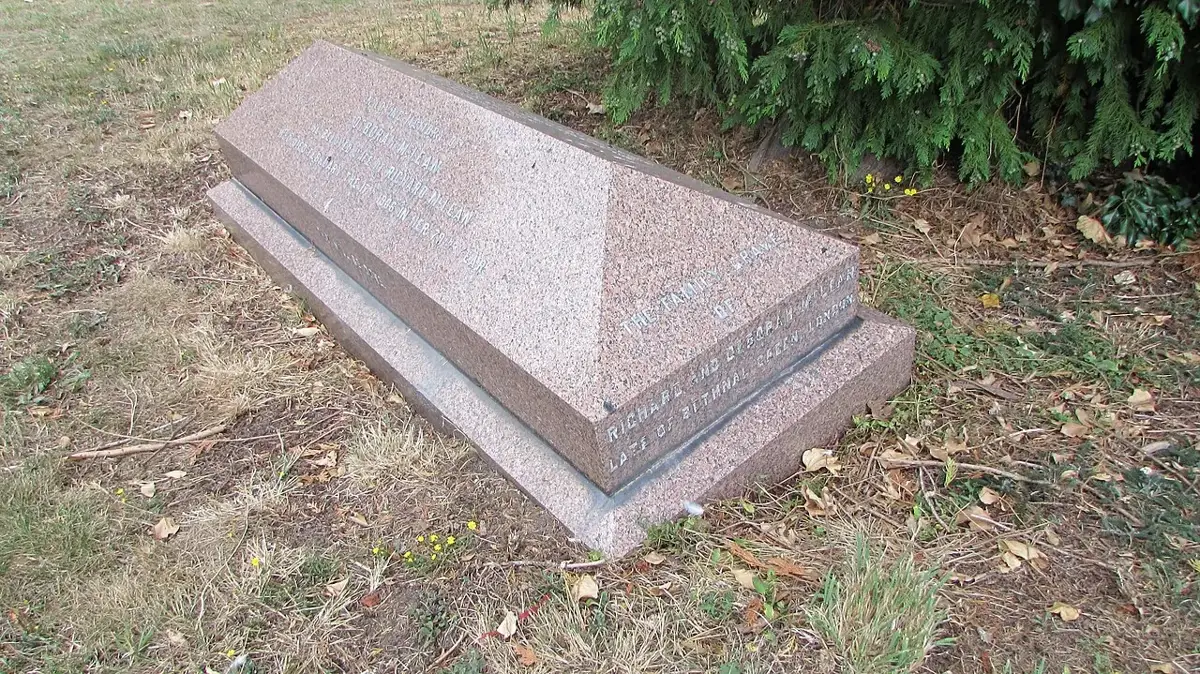
Illustrative stock photograph: Cardinal Wolsey gravestone - 17 March 2026.jpg by Aethonatic · CC0. Hosted by Wikimedia Commons. The photograph does not represent Marwaa’s work or a featured service location.
Mirrored headstone artwork should be reviewed by the direction of its meaningful details, not only its position on the page. Identify any text, handedness, badges, tools or place features before accepting a flipped image. A balanced composition can still show the wrong object or person. Ask the designer to mark whether an image is original, rotated or reflected, and check the complete production proof.
A designer may reflect an image so that two figures face inward or a motif fits the other corner. That can be a reasonable proposal, but it should be a visible decision. Some details change meaning when their direction changes.
What changes when an image is reflected?
Reflection reverses left and right in the pictured object. That is different from moving the same artwork to another part of the memorial. A logo containing letters, a uniform detail or a familiar building entrance can become incorrect even if the overall silhouette still looks convincing.
Describe the meaningful detail in the brief. If a person used a tool in a particular hand or wore an identifiable item on one side, ask whether that matters to the family’s interpretation. Do not let the designer assume that an inward-facing pose is more important than those features.
How can source and proposed orientation be compared?
Place the source reference beside the proposed artwork and give both an orientation label. A simple note such as reflected for composition is clearer than quietly replacing the original. Ask the reviewer to compare the features that could change meaning.
Check text within the image separately from the memorial inscription. A small sign, badge, boat name or maker’s mark can be overlooked when the family focuses on the main portrait. If it becomes unreadable or wrong, discuss removal, redrawing or a different composition rather than ignoring it.
When should a designer redraw instead of flip?
Sometimes an original drawing can face a different direction without reflecting every identifying detail. That is a design proposal requiring review, not a guarantee that the image can be altered convincingly. Ask which parts will be redrawn and which reference supports them.
An artistic interpretation should not appear to be an unaltered historical photograph. If the family wants a documentary likeness, a different crop or placement may be preferable. The choice should follow the intended meaning, not only the easiest way to fill the space.
How does orientation affect a two-face memorial?
Image direction and installation orientation are different records. A bird can face left in the artwork while the entire stone face has a separate agreed direction on the plot. Label the intended viewing face and avoid ambiguous notes such as turn it round.
Ask for the complete drawing set after a change. A reflected motif may shift a border or move near the text. The family should review the whole result and the supplier should identify the controlling file, rather than receiving an isolated flipped image with no order reference.
Review worksheet
| Review item | Decision to record |
|---|---|
| Source | Original artwork or photograph reference |
| Transformation | Unchanged, rotated, reflected or newly redrawn |
| Meaningful detail | Text, handedness, insignia or other feature |
| Review | Named feature checked beside the source |
| Memorial face | Face label and installation direction handled separately |
| Accepted file | Full drawing version, not only the cropped image |
A worked review example
A family chooses a portrait showing a person holding a musical instrument. A reflected crop fits neatly beside the surname, but it reverses the instrument and the person’s posture. The reviewer notices this because the source and proof sit side by side.
The designer offers the original orientation in a different position. The family accepts that composition. The final drawing records the unchanged portrait rather than silently treating a reflected image as the same approved artwork.
Before the file moves to production
Check every image containing lettering or recognisable equipment before release. Ask a knowledgeable reviewer if an object’s direction matters and the designer cannot judge it. Keep that question separate from general spelling approval.
Finally, compare the accepted complete proof with the source notes. If a reflected version is intentional, say so explicitly. If it is not, the record should show the original orientation. A short label can prevent several participants from making different assumptions about the same picture.
For broader visual planning, the Marwaa Design Studio can help explain the proposed arrangement. Its preview is a discussion aid, not a substitute for the supplier’s final proof.
Key Takeaways
- A reflected image is not identical to an image moved elsewhere on the layout.
- Text and identifying details need review after any reflection.
- The complete accepted proof should identify the intended artwork orientation.
Frequently Asked Questions
Is moving an image the same as mirroring it?
No. Moving changes position; reflection changes the left-right relationship within the image.
Should a portrait always face the centre of the stone?
That is a design preference, not a universal requirement. Discuss it alongside likeness and meaningful details.
What if the motif includes letters?
Check those letters separately after any reflection or redraw.
Next step
Use Headstone Proof Approval Checklist as the next review step. Bring the unresolved points to your chosen memorial professional before authorizing production.
Read More
Sources and scope
A Note on This Guide
This is an artwork-orientation review, not an instruction for image-processing or engraving equipment. The designer should explain intentional transformations. Cemetery acceptance and the stone’s installation direction remain separate matters.
Published by Marwaa Team for Marwaa Memorials (marwaamemorials.com) · Published 2026-11-21 · Updated 2026-11-21 Marwaa Memorials is a factory-direct exporter of bulk granite monuments and headstones, shipping to monument dealers, funeral homes, and importers across North America.
Related guides
Fingerprint Memorial Artwork: A Privacy Checklist

Commissioning Memorial Artwork: Write the Artist Brief

Headstone Vector Artwork: A Supplier Handoff Package

Headstone Artwork Line Weight: Approve a Simplified Detail
Two-Sided Headstones: Label Front, Back and Orientation