Headstone Borders: Check the Clear Engraving Area
Check headstone border engraving clearance around letters, photos and future space on a full proof assessed by the actual supplier.
By Marwaa Team · Published
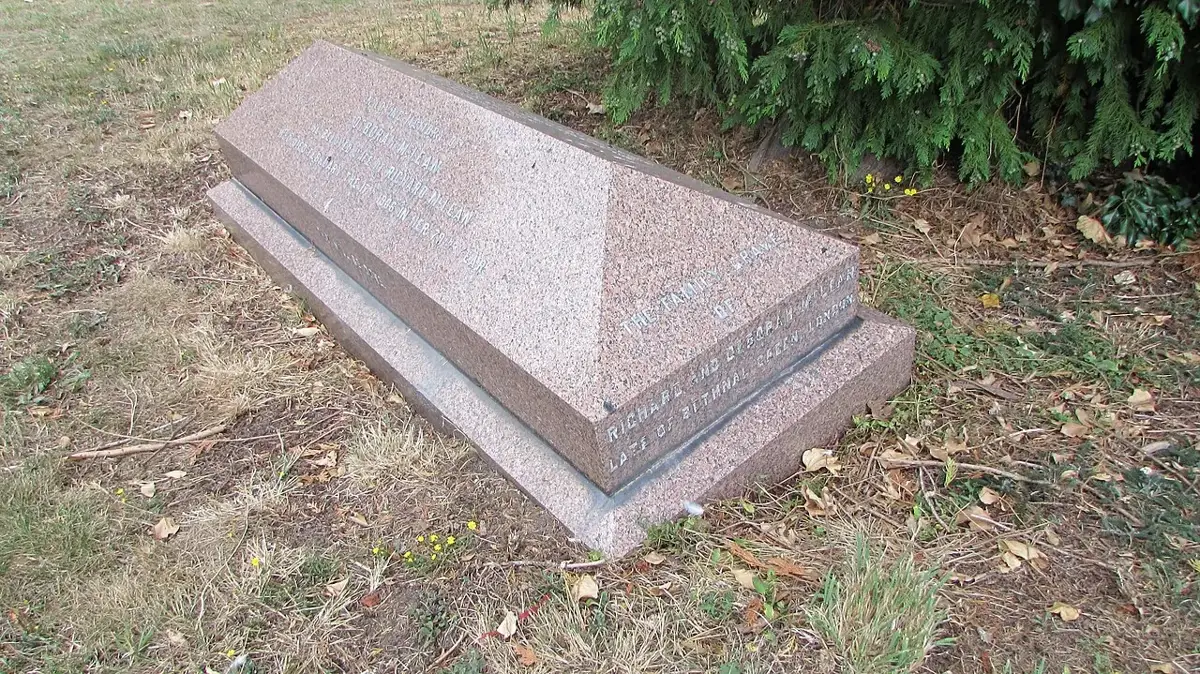
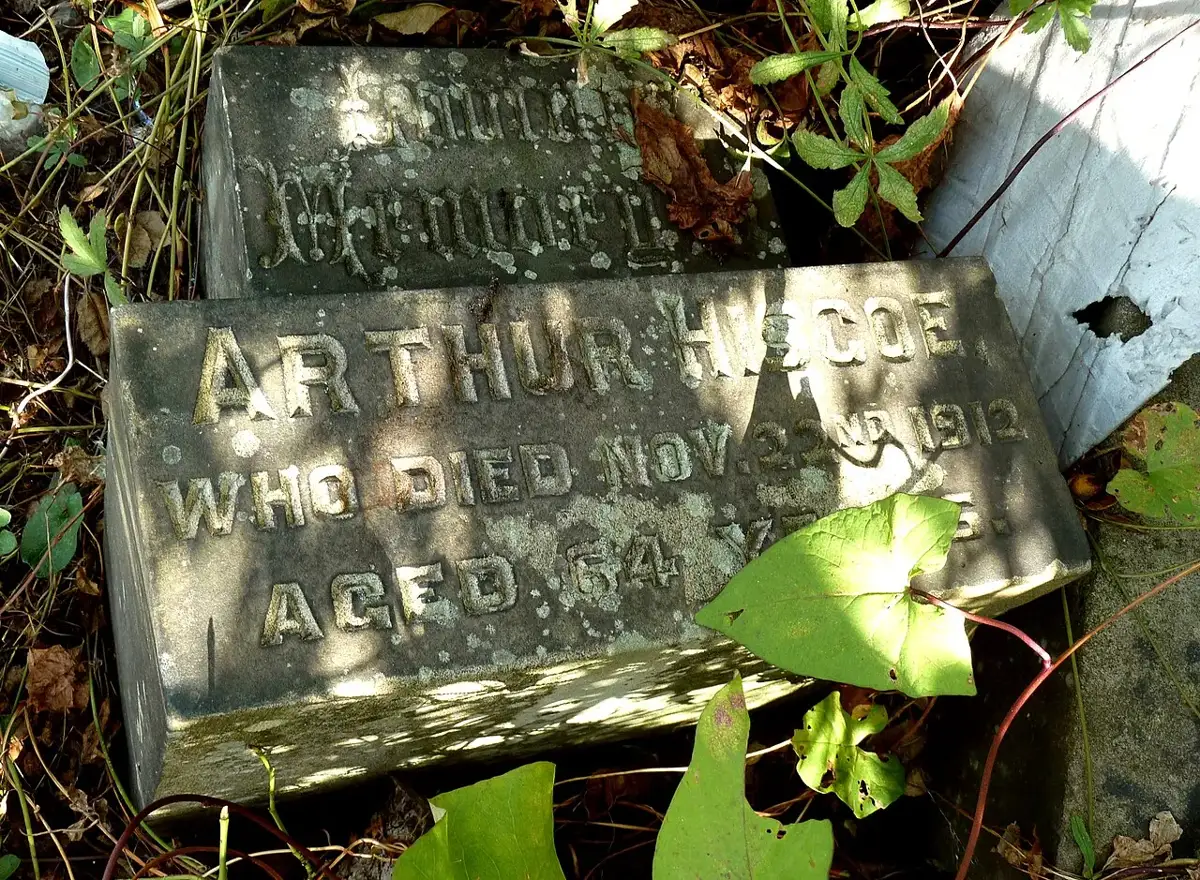
Illustrative stock photograph: Tomb in Devizes Road Cemetery.jpg by Richard Avery · CC BY-SA 4.0. Resized and converted to WebP. The photograph does not represent Marwaa’s work or a featured service location.
Headstone border engraving clearance is the space left between decoration, lettering, portrait openings and the finished edge. Review that usable area on a dimensioned proof rather than assuming the whole stone face is available. Ask the supplier to explain the clearances appropriate to the design and process. There is no universal margin that can be applied safely to every stone shape, border and engraving method.
A decorative frame can look spacious in a catalogue yet leave a difficult text area once the actual names and dates are added. We suggest treating the border and wording as one composition. The outline of the stone is not the same as the usable text panel.
How does headstone border engraving clearance affect the design?
A border occupies space even when its lines appear delicate. Its inner edge, corner motifs and curved top can reduce the area available for text. Ask the designer to show the intended clear panel, especially where ornament projects inward.
Do not use a generic margin copied from another article as a production instruction. The supplier must consider the proposed stone, finish and process. A family can identify a cramped region without deciding the technical clearance needed to manufacture it.
Which boundaries should the proof distinguish?
Show the finished stone edge, the border, the text and any opening as separate visible elements. Ask whether annotation lines will remain only on the drawing. A faint guide line should not be mistaken for an engraved frame.
Check the closest approach between elements, not only the gap at the centre of each edge. A curling leaf may move closer to a date than the main border line does. The relevant question is whether every local relationship is intentional and suitable, not whether the outer rectangle looks balanced.
What should change if the wording does not fit?
Discuss the options in a sensible order: simplify ornament, revise its position, choose a different layout or change the wording with family agreement. Shrinking every line should not be an automatic response. The names and dates still need a clear place in the design.
Compare alternatives using the same inscription so the effect of the border decision is visible. A proof that also changes font, stone shape and text can make the improvement difficult to understand. Name the design problem before collecting several unrelated variations.
How should future lettering be protected?
A border should not consume the space reserved for a later inscription. Ask the designer to show the proposed future area as a clearly labelled non-production guide. The family should understand what remains blank now and which later work still needs assessment.
For a dealer, keep the border reference and the full layout together. A shared ornamental file may suit one memorial but crowd another with longer names. Do not assume the same artwork can simply be scaled across an order without reviewing each inscription.
Review worksheet
| Review item | Decision to record |
|---|---|
| Stone edge | Finished outline and stated component size |
| Border | Exact artwork reference and any inward projections |
| Text panel | Usable area shown on the full proof |
| Nearby feature | Closest point to a letter, portrait or recess |
| Future space | Reserved area distinguished from current engraving |
| Technical answer | Supplier confirms appropriate production clearances |
A worked review example
A family selects a leaf border for a memorial with a long surname. The main border sits comfortably outside the name, but one corner leaf reaches into the date area. The designer highlights that local conflict and proposes a simpler corner.
The family compares the simplified border with a version that moves the whole inscription. They choose the simpler ornament, preserve the intended text size and approve the full layout. The decision record names the revised border file rather than only saying that the margin should be wider.
Before the file moves to production
Review the border with the exact names, dates and image openings in place. Do not sign a generic catalogue mock-up expecting the workshop to solve the remaining fit automatically. Ask the supplier to confirm any technical limit the family cannot assess visually.
The products page can help identify the proposed form, but its image is not the project specification. Save the full dimensioned proof and any supplier answer about clearances. If an element later moves, recheck the neighbouring space before treating the older approval as sufficient.
For broader visual planning, the Marwaa Design Studio can help explain the proposed arrangement. Its preview is a discussion aid, not a substitute for the supplier’s final proof.
Key Takeaways
- The usable engraving panel can be smaller than the complete stone face.
- Border clearance should be checked at the closest local points, including decorative corners.
- Future inscription space should remain visible in the border review.
Frequently Asked Questions
Can I use a fixed margin for every headstone?
No universal margin suits every design and process. Ask the supplier about the particular stone and artwork.
Does a thin border leave the whole face free?
No. Its corners and motifs may project into the inscription area; review the complete inner boundary.
Should all the lettering shrink if a border crowds it?
Discuss alternatives, including simpler ornament or another layout, before reducing the entire inscription.
Next step
Use Headstone Border Designs as the next review step. Bring the unresolved points to your chosen memorial professional before authorizing production.
Read More
Sources and scope
A Note on This Guide
This is a drawing-review guide, not a dimensional standard or structural specification. The appropriate supplier must confirm clearances for the actual process. Cemetery limits and family preferences need separate confirmation.
Published by Marwaa Team for Marwaa Memorials (marwaamemorials.com) · Published 2026-11-21 · Updated 2026-11-21 Marwaa Memorials is a factory-direct exporter of bulk granite monuments and headstones, shipping to monument dealers, funeral homes, and importers across North America.
Related guides

Headstone Border Designs: Frames, Corners and Panels
Leaving a Future Date Blank: Clear Headstone Proof Instructions
Companion Memorials: A Layout Plan for Future Lettering

Headstone Lettering: Make a Full-Size Paper Test
Grayscale Headstone Photo Proofs: What to Review