Braille on a Memorial: Plan for Real Touch Reading
The aim is independent participation where possible. Start by asking the intended reader what would be useful, rather than deciding that any raised dots will make a memorial accessible to every blind or partially sighted visitor.
By Marwaa Team · Editorial standards · Published
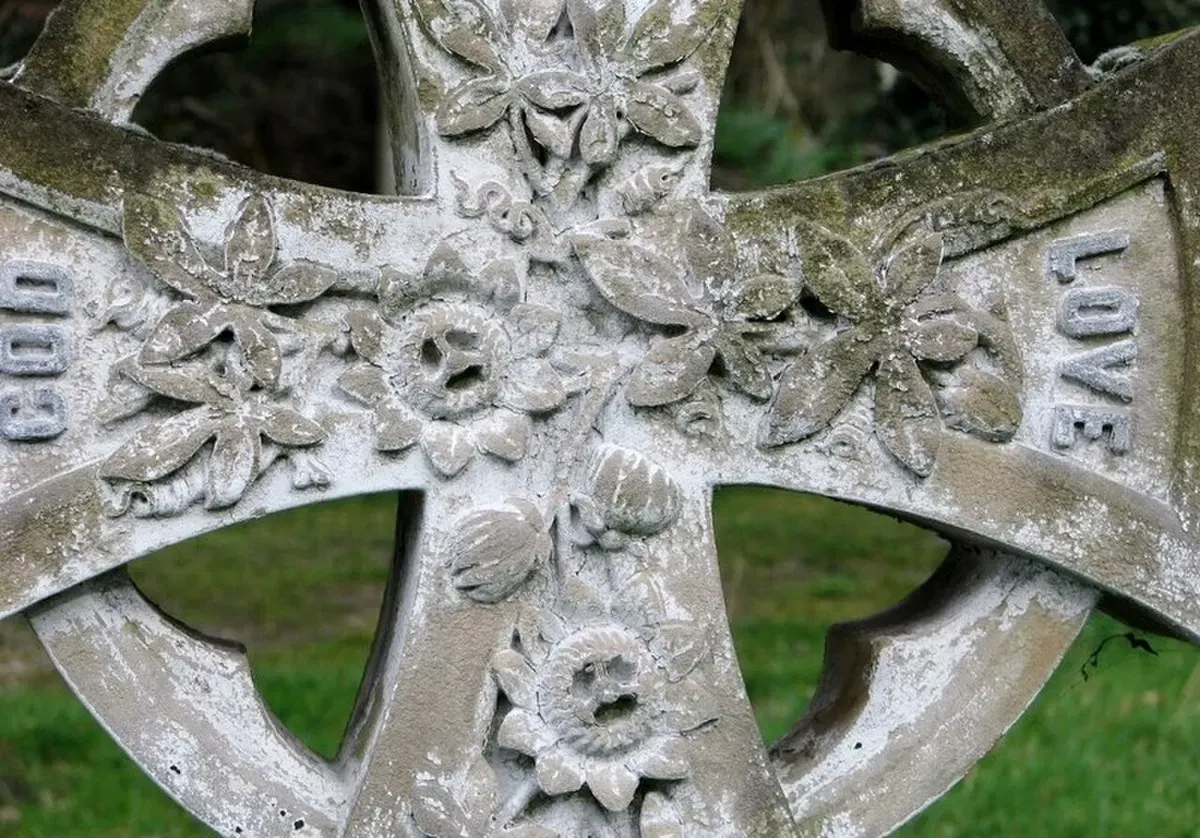
Illustrative stock photograph: 19th century gravestone (detail) - geograph.org.uk - 6085940.jpg by Evelyn Simak · CC BY-SA 2.0. Resized and converted to WebP. The photograph does not represent Marwaa’s work or a featured service location.
Braille on a memorial should be designed as readable tactile text, not as a visual dot pattern. Ask a qualified braille producer and intended readers to review the actual words, physical sample and reachable location. A correct-looking image does not establish usable braille. Include the surrounding visit and care arrangements, because text that a person cannot find or safely approach does not provide the intended access.
The aim is independent participation where possible. Start by asking the intended reader what would be useful, rather than deciding that any raised dots will make a memorial accessible to every blind or partially sighted visitor.
What information would the reader like to find?
A name and short dedication may be more useful than a dense transcription of every decorative element. Ask the reader about content and language before the designer allocates space. Braille knowledge and preferences vary; it is not a universal reading method for every person with sight loss.
RNIB presents braille alongside large print, tactile images and other access methods. That is a useful starting point for a memorial too. A spoken description, readable print and tactile text can serve different visitors without claiming that one feature solves every barrier.
Who will produce the braille text?
Use a qualified braille producer for the actual transcription. Do not convert a name into dots by copying a decorative alphabet found online. Names, punctuation and language choices deserve a proper review.
Keep the accepted braille text connected with the matching ordinary-text inscription. If a date or name changes, both versions need attention. A sighted visual check is useful for production consistency but does not replace tactile reading. Ask who will check the sample by touch and how the family will know which version has been accepted.
Where can the reader reach and find it?
Discuss the proposed location with the reader and the responsible site professionals. The surface needs to be discoverable and usable in its real setting. A position that looks balanced on an upright drawing may be awkward from the place where a visitor can actually stand or sit.
Avoid selecting a location by a universal height from this article. No generic dimension can account for every memorial, person or approach. The existing accessible visit guide addresses route planning; this article concerns the physical reading point once the visitor reaches the memorial.
What should a physical sample establish?
A sample should let a braille reader assess the tactile result, not only the spelling on screen. Ask the specialist what needs to be checked for the proposed material and method. Dot form, spacing and surface relationships belong to a proper tactile design process.
Do not ask the stone workshop to treat ordinary engraving of tiny circles as equivalent to raised braille. Compare a specialist tactile plaque or other suitable component where appropriate. APH's tactile graphics resources underline that readable touch information needs design knowledge. They are not a generic approval for any outdoor fabrication.
Who will keep the feature usable?
Agree who will notice a damaged or obscured tactile element and whom they will contact. Care guidance should cover the actual component and its relation to the monument. Avoid unapproved cleaning or repair in an attempt to restore a dot.
The Marwaa product pages establish the granite product context, not an accessibility certification or a promise to supply specialist braille. A dealer should identify who produces, checks and supports the tactile part. The site operator also needs to accept the complete proposal and the intended touch use.
Compare the practical choices
| Choice | Question to settle |
|---|---|
| Braille text | Qualified transcription plus tactile reading of the physical result |
| Raised ordinary letters | A separate feature, not an automatic braille substitute |
| Tactile image | Purposeful touch information rather than visual detail copied unchanged |
| Other formats | Chosen with visitors who do not read braille |
A decision in practice
A family wants its relative's name in braille. The first drawing places small engraved dots near the bottom edge. A braille producer explains that the proposed appearance is not the same as a usable tactile inscription.
The family, reader and memorial professional compare a specialist component in an agreed reachable position. They shorten the tactile dedication while keeping its meaning. The physical sample is read by touch before the complete proposal goes forward, and a contact for later concerns is recorded.
Key Takeaways
- Braille must work by touch rather than merely resemble dot lettering.
- Qualified transcription and tactile sample review are separate from visual proofing.
- The reader, specialist and site team should agree a discoverable, reachable location.
Frequently Asked Questions
Can a braille font on a proof establish readability?
No. The physical tactile result needs an appropriate specialist and reader review.
Does every blind visitor read braille?
No. Ask about preferred information formats instead of assuming one method serves everyone.
Does this guide establish an outdoor sign standard?
No. It provides planning questions and directs the actual design to qualified specialists and the site.
Next step
Read Headstone Proofs for Blind or Low-Vision Reviewers while shaping your discussion with the memorial professional. Families can use that discussion to identify a suitable local provider; dealers should confirm the actual supply scope before seeking a trade quotation.
Read More
Sources and context
A Note on This Guide
This is an inclusion and design guide, not a legal compliance assessment or braille manufacturing standard. No dot dimensions are prescribed. RNIB and APH sources inform the access principles; specialists and the individual cemetery must assess the actual physical proposal.
Published by Marwaa Team for Marwaa Memorials (marwaamemorials.com) · Published 2026-11-25 · Updated 2026-11-25 Marwaa Memorials is a factory-direct exporter of bulk granite monuments and headstones, shipping to monument dealers, funeral homes, and importers across North America.
Related guides
A Memorial Made for Touch: Plan the Experience
Headstone Ideas for a Real Estate Agent

Multiple Names on a Memorial: Set the Reading Order

Headstone Proofs for Blind or Low-Vision Reviewers

Raised vs Recessed Headstone Lettering: Which Should You Choose?