Weeping Willow on a Headstone: Meaning and History
What a weeping willow on a gravestone means — mourning, grief and earthly sorrow — its 18th- and 19th-century popularity, and how to use it on a memorial today.
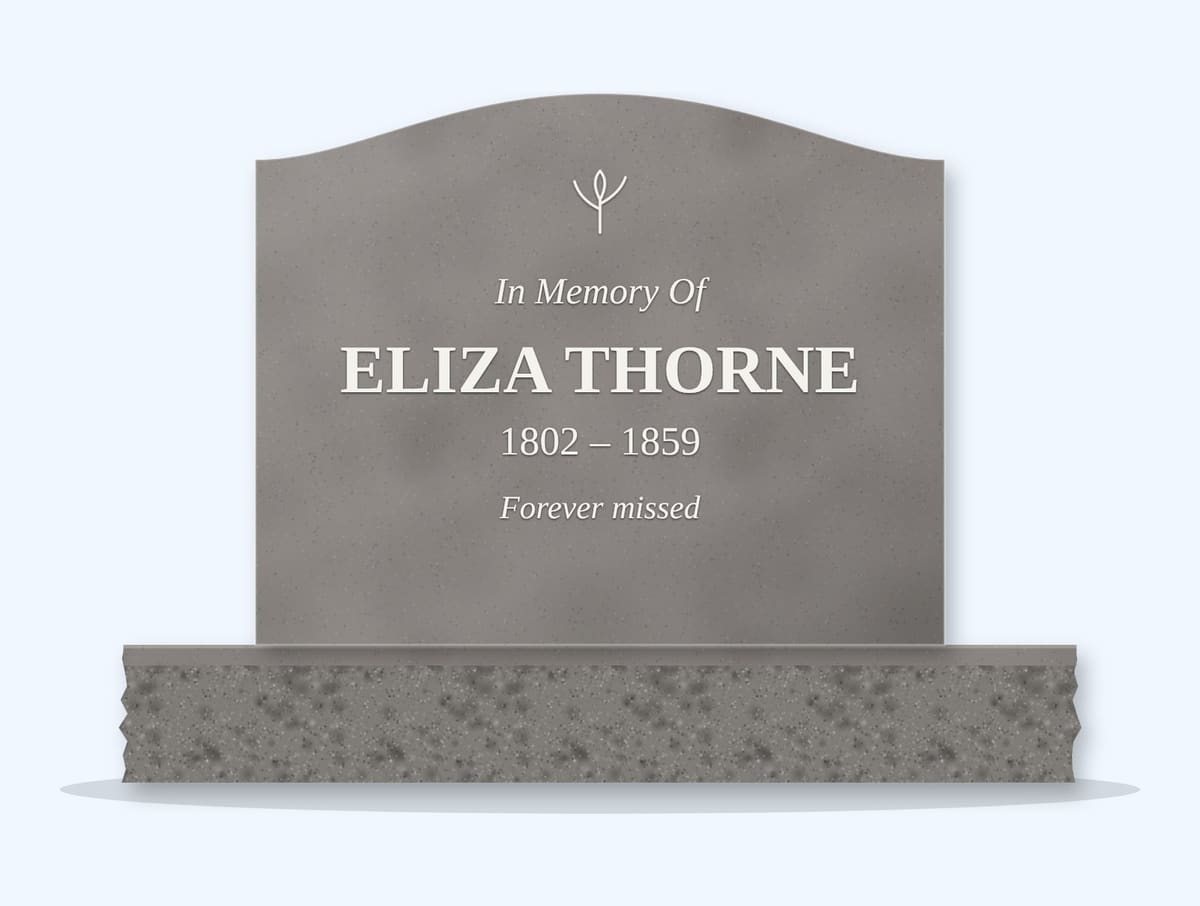
The weeping willow, its branches drooping toward the ground, is one of the most recognisable symbols in older cemeteries.
What it means
| Variation | Meaning |
|---|---|
| Weeping willow alone | Mourning and grief |
| Willow with an urn | Mourning for the dead — a classic paired motif |
| Willow with a figure | A mourner grieving at the grave |
History
The "urn and willow" motif spread widely in the late 18th and early 19th centuries, especially in New England, replacing earlier winged skulls and cherubs. See draped urn meaning and winged skull meaning.
Using it on a new headstone
- Etch a willow on black granite for fine branch detail.
- Pair it with a short line such as "Forever missed".
- A willow suits a traditional or heritage-style memorial.
Using the willow on a modern stone
Willows remain one of the most graceful memorial images:
- Etched on black granite with a lake or bench beneath, showing every drooping branch.
- Carved in relief on grey granite, echoing 19th-century stones.
- As a side panel beside the name on wide companion stones.
The willow suits someone deeply mourned, or a lover of quiet water and gardens. Pair it with "Forever missed", "In our hearts always" or a short psalm. See draped urn for the willow's usual Victorian companion.
The willow-and-urn design
The willow paired with a funeral urn was hugely popular in New England and the Mid-Atlantic from about 1790 to 1840. It replaced the earlier winged skulls and soul effigies, reflecting a gentler, more sentimental view of death influenced by neoclassical taste. The urn recalled ancient Greek and Roman cremation urns, while the drooping willow suggested mourning. If you find this design on an ancestor's stone, it's a strong clue to the date and to the family's taste. See winged skull meaning for the style it replaced.
Key Takeaways
- A weeping willow represents mourning and grief.
- It often appears with an urn on older stones.
- Etching gives the best detail today.
Next Step
Explore more symbols in our headstone symbols guide, or add a symbol in the Design Studio.
Frequently Asked Questions
What does a weeping willow mean on a gravestone?
It symbolises mourning and grief.
Why do old gravestones have willows and urns?
The urn-and-willow motif was very popular in the late 18th and early 19th centuries as a symbol of mourning.
Can a willow be put on a modern headstone?
Yes. It can be etched on black granite or carved on other colours.
What epitaph goes with a weeping willow?
"Forever missed" or "In our hearts always" are common pairings.
Ready to get pricing for your granite monument?
Request pricing, factory specifications, and DAP delivery timelines from our team.