Upright vs Slant Headstone: Which Should You Choose?
Comparing upright headstones and slant markers — appearance, space for text, cost, visibility in snow and cemetery rules — to help families choose.
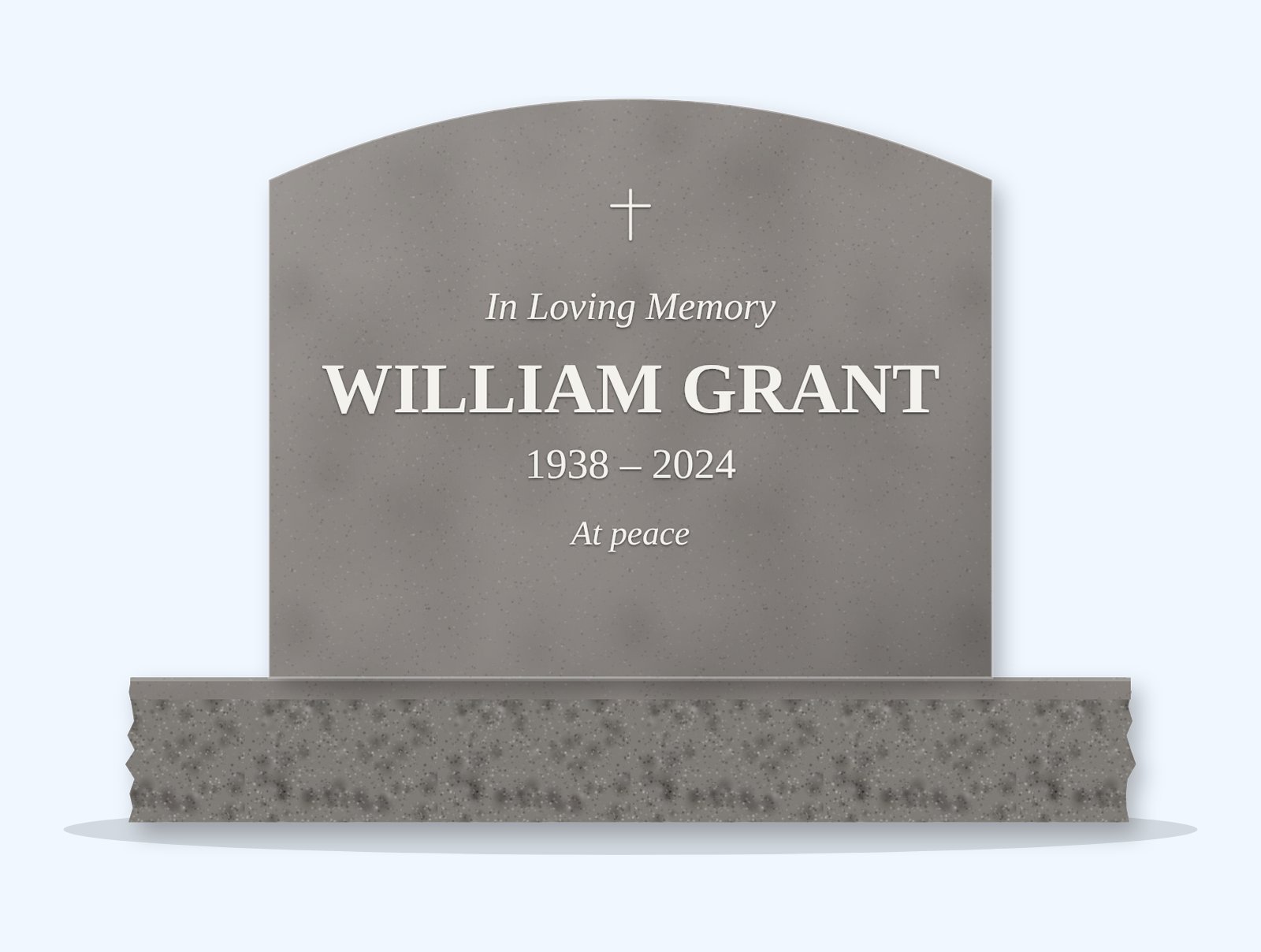
Upright headstones and slant markers are both raised above the grass, but they look and work differently. Here's how to choose.
At a glance
| Upright headstone | Slant marker | |
|---|---|---|
| Look | Tall, traditional | Low, wedge-shaped |
| Height | Often 24–36" plus base | Usually 12–16" |
| Text space | Front and back | Angled face only |
| Cost | Higher | Moderate |
| Snow visibility | Best | Good |
| Allowed in | Monument sections | Many sections where uprights aren't |
When an upright makes sense
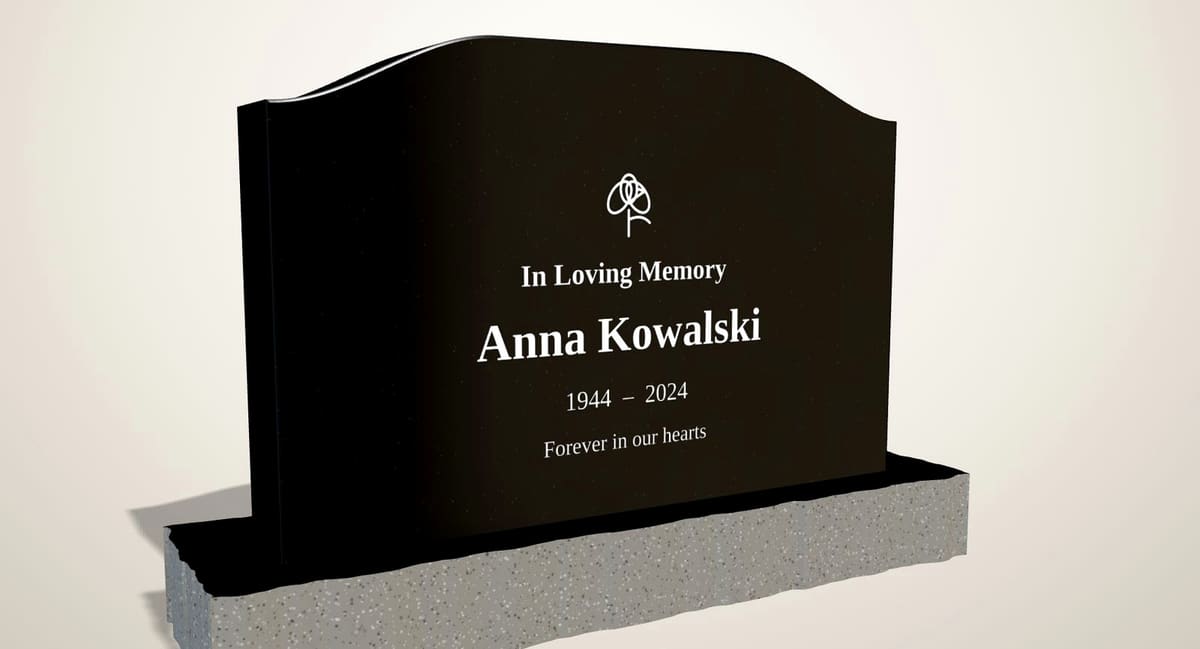
Choose an upright if the section allows it and you want maximum presence, room for an etched scene on the back, or a companion layout with a family name. Uprights also stay visible in deep snow — useful across Canada and the northern US. See upright headstone buying guide.
When a slant makes sense
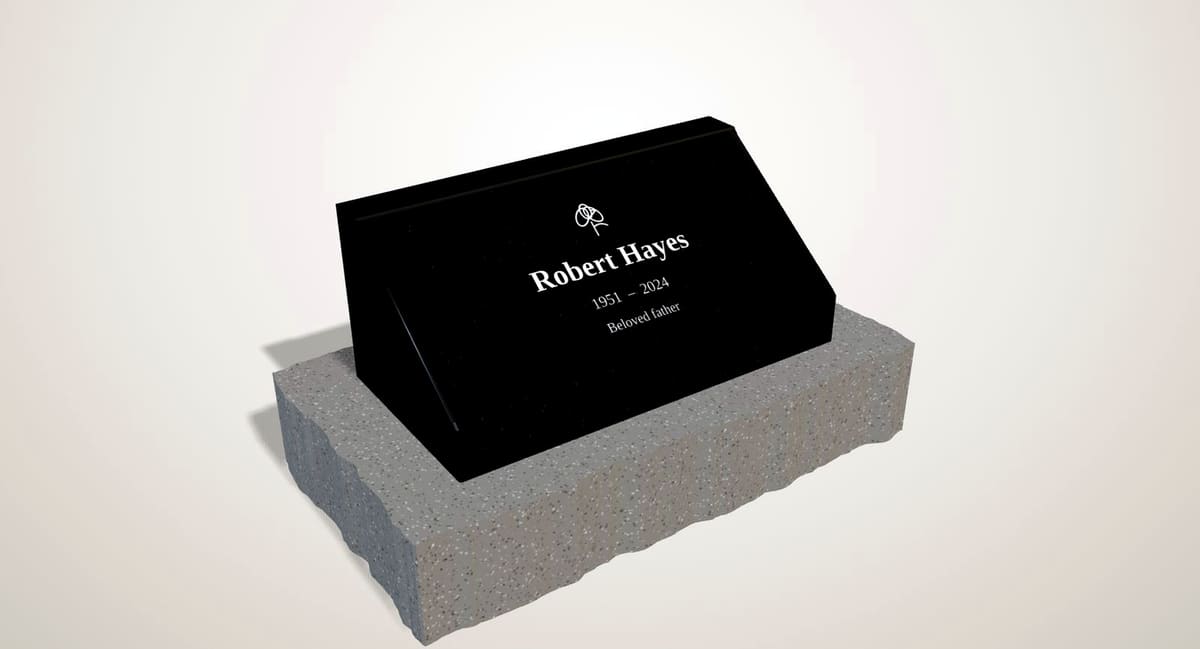
A slant suits sections that limit height, smaller budgets, and families who want a clear, angled face that's easy to read standing up. Slants are also popular for cremation plots and as matching markers in family lots.
Check the rules first
Cemeteries set rules section by section. Some allow only flat markers; others allow slants but not uprights. Ask for the rules in writing — see cemetery headstone rules.
Try both
Switch between upright and slant in our Design Studio to see how your wording fits each, then use Check Price to compare.
What families tell us after installation
Families who chose an upright often mention how easy it is to find in a crowded cemetery and how much room the back gave them for an etched scene or family names. Families who chose a slant often say it felt more in keeping with a modest section and was easy to read without bending. Both age well in granite.
If you're torn, think about who will visit — elderly visitors may find a slant's angled face easier to read, while a tall upright helps relatives who visit rarely find the grave quickly.
Key Takeaways
- Uprights offer more presence and space.
- Slants are lower, cheaper and widely allowed.
- Cemetery section rules often decide.
- Compare both in the Design Studio.
Next Step
Frequently Asked Questions
Is a slant marker cheaper than an upright headstone?
Usually yes — it uses less granite and a smaller base.
Can you engrave the back of a slant marker?
Rarely; slants are designed with text on the angled face only.
Which is more visible in snow?
An upright headstone, because it stands taller above the ground.
Are slant markers allowed where uprights aren't?
Often, but check the cemetery's rules for your section.
Is a slant marker easier to read than an upright?
Its angled face is easy to read while standing, which some elderly visitors prefer.
Ready to get pricing for your granite monument?
Request pricing, factory specifications, and DAP delivery timelines from our team.
Related guides

Flat Grave Markers vs Upright Headstones
Slant, Bevel and Pillow Markers
Upright Headstones
How Thick Should a Headstone Be? 6" vs 8" Dies Explained

Can You Replace a Flat Grave Marker With an Upright Headstone?