Flat Grave Markers vs Upright Headstones: Which Granite Memorial Is Right?
Compare flat grave markers, slant markers, and upright granite headstones by cost, cemetery rules, visibility, engraving space, installation, and long-term care.
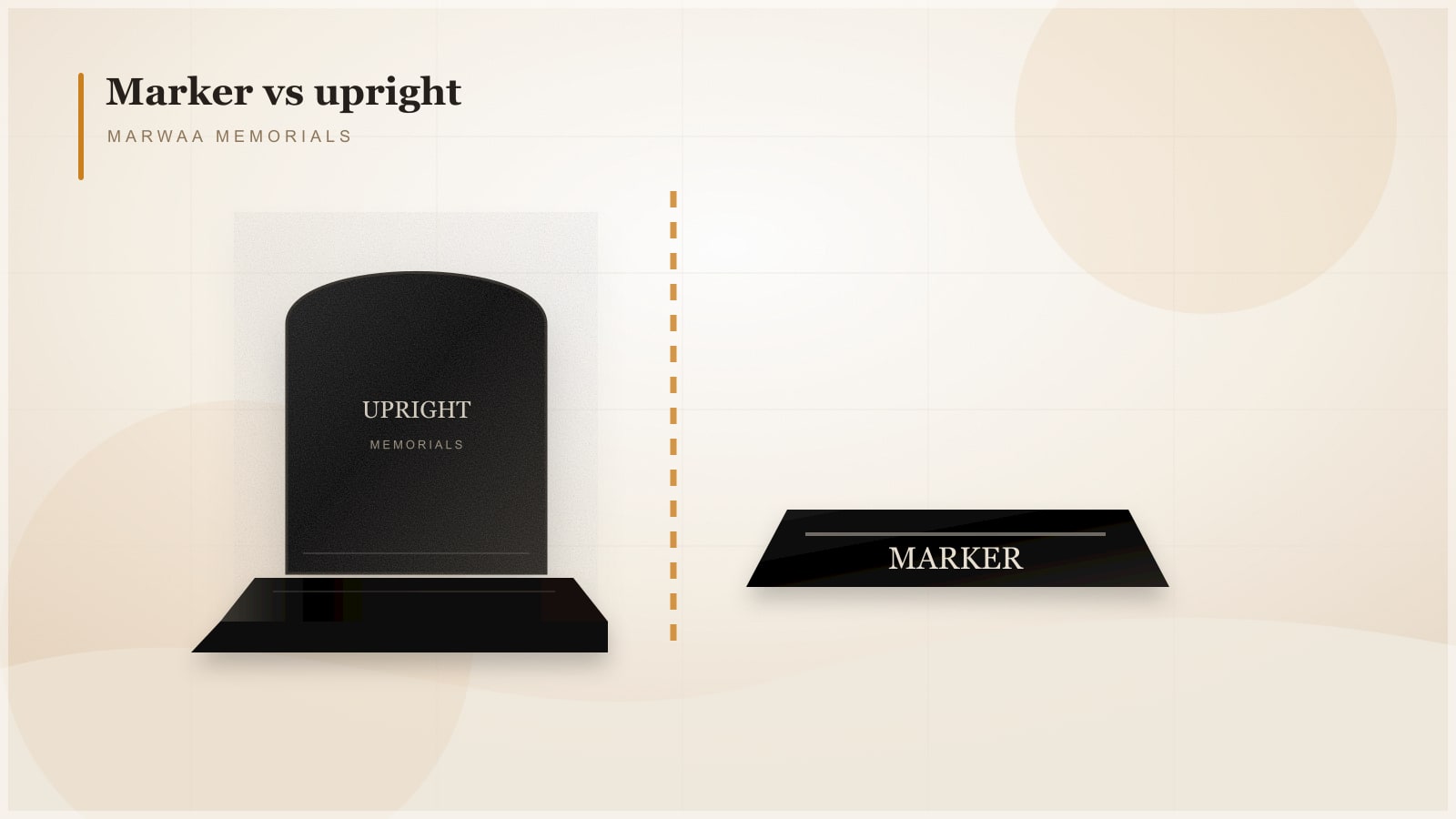
Flat grave markers and upright headstones serve the same purpose, but they create very different memorial experiences. One sits low and simple. The other stands visibly above the grave. The right choice depends on cemetery rules, family preference, budget, engraving needs, installation, and long-term maintenance.
This guide compares the main granite memorial types so families, funeral homes, and monument dealers can explain the options clearly.
Quick Comparison
| Feature | Flat Grave Marker | Upright Headstone |
|---|---|---|
| Visibility | Low, flush or slightly raised | High, visible from a distance |
| Cost logic | Usually lower material and handling cost | Higher stone volume, base and foundation cost |
| Cemetery rules | Required in many memorial parks | Allowed only in approved sections |
| Engraving space | Limited but clean | More room for names, dates, portraits and symbols |
| Installation | Usually simpler | Requires base, foundation and heavier handling |
| Appearance | Minimal, modern, lawn-friendly | Traditional, prominent and customizable |
What Is a Flat Grave Marker?
A flat grave marker is a granite or bronze memorial installed at ground level or slightly raised. It usually includes the name, dates, a short inscription, and sometimes a vase or emblem.
Flat markers are common in cemeteries designed for open lawn maintenance. They are also chosen by families who prefer a modest, clean memorial style.
What Is an Upright Headstone?
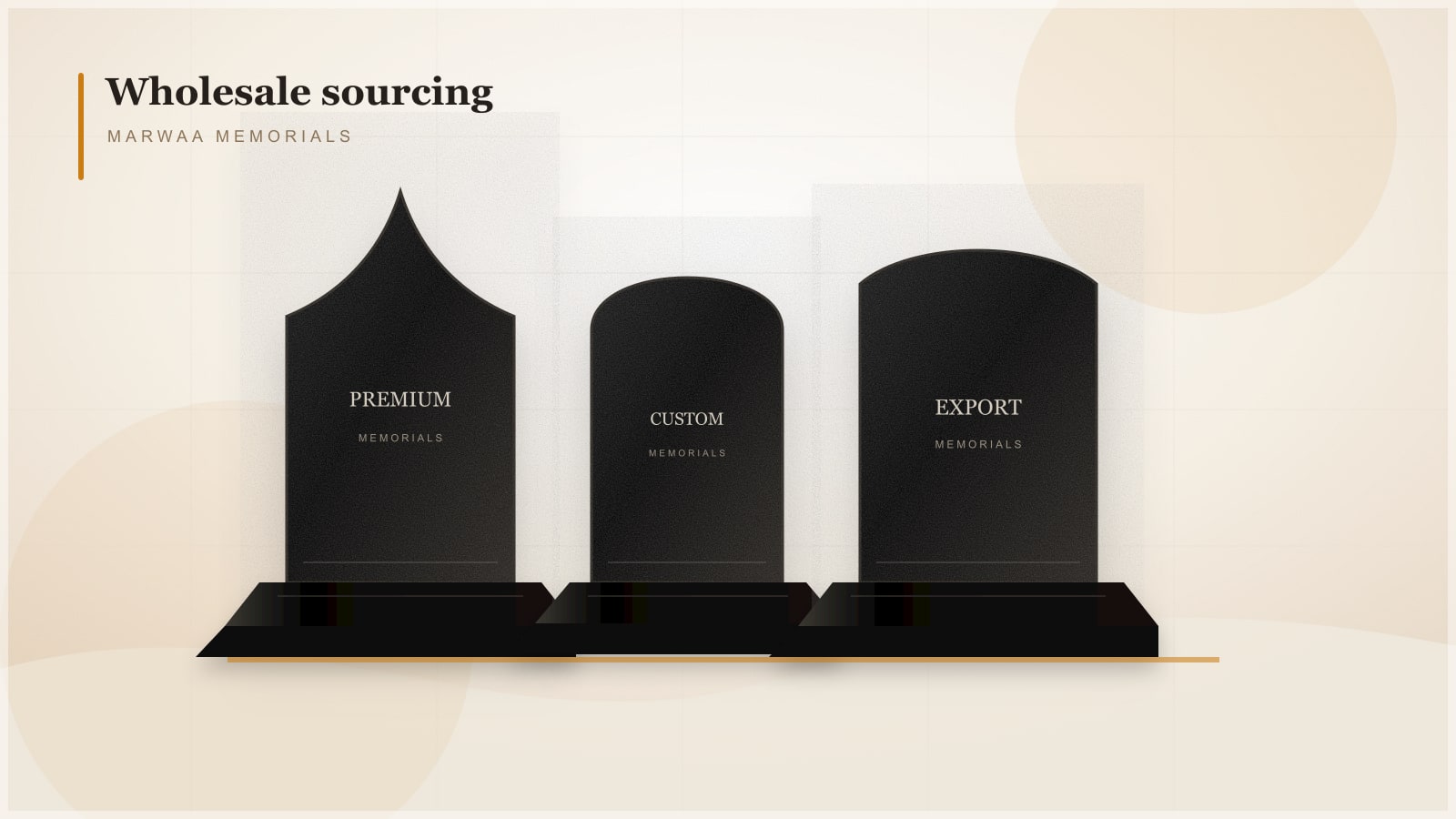
An upright headstone is a vertical granite memorial set on a base. It may be a single monument, companion monument, custom shape, heart design, serpentine top, or religious design.
Upright monuments offer more design space and visual presence. They can include longer inscriptions, carved symbols, laser portraits, vases, and custom artwork.
Cost Differences
Flat markers are often less expensive because they use less stone and require simpler handling. Upright headstones cost more because they include a die, base, heavier freight, foundation requirements, and more installation work.
However, the lowest product price is not always the lowest final cost. Cemetery permit fees, setting fees, delivery, foundation charges, and engraving complexity can change the total.
For a deeper pricing explanation, read the granite headstone cost guide.
Cemetery Rules Decide First
Before comparing designs, confirm what the cemetery allows. Some sections require flat markers only. Others allow upright monuments but limit height, width, granite color, vase placement, or base size.
If a family wants an upright monument in a flat-marker-only section, the order will not be approved. This is why cemetery information should be collected before production begins.
Engraving and Personalization
Flat markers work best for concise memorials: name, dates, short epitaph, small symbol, and sometimes a vase. Upright headstones provide more space for custom layouts, portraits, religious artwork, borders, and companion inscriptions.
Black granite is often preferred when families want high-contrast laser etching. Grey and colored granite can also work well depending on the engraving method and cemetery style.
Delivery and Installation
Granite is heavy, even in smaller formats. Flat markers are easier to transport and set, while upright monuments need careful packaging, lifting, base alignment, and foundation preparation.
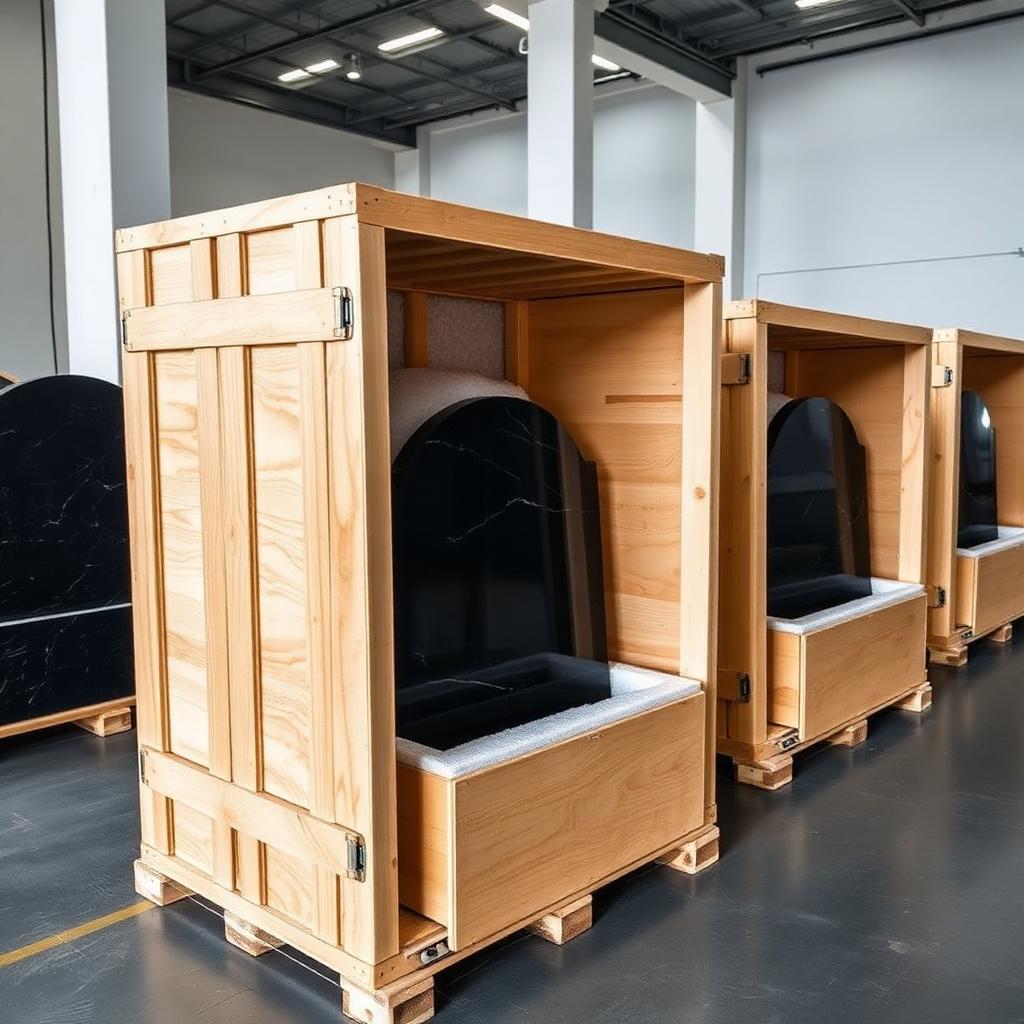
Marwaa Memorials supports factory-direct granite memorial supply with delivery planning across Canada and the USA. The product catalog helps families and partners compare styles before requesting a quote.
Which Memorial Should You Choose?
Choose a flat grave marker when:
- The cemetery requires it.
- The family prefers a simple, modest memorial.
- Budget and maintenance are key concerns.
- The inscription is short and straightforward.
Choose an upright headstone when:
- The cemetery allows it.
- Visibility and tradition matter.
- The family wants more engraving or artwork.
- A companion or family memorial is planned.
Next Step
The best memorial choice starts with cemetery rules, then moves to design and pricing. Review the granite memorial product range, confirm cemetery requirements, and submit a quote request with the preferred style, size, granite color, and inscription details.
Frequently Asked Questions
Are flat grave markers cheaper than upright headstones?
Flat grave markers are usually less expensive because they use less stone and are easier to handle, but cemetery setting fees, engraving, vases, and delivery can affect the final cost.
Which lasts longer, a flat marker or an upright headstone?
Both can last for generations when made from quality granite and installed correctly. The difference is mainly design, visibility, cemetery rules, and maintenance exposure.
Can flat markers include photos or custom artwork?
Yes, but the available space is limited. Upright headstones usually provide more room for portraits, emblems, long inscriptions, borders, and custom layouts.
Ready to get pricing for your granite monument?
Request pricing, factory specifications, and DAP delivery timelines from our team.