Plain Headstones: Amish, Mennonite and Quaker Traditions
Why Amish, Mennonite and Quaker communities choose plain, uniform headstones — and how simplicity and equality shape their memorials.
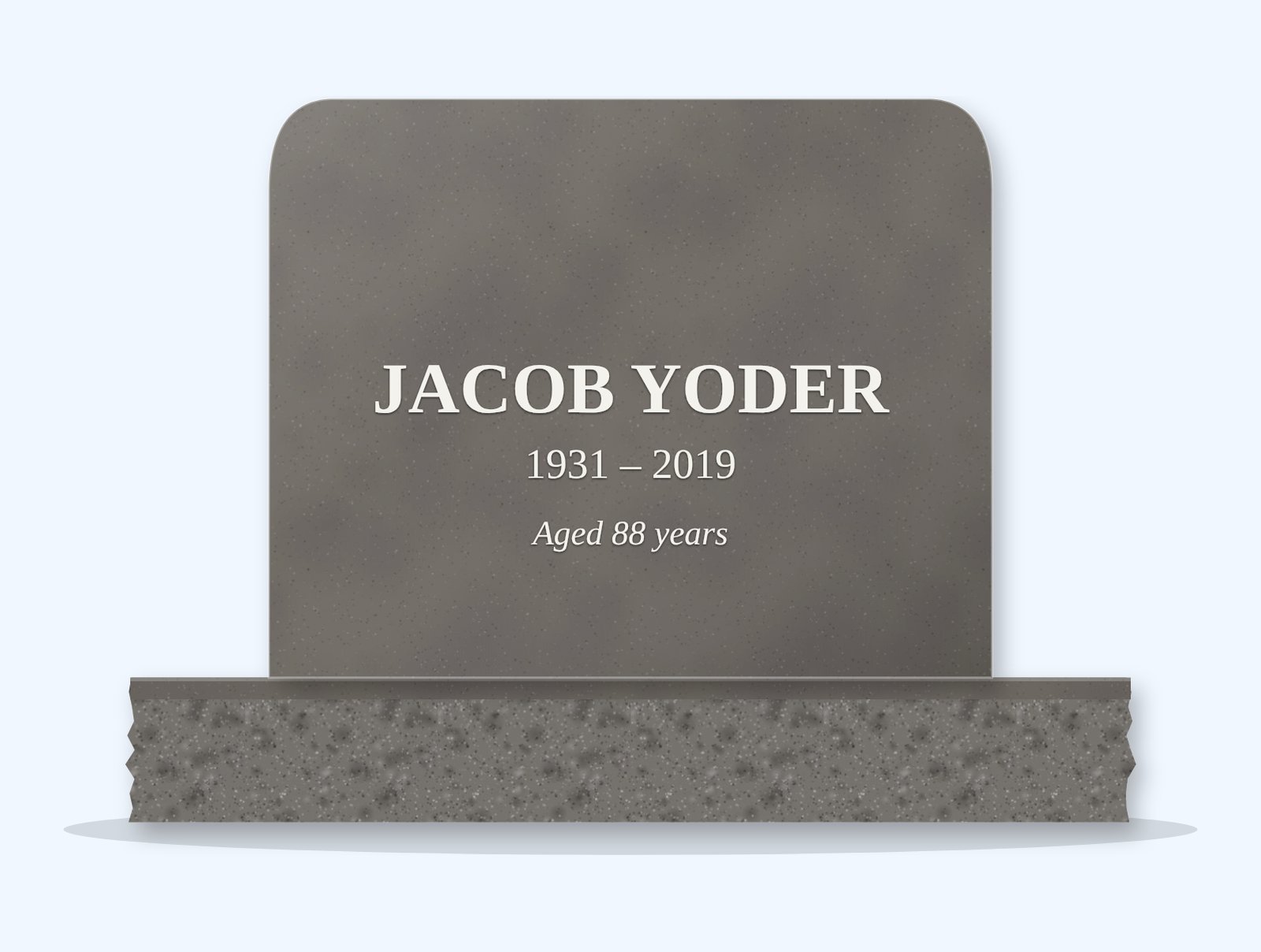
Plain communities value simplicity and equality, even in death. Their memorials reflect that.
Amish
Small, uniform stones with name, dates and sometimes age in years, months and days.
Mennonite
Traditions vary from very plain to modest designs, often with a short Bible verse.
Quaker
Early Quakers avoided headstones; today, small uniform markers are common.
Plain design ideas
See minimalist headstone design and flat vs upright.
Choosing a plain stone outside these traditions
Many families who aren't Amish, Mennonite or Quaker are drawn to plain memorials:
- Equal-sized stones for everyone in a family plot.
- Name and dates only — no titles or epitaphs.
- Grey granite with a simple rounded or square top.
- No symbols, or one small cross.
Plain stones are affordable, timeless and easy to match across generations. See minimalist design.
Why uniform stones matter in plain communities
In plain communities the identical marker is a statement of belief: before God everyone is equal, so no family stands out by wealth or display. Practical results include:
- Rows of stones of the same height and shape, often in order of death rather than family.
- No photographs, carvings or epitaphs in many congregations.
- Plain granite or white stone with simple lettering.
If you're placing a memorial in such a cemetery, follow the congregation's pattern exactly — it's a sign of respect for the whole community.
Simplicity for families of any faith
You don't need to be Amish, Mennonite or Quaker to choose a plain stone. Many families choose simplicity because:
- It suited the person — modest, practical, unfussy.
- It costs less and leaves money for the living.
- It never looks dated.
- It focuses attention on the name.
A simple grey stone with name and dates can be deeply dignified.
Key Takeaways
- Plain markers express equality.
- Name, dates and age are typical.
- Uniform sizes are common.
Next Step
When you're ready, request a quote or plan the layout in the Design Studio.
Frequently Asked Questions
Why are Amish headstones plain?
To express humility and equality.
Did Quakers use headstones?
Early Quakers avoided them; small uniform markers are common today.
What goes on an Amish headstone?
Name, dates and often the age in years, months and days.
Can anyone choose a plain-style headstone?
Yes — simple, uniform stones with name and dates suit many families.
Ready to get pricing for your granite monument?
Request pricing, factory specifications, and DAP delivery timelines from our team.
Related guides
Mexican Headstone and Grave Traditions
Muslim Headstones
Finnish Headstone Inscriptions and Traditions
Italian Headstone Traditions

Welsh Headstone Inscriptions and Traditions