Memorial Time Capsule or a Visible Dedication?
The object people will read now and the contents someone may discover later need separate plans. A family can create a meaningful future archive without making the visible memorial responsible for keeping every letter, photograph or small keepsake.
By Marwaa Team · Editorial standards · Published
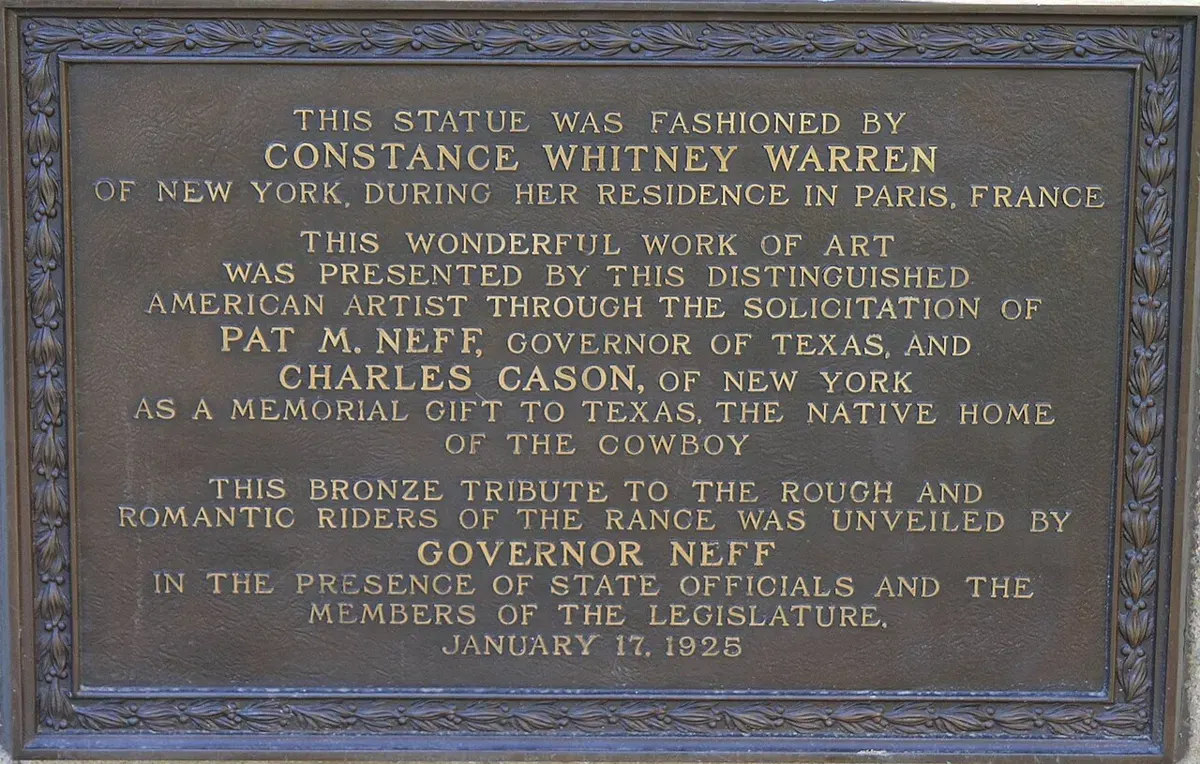
Illustrative stock photograph: Cowboy memorial in front of Texas State Capitol-plaque.JPG by Daniel Mayer · CC BY-SA 3.0. Resized and converted to WebP. The photograph does not represent Marwaa’s work or a featured service location.
A memorial time capsule preserves selected contents for a future opening, while a visible dedication tells today's visitors what is being remembered. They can accompany each other, but they do different jobs. Decide who will keep the capsule record, when it may be opened and what the public inscription should say. A time capsule does not have to be buried, and burial should not be treated as a preservation guarantee.
The object people will read now and the contents someone may discover later need separate plans. A family can create a meaningful future archive without making the visible memorial responsible for keeping every letter, photograph or small keepsake.
What do you want future readers to find?
Choose a small, coherent purpose before collecting objects. The capsule might preserve messages from a particular gathering or explain the life behind a dedication. It should not become the only place where essential family records exist.
Make an inventory outside the capsule as well as inside it. Future custodians should know that it exists and what they are expected to protect. The family may prefer copies of irreplaceable papers, keeping originals in a separately considered archive. Decide how access and custody will work before filling the container.
Does the capsule need to be outdoors?
The Library of Congress explains that a time capsule need not be buried. It frames the project around a suitable container, location and contents. That distinction helps a family compare an indoor archive with an outdoor commemorative marker.
Ask the responsible archive or preservation specialist about the actual contents and storage proposal. A sealed-looking object is not proof that its contents will remain unchanged. This article provides no container recipe or burial procedure. The visible dedication can mark the capsule project even if the archive is kept somewhere else.
Who will know when it may be opened?
Choose a date, event or condition for opening, and explain who has authority to decide. A distant year on stone is not a complete succession plan. The current custodian may move or an organisation may change its name.
Keep the opening instructions in a record that can be passed on. Identify a successor contact or responsible organisation rather than relying on one person's private memory. If access could conflict with cemetery operations or land use, resolve that with the landowner and relevant professionals before making a public promise.
What should the visible memorial say?
Keep the dedication understandable even when the capsule is closed. Visitors should know the person or occasion being commemorated without having to see its contents. An opening date can be part of the text, but need not dominate the design.
Avoid implying the contents are buried directly beneath the marker unless that is actually correct and appropriate to disclose. The catalogue can help compare a simple commemorative plaque with a larger granite form. The archive location and physical monument need not be the same object or the same supply scope.
How should the two records stay connected?
Give the memorial and capsule record a shared project name or reference. Keep photographs of the dedication, the inventory and the opening instructions together. A future custodian should not have to infer the connection from a family anecdote.
The handover-folder guide offers a useful place for those references. Keep any cemetery record separate from the contents list; a time capsule does not establish burial identity or ownership rights. If plans change, update the accessible record instead of letting an outdated inscription become the only instruction.
Compare the practical choices
| Choice | Question to settle |
|---|---|
| Indoor time capsule | Can custody and future access be maintained? |
| Outdoor capsule proposal | Has the actual storage plan received appropriate advice? |
| Visible dedication | Does it explain remembrance without revealing private contents? |
| Opening instruction | Who can interpret and carry it forward? |
A decision in practice
A family wants to place letters from grandchildren beneath a garden memorial. After discussing preservation and access, it decides to keep the letters in a professionally advised indoor capsule and use the garden stone for the dedication.
An inventory and future opening instruction stay with more than one custodian. The stone mentions the family project without giving misleading directions to hidden contents. Present visitors have something readable, and future readers have a traceable archive rather than a mystery container.
Key Takeaways
- A time capsule and a visible memorial have different purposes.
- Time capsules do not have to be buried.
- An opening plan needs a continuing custodian and accessible records.
Frequently Asked Questions
Must a time capsule go beneath the memorial?
No. Its storage location and the visible dedication can be separate.
Should original irreplaceable documents be sealed inside?
Consider their preservation and future access with an appropriate specialist; copies may suit the project better.
Does an opening date identify who may open it?
No. Authority and custody should be recorded separately.
Next step
Read The Headstone Handover Folder: Records Your Family Will Need Later while shaping your discussion with the memorial professional. Families can use that discussion to identify a suitable local provider; dealers should confirm the actual supply scope before seeking a trade quotation.
Read More
- The Headstone Handover Folder: Records Your Family Will Need Later
- A Memorial Donation or a Physical Memorial Stone?
Sources and context
A Note on This Guide
This guide addresses purpose, dedication and record continuity. It gives no burial, container-construction or preservation guarantee. Land use, access and the treatment of particular contents need advice for the actual project and permission from the relevant site.
Published by Marwaa Team for Marwaa Memorials (marwaamemorials.com) · Published 2026-11-25 · Updated 2026-11-25 Marwaa Memorials is a factory-direct exporter of bulk granite monuments and headstones, shipping to monument dealers, funeral homes, and importers across North America.
Related guides

Headstone Quotes About Time

Terrazzo Memorials: Pattern, Lettering and Material
Hourglass on a Headstone: Meaning of Time
Companion Memorials: A Layout Plan for Future Lettering
Leaving a Future Date Blank: Clear Headstone Proof Instructions