Matching Monument Components: Review the Complete Set
Review matching monument components as an identified set, including tablet, base and accessories, before recording material and appearance acceptance.
By Marwaa Team · Published
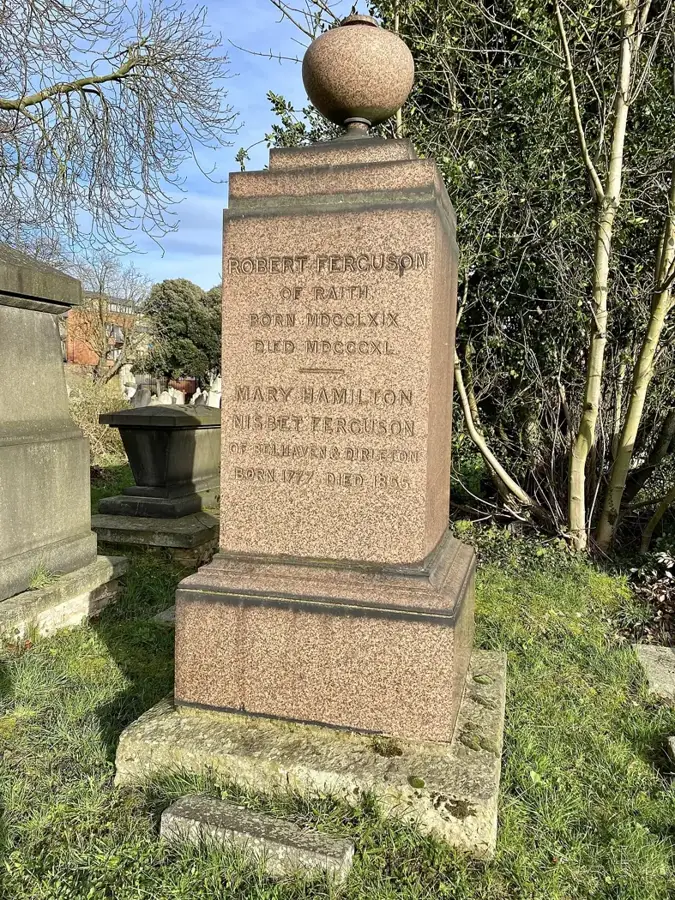
Illustrative stock photograph: Monument to Robert Ferguson, Kensal Green Cemetery, February 2024.jpg by No Swan So Fine · CC BY-SA 4.0. Resized and converted to WebP. The photograph does not represent Marwaa’s work or a featured service location.
Matching monument components should be reviewed as the intended set, not as unrelated photographs of a tablet, base and accessory. Identify the pieces that belong together and the appearance relationship the buyer expects. A deliberate contrast and a close visual match are different design instructions, even when every component uses a familiar granite trade name.
What does matching monument components mean?
Matching can mean the same declared material, a similar visible appearance or an intentionally coordinated combination. Ask which meaning the buyer intends. A base in a contrasting granite may be correct even though it does not resemble the tablet.
For a close-match order, state which visible features matter. Colour, grain movement, finish and part direction can affect the overall impression. Do not promise an exact natural-stone match based only on a small sample or a screen image.
The drawing should name the complete set and each part mark. If a vase or smaller marker belongs with an upright, include it in the review. An omitted accessory can become the most obvious visual difference once the full memorial is assembled.
How should the set be identified?
Give every assembly a set reference and each piece a part ID. Keep those identities through check and packing so an accepted base is not later paired with a different tablet. A general container number cannot show which pieces belong together.
Ask the supplier to explain any planned interchangeability. Some stock parts may be intended to serve several assemblies; a custom paired set may need more precise part marks. Record the actual arrangement instead of imposing one marking system on every product.
| Review question | Close-match design | Deliberate-contrast design |
|---|---|---|
| Stone ID | Confirm all stated references | Identify each different reference |
| Appearance | Compare the visible set | Review the intended link |
| Finish | Check specified surfaces together | Keep each finish explicit |
| Packing identity | Preserve set membership | Preserve the designed combination |
| Replacement | Assess against the remaining set | Assess against the contrast brief |
The table describes review priorities, not acceptance limits.
What photographs help a remote buyer?
Ask for an overview that shows the intended pieces under comparable conditions. Separate close-ups help examine details, but differences in light or wetness can make unrelated images difficult to compare. State the limitation when a complete set view is not practical.
Do not ask staff to arrange heavy parts just to recreate a promotional photograph. The supplier should decide how to present evidence safely. Check evidence can combine controlled views, part IDs and a clear explanation without staging an unsafe assembly.
For a formal trial fit, treat fit and appearance as separate notes. A set may fit in shape and size but still raise an unresolved colour question. Conversely, visually coordinated pieces do not prove the interface meets the technical drawing.
How do you review a partial remake?
A replacement part needs review against the pieces that remain. Find the original order, accepted stone ID and completion images. Ask what can be compared directly and what is limited by the passage of time or available records.
Do not assume that the same trade name settles the replacement. Ask the supplier whether a new sample, complete set review or another approach is right. Keep the buyer's decision specific to the replacement rather than changing the record of the original order.
The base guide explains part roles. Pair it with the sample record when the proposed match needs a fresh appearance decision.
Who approves the final appearance relationship?
The named buyer should name the accepted set and any agreed limitations. If a family is selecting the appearance through a dealer, the dealer should keep the family-facing approval while separately managing the bulk-order part schedule.
Avoid a vague approval such as “all good” attached to a mixed image gallery. Name the set references and the images reviewed. If one part remains unresolved, state that it is excluded from the acceptance.
A supplier's release record should show how the accepted grouping connects to packing. This does not require a complicated database. It requires a record that a different receiver can understand without reconstructing a conversation.
What should a repeat order preserve?
Keep the original combination's references, but review current material availability and appearance evidence for the repeat. The earlier order is a useful starting point, not a guarantee that a new batch will be indistinguishable.
Explore the product range for possible combinations and keep the accepted part schedule with the final records. Where handling or assembly is needed for review, the stone professional must control the work. The buyer's task is to make the expected link clear and keep the identity of what was accepted.
Key Takeaways
- Matching monument parts need an explicit intended look and set identity.
- A close match and an intentional contrast require different review questions.
- A replacement piece should be assessed against the parts that remain.
Frequently Asked Questions
Do identical granite names guarantee a close match?
No. Review the declared material and the appearance of the actual intended set.
Can I approve the tablet and base from unrelated photos?
The photos may help, but differing conditions limit review. Ask for a suitable set-level record.
Does a trial fit confirm colour acceptance?
No. Fit and appearance are separate decisions that should each be recorded.
For a dealer or importer order, request a bulk monument quotation with the relevant drawing and the acceptance points that still need agreement.
Read More
- Headstone Bases Explained
- Granite Sample Review Record
- How to Tell if a Granite Monument Is High Quality
A Note on This Guide
This guide is about set identity and appearance review. It does not provide assembly or lifting instructions. Natural variation and the approved design decide what matching means for the order.
For handling context, see the OSHA stone-handling bulletin. For stone-selection references, consult the Natural Stone Institute directory.
Published by Marwaa Team for Marwaa Memorials (marwaamemorials.com) · Published 2026-11-21 · Updated 2026-11-21 Marwaa Memorials is a factory-direct exporter of bulk granite monuments and headstones, shipping to monument dealers, funeral homes, and importers across North America.
Related guides

Monument Crate Labels: Map Components Without Guessing
Memorial Accessory Holes: Check the Approved Drawing

Missing Monument Components: Reconcile a Freight Shortage
Matching a New Headstone to an Existing Family Stone
Monument Dealer Reviews: Request Honest Feedback