Historic Wooden Grave Markers: Preserve the Record
Preserve the evidence of historic wooden grave markers before considering treatment, new coatings or a separate replacement memorial.
By Marwaa Team · Editorial standards · Published
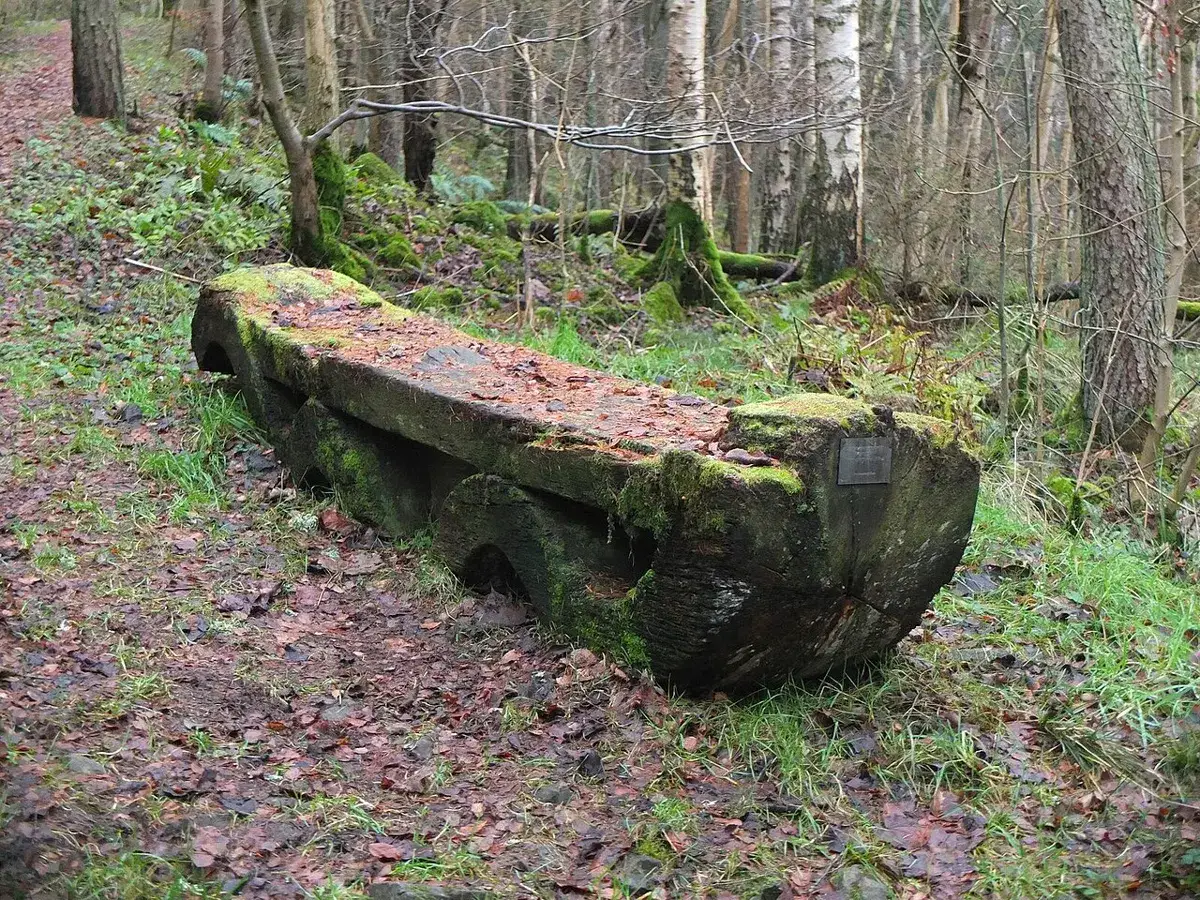
Illustrative stock photograph: Memorial bench, Plora Wood - geograph.org.uk - 6703403.jpg by Jim Barton · CC BY-SA 2.0. Resized and converted to WebP. The photograph does not represent Marwaa’s work or a featured service location.
A historic wooden grave marker is more than a temporary version of a stone. Its material, form and surviving text can carry evidence of the site’s history. Record what can be seen safely and ask about appropriate assessment before cleaning, coating, moving or copying it. A new stone can be a separate memorial choice, not a treatment of the original wood.
Why does the material matter to the decision?
Wood has formed part of cemetery markers and enclosures, as the NPS materials course explains. That broad history should not be reduced to an assumption that every surviving wooden object is disposable or was meant to be replaced immediately.
Ask the cemetery what is known about the specific marker. A family memory, earlier survey or historic photograph may explain its age and role. Preserve the source of that information rather than turning a likely date into an established fact.
Record the surviving object without treatment
Photograph the setting and visible faces only from safe, permitted positions. Copy readable text with uncertainty noted. If a name is partly lost, preserve the gap rather than reconstructing the whole inscription from a family tree.
Do not brush, scrape or wet the surface to improve contrast. Do not press or lift a fragile piece for another view. If physical condition limits observation, record that limit and ask the site about appropriate professional help.
Separate four possible objectives
| Objective | Useful next question | What it does not authorize |
|---|---|---|
| Preserve a record | Which safe images and sources survive? | Cleaning to reveal more detail |
| Assess the object | Who has relevant material expertise? | A visitor’s stability test |
| Consider conservation | What proposal follows the assessment? | A general coating or repair recipe |
| Provide another memorial | What separate form does the site accept? | Disposal or alteration of the original |
These objectives can coexist, but they should not collapse into one vague instruction to “restore the grave.” The family can ask for a clear record before deciding what further work is appropriate.
Why not apply a common outdoor timber product?
A product sold for fences or garden furniture is not automatically suitable for an old marker. Its effect on the wood, surface and future treatment needs appropriate consideration. Do not assume that sealing or painting is preservation simply because it makes the object look more uniform.
Historic England’s monument guidance includes wooden elements within its wider conservation context. It is not a set of instructions for applying a treatment to your marker. Ask a suitably qualified professional about the actual condition and proposed objective.
Keep detached parts and context together
If a piece is found on the ground, do not take it home as a keepsake or fix it to the nearest marker. Its position and relationship to other features may matter. Report it to the responsible site manager with safe context photographs.
The loose-fragment reporting guide explains the visitor’s role without prescribing repair. A piece that seems small can still hold text or construction evidence that a casual move would separate from its setting.
Example: a family wants legible names for descendants
Suppose an old timber marker is difficult to read, while an earlier reliable transcription survives. The family may want a new granite stone with the complete names. Before treating that as a replacement, ask whether the original can remain and what separate accepted means of interpretation is possible.
The answer depends on the actual site and assessment. Keep the old transcription, its source and the original object’s record together. A modern copy should not be presented as if every character remains visible on the wood today.
Describe a new object honestly
If the site accepts a separate new memorial, record its date and purpose. Do not claim that granite preserves the original material or construction. It preserves a chosen new expression of remembrance, while the historical record may include several distinct objects.
The historic replacement review helps compare options. The uncertain transcription guide helps keep missing text honest. The Marwaa catalogue provides new stone forms for discussion only after the existing marker’s role and appropriate treatment have been considered.
Key Takeaways
- A surviving wooden grave marker can carry historical evidence beyond its inscription.
- Do not assume that a general outdoor timber coating is suitable conservation care.
- A new stone is a separate object and should not erase the record or role of the original wooden marker.
Frequently Asked Questions
Are all wooden markers only temporary?
Do not assume that. Ask about the specific object’s history and the site’s records.
Should I seal or paint an old wooden marker?
Do not choose a treatment from a general garden-product label. Seek appropriate material-specific advice.
Can a new stone copy the old wording?
That is a separate proposal requiring confirmed text and the site’s acceptance; it does not decide what happens to the original wood.
Next Step
Use the historic headstone review to distinguish recording, assessment and any separate new memorial proposal.
Read More
- Before Replacing a Historic Headstone: Review Options
- Transcribing a Worn Headstone Without Guessing
- Found a Loose Gravestone Fragment? Report It
A Note on This Guide
This guide does not identify wood condition or prescribe conservation treatment. Historic context, material and site requirements differ. Ask appropriate professionals and the operator before moving, coating or changing a wooden marker.
Published by Marwaa Team for Marwaa Memorials (marwaamemorials.com) · Published 2026-11-23 · Updated 2026-11-23 Marwaa Memorials is a factory-direct exporter of bulk granite monuments and headstones, shipping to monument dealers, funeral homes, and importers across North America.
Related guides
Historic Iron Grave Markers: Care Boundaries
Historic Zinc or White-Bronze Grave Markers

Before Replacing a Historic Headstone: Review Options
How to Clean a Concrete Grave Marker
How to Fix a Sunken Flat Grave Marker