Grey and Colored Granite Headstones: Choosing the Right Color
Compare grey, black, and colored granite headstones by cost, cemetery acceptance, engraving contrast, and long-term appearance.
Key Takeaways
- Grey granite is the traditional, most widely cemetery-approved color and typically the most cost-effective option.
- Black granite offers the highest contrast for laser-etched portraits and detailed engraving, which is why it's become the standard choice for photo memorials.
- Red, blue, pink, and mahogany granites add cost and are sometimes restricted in uniform memorial-park sections.
- Granite color doesn't affect durability in any meaningful way; all commonly used monument granites weather similarly well.
- Cemetery rules on approved colors should be confirmed before choosing a color, not after a family has already picked one.
Why Granite Color Is a Cemetery Question First
A surprising number of color decisions get made before anyone checks whether the cemetery allows the color at all. Uniform memorial-park sections in particular often restrict color choices to keep a consistent look across rows, sometimes to gray only.
Traditional cemetery sections with individually purchased plots tend to allow more color range, since there's no uniform-appearance requirement to maintain. Either way, this is a five-minute phone call to the cemetery office that can save weeks of delay if a family orders a color the section doesn't accept.
Grey Granite
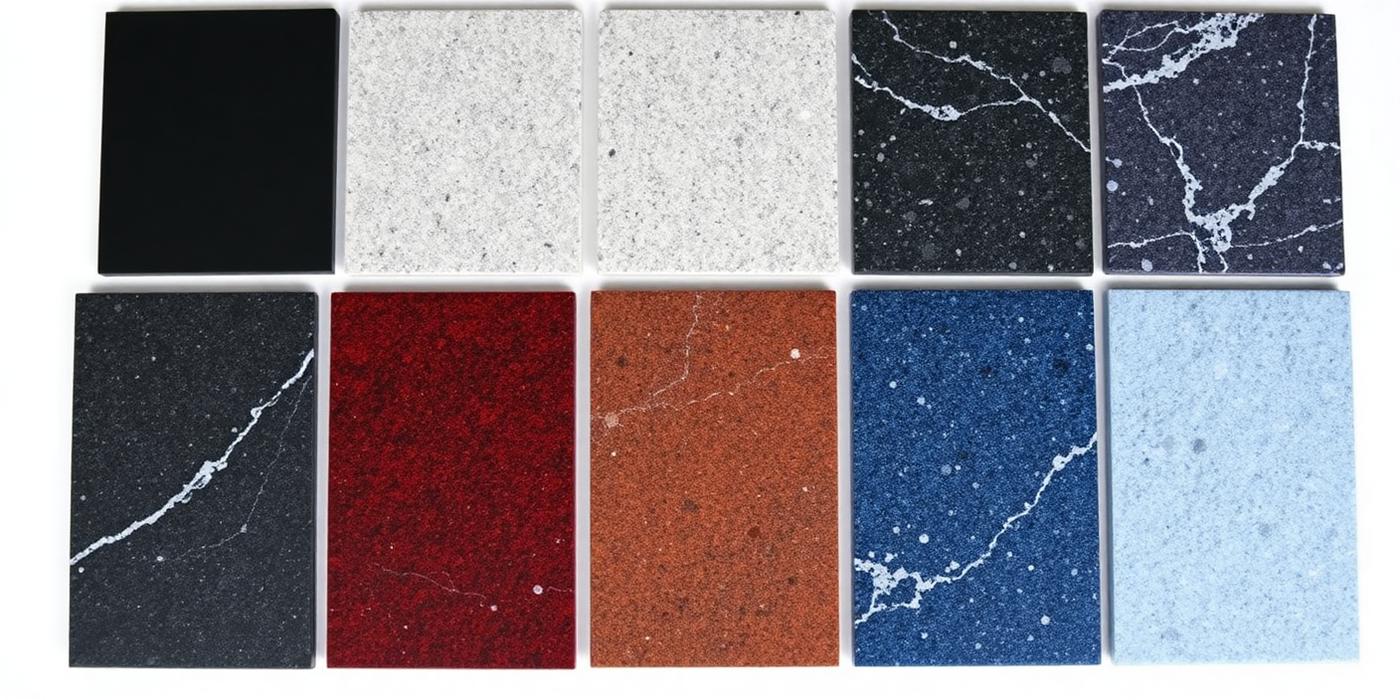
Grey is the default choice for a reason. It's traditional, it's accepted in nearly every cemetery section that allows granite at all, and it's generally the least expensive color because it's the most abundant and widely quarried.
Grey works well across every headstone type, upright monuments, flat markers, slants, and companion stones, and it pairs cleanly with sandblasted lettering, which is the standard technique for names, dates, and most inscriptions. For a family or dealer prioritizing cemetery acceptance and cost predictability over a distinctive look, grey is the safe, correct default.
Black Granite
Black granite has become the dominant choice for a specific reason: contrast. Laser etching relies on the difference between the polished black surface and the lighter etched area to render a portrait or detailed scene, and no other common granite color produces that level of clarity.
Beyond photo memorials, black granite gives a formal, polished appearance that reads as more contemporary than traditional grey, and it's widely, though not universally, accepted across cemetery sections. It typically costs somewhat more than grey per square foot, largely because deep, uniform black granite is quarried in fewer locations.
Red, Blue, Pink, and Mahogany Granite
Colored granites serve a different purpose: distinction. A red or mahogany headstone reads as warm and traditional in a row of grey stones. Blue granite tends to read as formal and refined, often chosen for more contemporary designs. Pink granite softens the appearance, a common choice for children's memorials or designs pairing with floral carving.
The tradeoff is twofold. Colored granites generally cost more than grey or black, since they're quarried in fewer locations and often imported over longer distances, and they're the color category most likely to run into a cemetery's color restrictions in a uniform section. Confirming acceptance matters more here than with grey or black.
Granite Color Comparison
| Color | Typical cost vs. grey | Cemetery acceptance | Best for |
|---|---|---|---|
| Grey | Baseline, most affordable | Widest acceptance | Traditional headstones, cost-sensitive orders |
| Black | Moderately higher | Wide, but check uniform sections | Laser-etched portraits, contemporary designs |
| Red / mahogany | Higher | Check individually, often restricted in memorial parks | Traditional, distinctive appearance |
| Blue | Higher | Check individually | Formal, contemporary designs |
| Pink | Higher | Check individually | Softer designs, children's memorials |
A note for dealers: grey and black together typically cover the large majority of retail demand, which is why they're worth stocking deepest in a showroom or catalog. Colored granite moves in smaller volumes but at a higher margin, and it's usually more efficient to source it to order against a confirmed design rather than holding broad color inventory, since colored granite availability and pricing shift more with quarry sourcing than grey or black do.
Does Color Affect Durability?
Not meaningfully. All commonly used monument granites, regardless of color, are dense, low-porosity stones selected specifically for outdoor weather resistance. A grey headstone and a black headstone of the same quarry-grade granite will weather at essentially the same rate. Color is a design and cemetery-acceptance decision, not a durability one.
Next Step
If you're planning inventory or pricing across the grey, black, and colored granite range, our Request a Quote page has current factory-direct pricing by color and size.
Cemetery rules on approved granite colors vary by individual cemetery and section, and the patterns described above are common tendencies, not universal rules. Confirm approved colors with the specific cemetery before finalizing a design.
Frequently Asked Questions
What is the most popular headstone color?
Grey remains the most common headstone color because of its traditional appearance, wide cemetery acceptance, and lower cost. Black granite has grown significantly in popularity, particularly for designs that include laser-etched portraits.
Is black granite better than grey granite?
Neither is objectively better; they suit different priorities. Black granite gives stronger contrast for laser etching and a more contemporary look. Grey granite is generally more affordable and accepted in a wider range of cemetery sections. The better choice depends on the design goal and the cemetery's rules.
Do all cemeteries allow colored granite?
No. Many memorial-park sections restrict color to maintain a uniform appearance, sometimes to grey only. Traditional cemetery sections with individually owned plots typically allow more color range. Always confirm with the specific cemetery before choosing a color.
Does granite color affect how long a headstone lasts?
No. Commonly used monument granites weather similarly regardless of color, since they're selected for density and low porosity rather than color. Color is a visual and cemetery-approval choice, not a durability factor.
Why does colored granite cost more than grey or black?
Colored granites like red, blue, and mahogany are quarried in fewer locations worldwide and often travel further to reach a processing facility, which adds to the base material cost before engraving or finishing.
Ready to get pricing for your granite monument?
Request pricing, factory specifications, and DAP delivery timelines from our team.