Grey Granite Monuments: The Traditional Choice Explained
Why grey granite remains the most popular monument color — durability, cost, and how it compares to black granite.
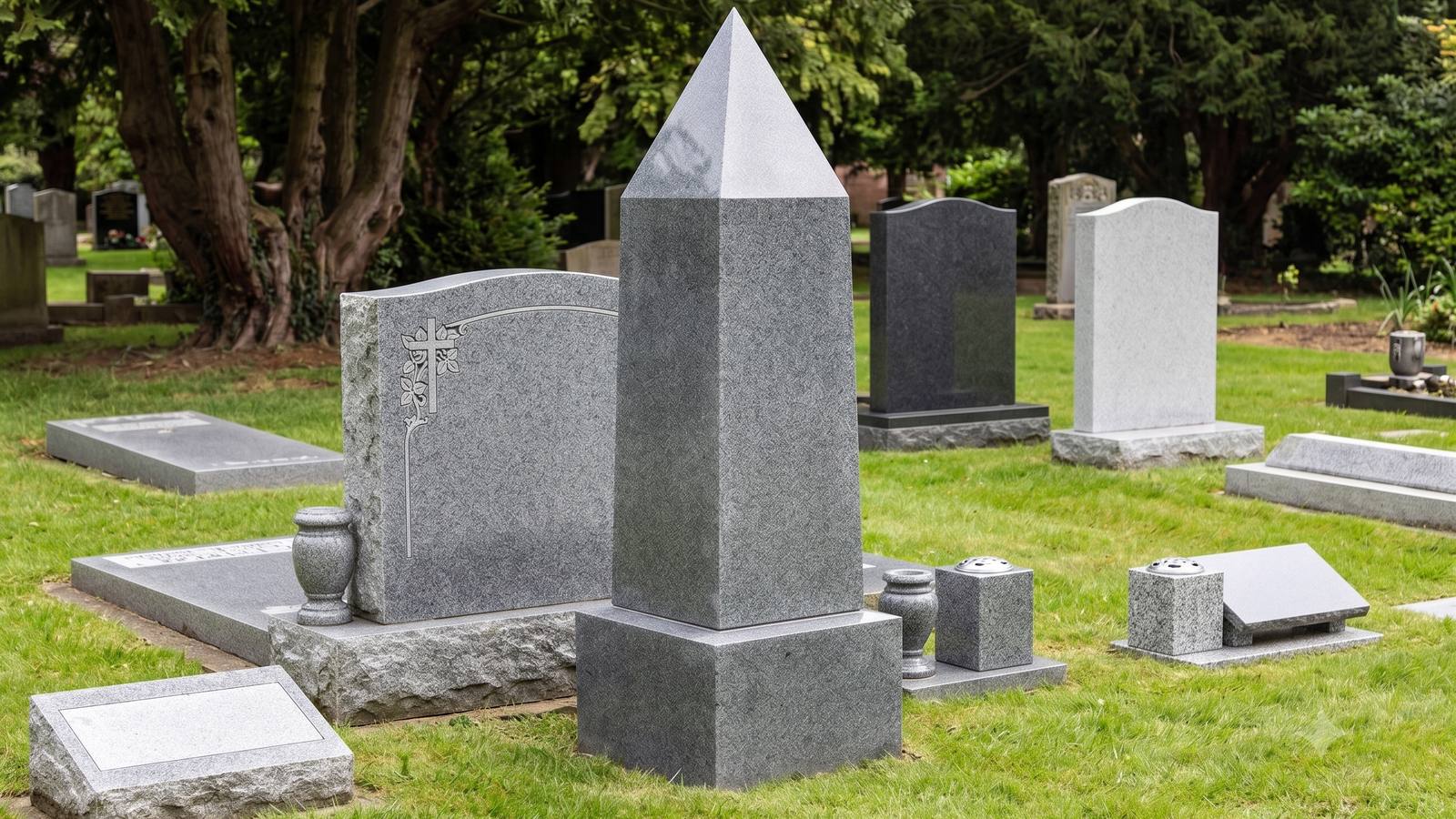
Walk through almost any cemetery, in almost any country, and grey is the color you'll see the most. It's not a coincidence or a lack of imagination — grey granite earned that dominance through a genuinely practical combination of durability, affordability, and a look that ages well in a way few other choices do.
Why grey is the default, not just a fallback
Grey granite's popularity comes down to three things lining up at once, which doesn't happen with every color:
It's abundant, which keeps it affordable. Grey granite is quarried widely across North America and beyond, and that availability makes it easier to source and cut than rarer, more exotic colors — which shows up directly in the price.
It's genuinely durable. Like all granite, grey varieties are dense and weather-resistant, holding their surface and legibility for generations with minimal upkeep.
It hides weathering better than darker stone. This is a detail people don't expect: lighter granite naturally conceals water spots, pollen, and dust more than black or dark red granite does. A grey memorial can look presentable for longer between cleanings, simply because of how the color interacts with the elements sitting on its surface.
Common grey granite varieties
Grey isn't one uniform shade — it ranges from cool, neutral tones to warmer, bluish grey depending on where it's quarried:
- Barre Grey — quarried in Vermont, known for a uniform, fine-grained grey with a classic, understated look that's remained popular for generations.
- Georgia Grey — a lighter, bluish-grey stone that can take on a subtle sky-blue cast in direct sunlight, and is prized for being both durable and relatively easy to carve in detail.
- Various regional "Super Grey" or similarly branded stones, which tend to compete directly with Barre Grey on both appearance and price.
The exact shade, grain, and price will vary by supplier and quarry source, so it's worth asking to see physical samples rather than choosing from a photo alone — grey granite's subtle variations are easy to misjudge on a screen.
What grey granite is best suited for
Traditional sandblasted lettering and classic design work. Grey's lighter background gives strong, legible contrast for standard engraved lettering and traditional decorative elements — the kind of clean, dignified look most people picture when they think "headstone."
Understated, timeless memorials. Families who want something that feels quiet and dignified rather than dramatic tend to gravitate toward grey. It reads as classic in almost any cemetery setting, in a way that doesn't compete for attention.
Lower ongoing maintenance concerns. Since grey hides surface residue better than dark stone, it's a practical choice for families who want a low-fuss memorial without frequent cleaning.
Where black granite has the edge instead
It's worth being direct about the one place grey isn't the best tool for the job: laser-etched portraits and highly detailed photographic engravings. That technique works by removing a polished dark surface to reveal lighter stone underneath, which needs strong contrast to render fine detail — something black granite is built for in a way lighter stones aren't. If a laser-etched portrait or highly detailed photorealistic image is the centerpiece of your design, our black granite monuments guide covers what's achievable on that material specifically.
For most other engraving styles — sandblasted lettering, shallow relief carving, symbols, and standard artwork — grey performs excellently and doesn't carry that same tradeoff.
Grey granite at a glance
| Grey Granite | |
|---|---|
| Durability | Excellent |
| Cost | Generally the most affordable granite option |
| Maintenance | Low — hides water spots and pollen well |
| Best engraving fit | Sandblasted lettering, traditional carving, symbols |
| Less ideal for | Laser-etched photographic portraits (contrast limitation) |
| Overall aesthetic | Classic, understated, dignified |
A few practical questions to ask before ordering
- Does your cemetery restrict granite color in any section? (Most don't, but some do, particularly for bronze-on-granite combinations.)
- Do you want physical samples rather than photos, given how subtly grey shades can shift in different lighting?
- Is fine photographic detail a priority? If so, weigh grey against black granite specifically before finalizing — see our granite vs. marble vs. bronze comparison for how the major memorial materials stack up more broadly.
Key Takeaways
- Grey granite is the most common memorial color because it combines affordability, durability, and a look that ages gracefully — not because it's a default lack of choice.
- Lighter grey stone actually hides water spots, pollen, and dust better than darker granite, making it a genuinely practical low-maintenance choice.
- Grey performs excellently for traditional sandblasted lettering and classic design work, but black granite is the stronger choice specifically for laser-etched photographic portraits.
- Grey granite varies meaningfully by quarry source (cooler vs. warmer tones), so request physical samples rather than judging from photos.
- Most cemeteries don't restrict granite color, but it's worth a quick check before finalizing a design.
Next Step
If you're weighing grey against other granite colors for a memorial project, our design studio lets you compare shades and finishes directly, and our team is happy to show physical samples side by side when you request a quote.
Frequently Asked Questions
Is grey granite cheaper than black granite?
Generally yes — grey granite's wider availability and easier quarrying tend to make it more affordable than black granite, though exact pricing varies by supplier and specific stone.
Does grey granite fade over time?
No. Granite's color comes from its natural mineral composition rather than a dye or coating, so it doesn't fade the way an applied color would.
Can grey granite be laser-etched?
It can be engraved, but grey's lighter background provides less contrast for fine photographic detail than black granite does, which is why black is more commonly used for detailed laser-etched portraits.
Why does grey granite look different in photos versus in person?
Subtle grain and undertone variations (cool vs. warm grey) can be hard to judge from a photo or screen, which is why requesting a physical sample before ordering is worth the extra step.
Do cemeteries restrict which granite colors are allowed?
Most don't regulate color, but some cemeteries do have restrictions, particularly around bronze markers set into a granite base — it's worth confirming with your specific cemetery.
Ready to get pricing for your granite monument?
Request pricing, factory specifications, and DAP delivery timelines from our team.