Cremation Headstones and Grave Markers: Your Options Explained
Cremation doesn't mean skipping a permanent memorial. A guide to cremation headstones, urn compartments, and grave marker options.
The two questions that actually decide this
Before comparing products, it helps to separate two different decisions families often blend together:
- Where will the ashes actually go? Buried in a plot, placed in a columbarium niche, kept at home, or scattered elsewhere.
- Do you want the memorial to physically hold the ashes, or just mark the person's name and dates?
Both are valid, and the answer changes which product actually fits. A family that buries ashes in a small plot but wants a full-size, visible memorial has different needs than a family placing an urn in a niche and wanting a simple nameplate.
Cremation headstone types
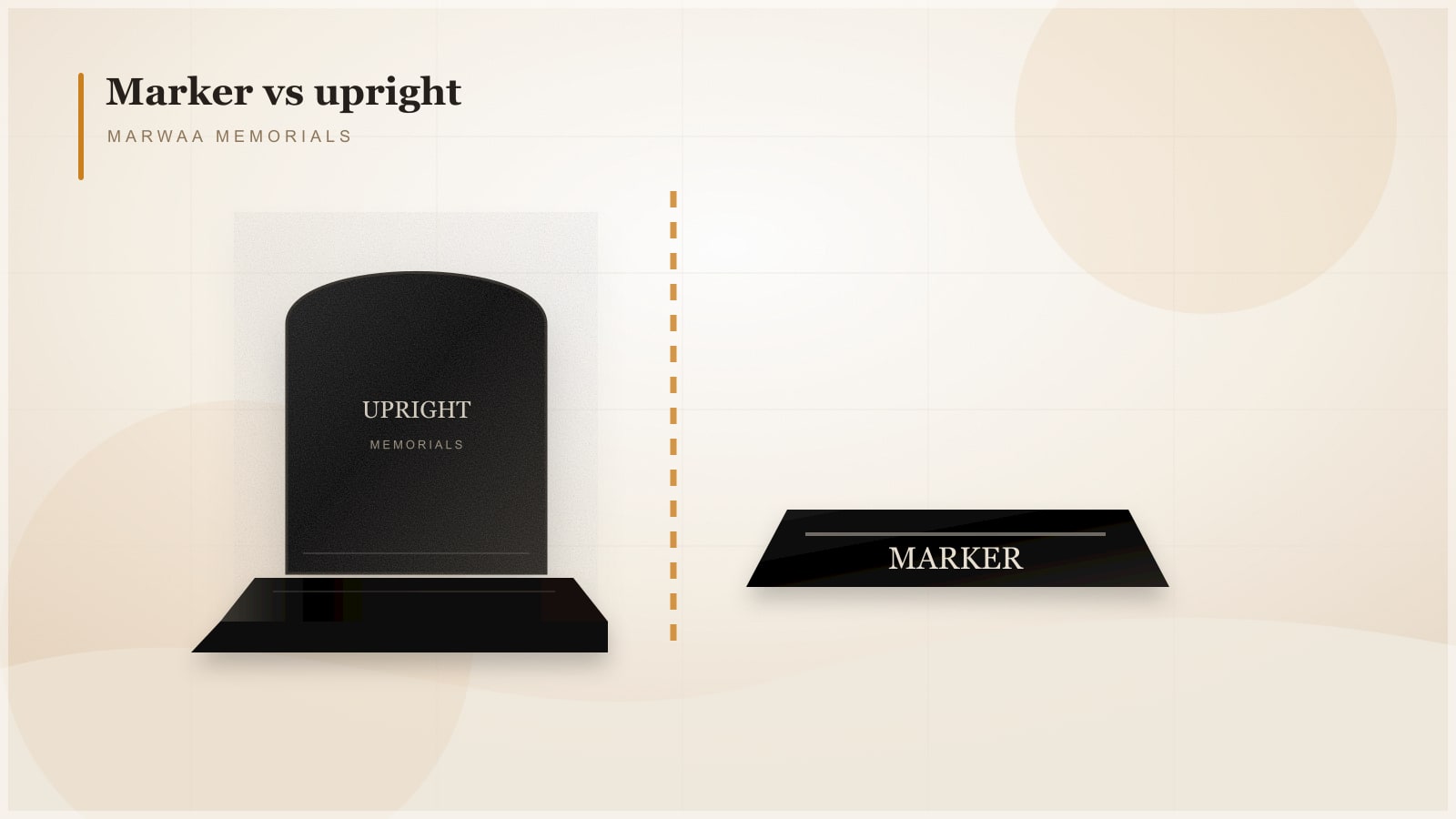
Upright cremation monuments look nearly identical to a traditional upright headstone, with one key difference: a sealed compartment, usually cored into the base, designed to hold the urn or cremated remains directly. These give families the visibility and engraving space of a full monument while keeping the remains within the memorial itself.
Cremation grave markers are flat markers sized for cremation plots and cremation garden sections — smaller-footprint burial areas that many cemeteries have added specifically to accommodate rising cremation rates. Some accommodate a small urn vault set beneath the marker.
Memorial pillars and columns offer a more distinctive, upright column-style design with the compartment built into the column itself, rather than a traditional tablet shape.
Columbarium niche plaques are a different category entirely — a small nameplate that identifies a specific niche in a columbarium wall, rather than a freestanding memorial in a plot.
Material and design considerations
The material and finish considerations are largely the same as a traditional headstone — see our granite vs. marble vs. bronze comparison for the full breakdown. Granite remains the most common choice for cremation monuments specifically, since it supports the coring needed for a urn compartment without compromising structural strength.
Engraving options — names, dates, an epitaph, symbols, or a portrait — work the same way as any other headstone. Our custom engraving guide and headstone symbols guide both apply directly to cremation memorials, and many families choose the same personalization approach they would for a traditional burial monument.
Cemetery rules for cremation memorials
Cremation sections often have their own separate size and style regulations, distinct from the cemetery's general burial section — some cremation gardens only permit flat markers, for instance, regardless of what's allowed elsewhere on the grounds. It's worth confirming cremation-specific rules directly, rather than assuming the cemetery's general headstone policy applies. Our cemetery rules guide covers what to ask before finalizing a design.
Key Takeaways
- Choosing cremation doesn't mean skipping a permanent memorial — cremation headstones and grave markers are a distinct, well-established product category.
- Upright cremation monuments include a sealed compartment for the urn, while cremation grave markers are typically flat and sized for cremation garden sections.
- The decision comes down to two questions: where the ashes are actually placed, and whether you want the memorial to physically hold them.
- Cremation sections often carry their own separate cemetery rules, distinct from general burial-section policies.
- Material, engraving, and design options for cremation memorials work the same way as traditional headstones.
Next Step
Ready to explore cremation memorial options? Browse our collection or request a quote and our team can walk through cemetery requirements specific to your cremation section.
Frequently Asked Questions
Can you put ashes in a regular headstone?
Not a standard one — a cremation headstone specifically includes a sealed compartment designed to hold the urn or remains. A traditional headstone marks a burial location but doesn't have a built-in space for ashes.
What is a cremation grave marker?
A flat memorial marker sized for cremation plots or cremation garden sections, which are smaller-footprint burial areas many cemeteries have added specifically for cremated remains.
Do cremation headstones cost less than traditional headstones?
Not necessarily — pricing depends on size, material, and design the same way a traditional headstone does. Cremation grave markers tend to be smaller and therefore less expensive, but upright cremation monuments are priced similarly to traditional upright headstones.
Can two people share a cremation headstone?
Yes — companion cremation headstones and markers are available, sized to hold or memorialize two people, similar to companion options for traditional burial.
Ready to get pricing for your granite monument?
Request pricing, factory specifications, and DAP delivery timelines from our team.