Bahá'í Burial and Headstone Traditions
A guide to Bahá'í burial and headstone traditions — burial near the place of death, the burial ring, the nine-pointed star and gravestone wording.
The Bahá'í Faith has a small number of clear burial laws and a great deal of freedom in how a grave is marked. This guide explains the main customs so families, funeral homes and monument makers can plan a headstone respectfully. Every family's situation differs, so the local Spiritual Assembly is the best place to confirm details.
Core burial laws
- Burial, not cremation. Bahá'ís are buried rather than cremated.
- Close to the place of death. The body should not be carried more than about an hour's journey from where the person died.
- No embalming unless the law requires it.
- Washing and shrouding in cotton or silk, with a burial ring placed on the finger of a believer aged 15 or over.
- The Prayer for the Dead, said for a believer aged 15 or over, before burial.
- Facing the Qiblih. The body is laid with the feet pointing toward the Qiblih, the Shrine of Bahá'u'lláh near Akka (in today's Israel).
The burial ring
The burial ring carries a short verse from Bahá'u'lláh about coming forth from God and returning to Him. Some families engrave the same verse, or part of it, on the headstone. Use the authorised English wording supplied by your Spiritual Assembly or the Bahá'í Publishing Trust, since translations differ and some are still under copyright.
Headstone designs
There is no required design. Common choices include:
- The nine-pointed star, a widely used Bahá'í symbol (the number nine stands for completeness).
- The "Greatest Name" in Arabic calligraphy, which many Bahá'ís treat with great reverence. Some prefer to keep it for the home and use the star outdoors.
- The ringstone symbol, another calligraphic emblem.
- Gardens, flowers and simple borders, reflecting the terraced gardens at the Bahá'í World Centre.
Ask your local Spiritual Assembly whether it has guidance on using sacred calligraphy outdoors.
Wording ideas
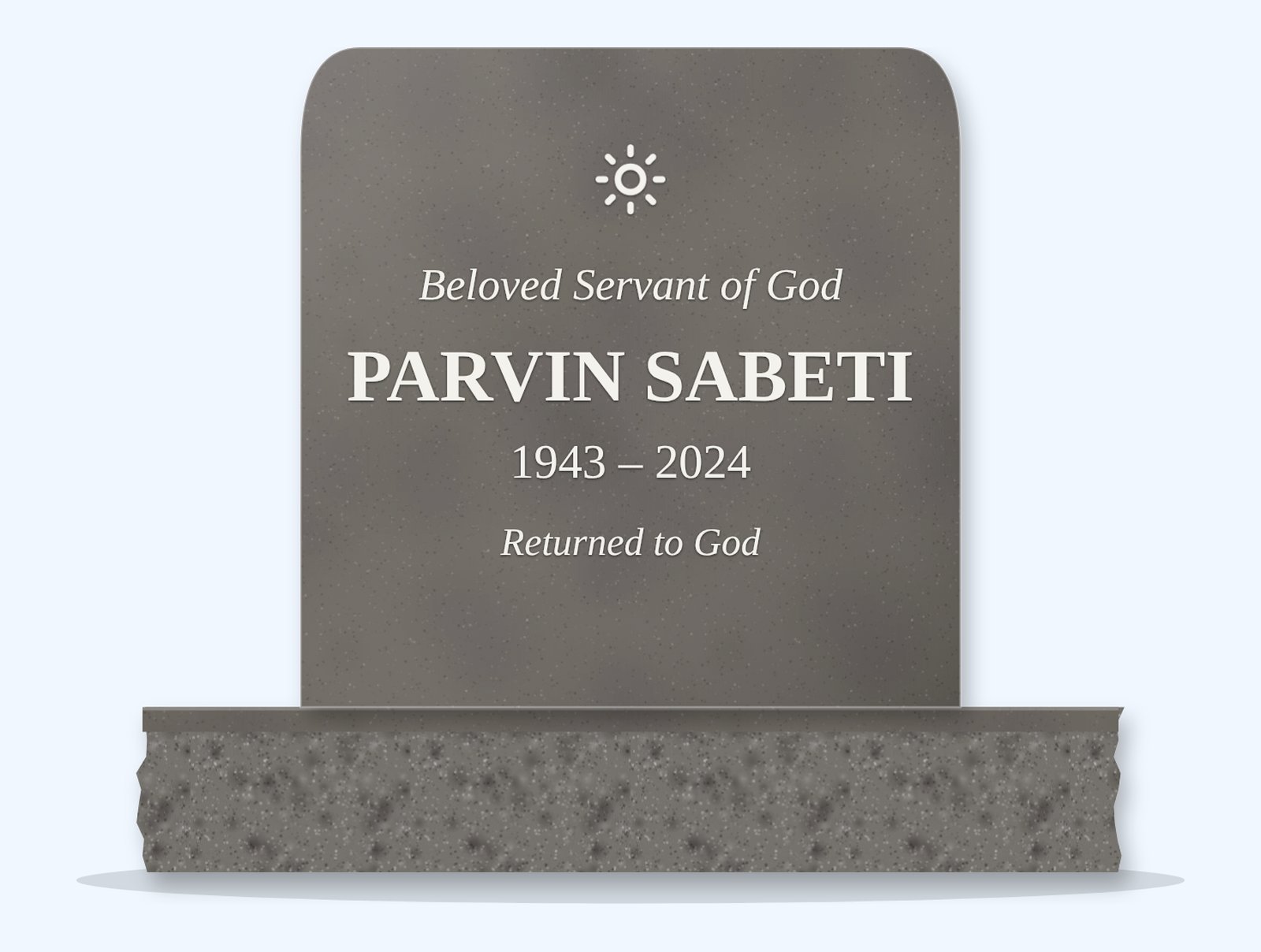
- Returned to God.
- Beloved servant of God.
- A light that shone for all.
- In the garden of God forever.
Many families add a short passage from the Bahá'í writings; ask your Assembly for the authorised translation. Families often include the person's name in Persian or Arabic as well as English. Have any Persian or Arabic text checked by a fluent reader. See Persian (Farsi) headstone inscriptions.
Choosing a cemetery
The one-hour guideline means the grave is usually in a cemetery near the place of death, not a family plot far away. Many municipal and non-denominational cemeteries welcome Bahá'í burials, and some have a Bahá'í section. Before ordering, ask the cemetery about its stone size and design rules — see faith sections in cemeteries explained and cemetery headstone rules.
Key Takeaways
- Bahá'ís are buried, not cremated, near the place of death.
- The burial ring verse can also go on the headstone.
- The nine-pointed star is a common, simple design.
- Confirm details with the local Spiritual Assembly.
Next Step
See secular and interfaith headstone ideas and headstones for a mixed-faith couple.
Frequently Asked Questions
Do Bahá'ís allow cremation?
No. Bahá'í law calls for burial.
How far can the body be taken for burial?
Generally no more than about an hour's journey from the place of death.
What symbol goes on a Bahá'í headstone?
Often the nine-pointed star; some families use calligraphy.
What is on the Bahá'í burial ring?
A short verse about coming from God and returning to Him; ask your Assembly for the authorised wording.
Ready to get pricing for your granite monument?
Request pricing, factory specifications, and DAP delivery timelines from our team.
Related guides
Burial vs Cremation
Grave Liner vs Burial Vault

Double-Depth Burial Explained

Home Burial on Private Property
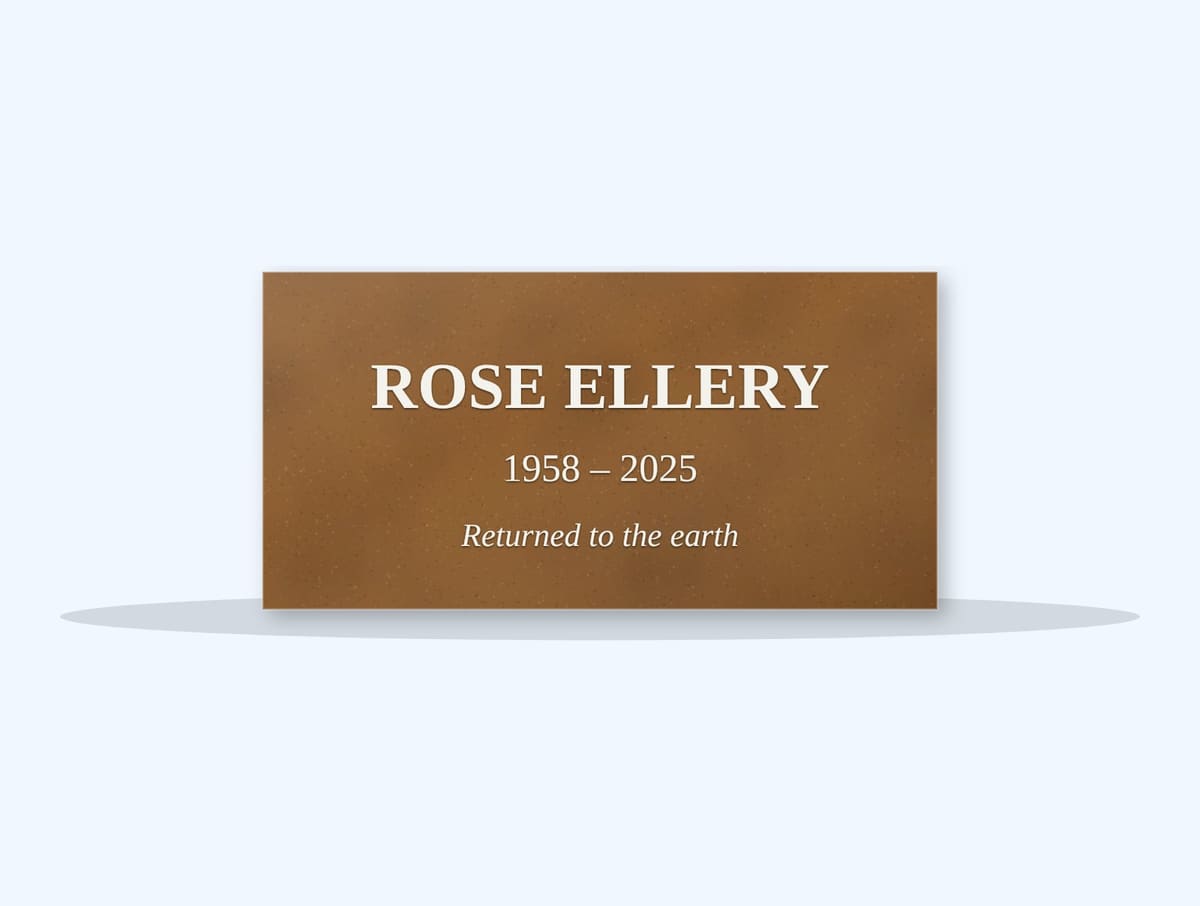
Grave Markers for Green and Natural Burial Sites