Limestone or Granite: Choose the Memorial Surface
Families sometimes choose a pale reference photograph before knowing what stone it shows. Begin with the appearance you value, then identify the actual material. That keeps a useful design conversation from turning into a promise based on a catalogue colour.
By Marwaa Team · Editorial standards · Published
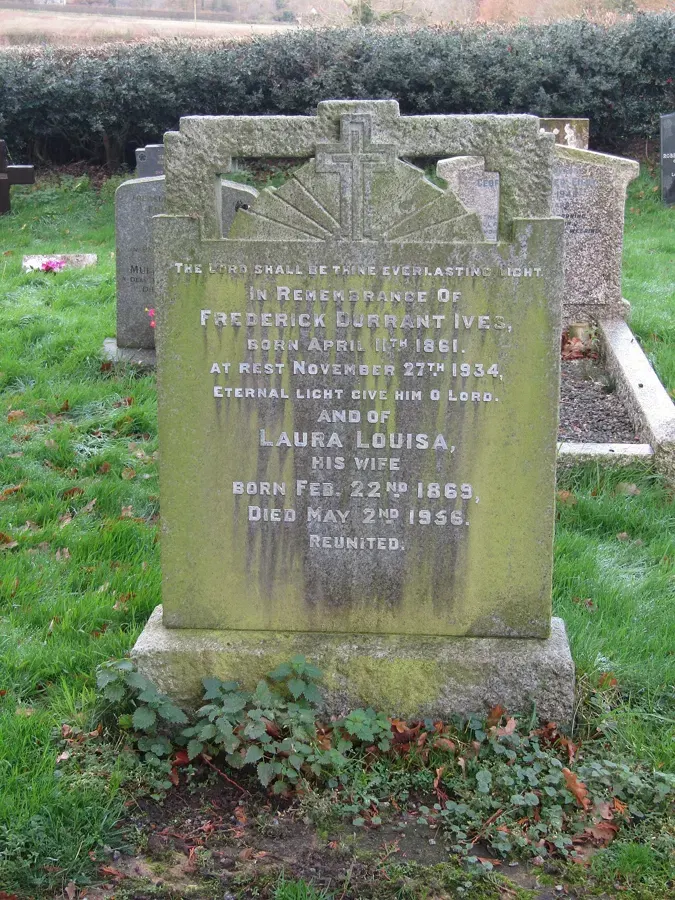
Illustrative stock photograph: -2020-11-24 Headstone for Frederick Durrant Ives, St Mary's churchyard, Erpingham, Norfolk.JPG by Kolforn (Kolforn) I'd appreciate if you could mail me (Kolforn@gmail.com) if you want to use this picture out of the Wikimedia project scope. This file is licensed under the Creative Commons Attribution-Share Alike 4.0 International license. You are free: to share – to copy, distribute and transmit the work to remix – to adapt the work Under the following conditions: attribution – You must give appropriate credit, provide a link to the license, and indicate if changes were made. You may do so in any reasonable manner, but not in any way that suggests the licensor endorses you or your use. share alike – If you remix, transform, or build upon the material, you must distribute your contributions under the same or compatible license as the original.https://creativecommons.org/licenses/by-sa/4.0CC BY-SA 4.0 Creative Commons Attribution-Share Alike 4.0 truetrue · CC BY-SA 4.0. Resized and converted to WebP. The photograph does not represent Marwaa’s work or a featured service location.
Limestone memorial design should be judged through the actual stone, lettering and intended surface, rather than through a colour name alone. Compare it with granite for the visual character the family wants, then ask the supplier about the specific material and setting. A pale, softly varied appearance can be a design preference without proving that one stone is suitable for every cemetery or engraving method.
Families sometimes choose a pale reference photograph before knowing what stone it shows. Begin with the appearance you value, then identify the actual material. That keeps a useful design conversation from turning into a promise based on a catalogue colour.
Which surface character attracts you?
Describe whether you like the colour, quiet variation, visible features or the way letters appear in the reference. Those observations are more useful than asking for stone that simply looks old or traditional. Ask to see the actual offered limestone rather than assuming every example has the same character.
A small sample helps with close surface discussion, while a completed example shows a larger composition. Neither should be treated as a guarantee that another block will look identical. Compare the named material and proposed finish together, with enough context to understand how the inscription would sit on it.
How will lettering carry the design?
Bring the actual name and dedication into the material discussion early. Ask the memorial professional to show the proposed letter treatment on an appropriate example. A typeface on a screen cannot show how a worked surface reads in ordinary light.
Decide whether the family wants the stone's surface or the lettering to have the stronger visual role. A quiet face can support a longer dedication, while pronounced natural features may lead to a different arrangement. This is a composition choice, not a rule that a particular stone can carry only a certain number of words.
What are you comparing with granite?
Compare complete proposals instead of contrasting a finished limestone memorial with an unfinished granite sample. Use the same wording, broadly comparable form and an identified finish. Otherwise the family may be reacting to the design rather than the material.
The National Park Service describes monument materials as distinct categories with their own characteristics. That supports identifying the actual stone. It does not justify a universal lifespan ranking. For granite product context, distinguish a natural stone alternative from a factory supply commitment to a material that is not actually offered.
What should be asked about the setting?
Ask whether the cemetery accepts the proposed stone and complete design. A material used in a historic churchyard elsewhere does not establish approval in a particular US or Canadian cemetery. Submit the actual proposal through the relevant provider.
Keep the visual discussion separate from site-specific material advice. The supplier should explain the offered stone and suitable care information, and the responsible professionals should assess the setting. This guide supplies no structural dimensions or freeze-thaw rating. The family can describe the look it wants without being asked to make an engineering judgement from a photograph.
How can expectations remain realistic?
Ask which changes in appearance the supplier expects and which concerns should be reported. Avoid promises that the memorial will stay exactly as pictured. Also avoid treating every later change as proof that the original choice was wrong.
Record the stone name, finish and accepted lettering approach with the family decision. If a later quotation offers a different material, compare it openly instead of treating a similar colour as automatic equivalence. The materials comparison provides a wider starting point; the present decision concerns a specific limestone proposal.
Compare the practical choices
| Choice | Question to settle |
|---|---|
| Limestone proposal | Which actual stone and surface are offered? |
| Granite alternative | Is the comparison using the same wording and form? |
| Pale reference image | Is the material identified rather than assumed? |
| Lettering sample | Can the family judge the worked result in context? |
A decision in practice
A family likes a pale memorial pictured in an old churchyard. Its local provider offers a named limestone and a pale granite option. Instead of choosing from the photograph, the family compares the same short dedication on relevant examples of both surfaces.
It discovers that the lettering treatment, rather than the colour alone, is what it values. The final choice follows the actual supplier and cemetery discussions. The old photograph remains a statement of preference, not evidence of availability or long-term performance at the new site.
Key Takeaways
- Identify the actual limestone before choosing from a pale reference image.
- Compare complete lettering and surface proposals rather than colour labels alone.
- A historic example does not establish acceptance or performance at another cemetery.
Frequently Asked Questions
Does pale stone always mean limestone?
No. Ask the supplier to identify the actual material.
Can a screen preview show the final carved surface?
It can help discuss layout, but it does not replace an appropriate physical example.
Does this guide rank stone lifespans?
No. The actual stone and setting need specific advice rather than a universal ranking.
Next step
Read Granite vs. Marble vs. Bronze: Which Material Is Right for a Memorial? while shaping your discussion with the memorial professional. Families can use that discussion to identify a suitable local provider; dealers should confirm the actual supply scope before seeking a trade quotation.
Read More
- Granite vs. Marble vs. Bronze: Which Material Is Right for a Memorial?
- How to Clean a Limestone or Sandstone Headstone
Sources and context
A Note on This Guide
This is a family surface-and-lettering comparison for a new memorial. It is not a geological grading, structural performance or historic-stone cleaning guide. Confirm the actual offered material, professional assessment and cemetery acceptance before commitment.
Published by Marwaa Team for Marwaa Memorials (marwaamemorials.com) · Published 2026-11-25 · Updated 2026-11-25 Marwaa Memorials is a factory-direct exporter of bulk granite monuments and headstones, shipping to monument dealers, funeral homes, and importers across North America.
Related guides
How to Clean a Limestone or Sandstone Headstone

Using an Existing Headstone as a Design Reference
Memorial Emblems: Identify the Exact Symbol Version

Sandstone Memorials: Texture, Text and Expectations

Terrazzo Memorials: Pattern, Lettering and Material