How to Choose a Funeral Home in Canada: A Practical Guide
Choosing a funeral home in Canada? Here's what to ask, what it costs, and how to compare providers with confidence.
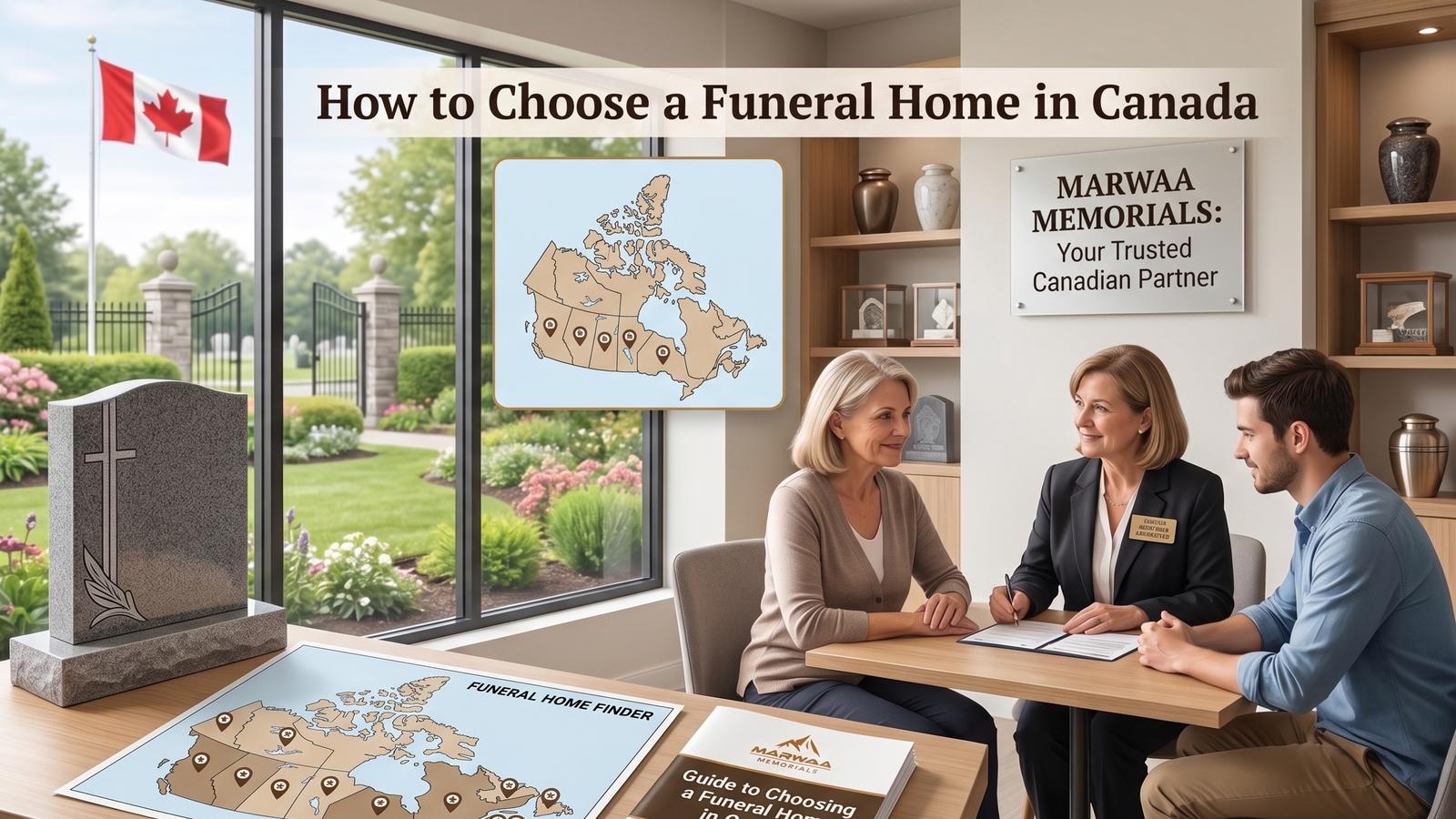
Most people choose a funeral home the way they'd choose almost nothing else in their life: under time pressure, while grieving, often based on whichever name comes to mind first. It doesn't have to work that way. Whether you're arranging something in the next few days or thinking ahead for yourself or a parent, a bit of structure makes the decision much less overwhelming.
What a funeral home actually does
A full-service funeral typically involves dozens of coordinated tasks — transferring the deceased, obtaining medical certificates, completing government paperwork, registering the death, preparing the body, arranging a service, and coordinating with the cemetery or crematorium. It's genuinely a lot of behind-the-scenes work, which is part of why costs and service levels vary so widely between providers.
Not every funeral home offers the same scope. Two broad categories are worth knowing before you start comparing:
- Full-service funeral homes — chapel, visitation rooms, reception facilities, embalming and preparation services, and full ceremony coordination.
- Direct cremation or immediate disposition providers — limited facilities focused on transporting and cremating the deceased without a viewing or ceremony. By law, these providers must disclose that they can't offer full-range funeral services.
Neither is inherently the "right" choice — it depends on what kind of service your family wants and what fits your budget.
Questions worth asking before you decide
What's included in the base price, and what's extra? Every licensed funeral provider in Canada is legally required to give you an itemized general price list on request. Ask for it in writing and compare it against at least one other provider — prices for comparable services can vary significantly between funeral homes in the same city.
Is the facility a good fit for what you need? Consider chapel size, parking, accessibility, and whether the space can comfortably hold the number of guests you expect. If a large gathering is planned, ask specifically about capacity rather than assuming.
Are they a member of a professional association? In Canada, associations like the Funeral Service Association of Canada represent funeral professionals and can be a useful reference point for standards and accountability, though membership isn't the only marker of quality.
How do they handle communication and pressure? A good funeral director guides without pushing. If a provider seems to be steering you toward upsells rather than listening to what your family actually wants, that's worth noting.
Do they have experience with your specific needs? Religious or cultural requirements, out-of-province transfers, or repatriation from abroad aren't something every funeral home handles routinely — ask directly if any of these apply to your situation.
Understanding what things cost
Funeral costs in Canada vary by province and by provider, but a few general patterns hold:
- A traditional, full-service funeral typically runs several thousand dollars, largely driven by casket choice, embalming, and facility use.
- Direct cremation, without a viewing or ceremony, is meaningfully less expensive and has become increasingly common — cremation now accounts for a strong majority of dispositions in Canada, a trend that's grown steadily over the past couple of decades.
- Cemetery or crematorium charges are typically separate from the funeral home's own fees, whether paid through the funeral home or directly to the cemetery.
Because pricing varies this much, getting quotes from more than one provider before committing is one of the simplest ways to avoid overpaying — and it's not considered rude or unusual to do so.
If you're planning ahead rather than arranging now
Pre-planning a funeral is common in Canada, and it comes in two separate pieces that are worth keeping distinct in your mind:
- Documenting your wishes — service type, burial or cremation, and specific preferences — without necessarily paying anything in advance.
- Pre-funding — setting money aside now, usually held in a provincially regulated trust, to cover costs later.
If you're considering pre-funding, ask directly: is the money held in a guaranteed trust, what happens if the funeral home closes, and can the plan transfer if you move to a different province? Protections and portability vary by province, so don't assume your plan works the same way a friend's does in another part of the country.
Once service arrangements are settled, many families move on to choosing a cemetery marker or headstone. If you're at that stage, our pre-need headstone planning guide and cemetery rules and regulations guide walk through what to consider on the memorial side specifically.
A practical comparison checklist
Before committing to a funeral home, it helps to have gathered:
- A written general price list from at least two providers
- Confirmation of what's included versus billed separately (transportation, documentation, facility use, merchandise)
- Whether the facility fits your expected number of guests
- Any professional association membership
- How they handle special requirements — religious practices, repatriation, or specific cultural rites
- If pre-funding, written answers on trust protection, portability, and refund terms
Key Takeaways
- Funeral homes range from full-service facilities to limited direct-cremation providers — know which type you actually need before comparing prices.
- Every licensed funeral provider in Canada must give you an itemized price list on request; comparing at least two is one of the easiest ways to avoid overpaying.
- Cremation now makes up the large majority of dispositions in Canada, and pricing differs substantially from a traditional full-service funeral.
- If you're pre-funding rather than just documenting wishes, ask specifically about trust protection and portability, since these vary by province.
- Choosing a funeral home and choosing a memorial are related but separate decisions — it's fine to take your time on the second once the first is settled.
Next Step
If you've settled on funeral arrangements and are now thinking through memorial or headstone options, our design studio is a low-pressure way to explore materials and designs, and our team can walk you through pricing whenever you request a quote.
Frequently Asked Questions
Are funeral homes required to give price lists in Canada?
Yes. Licensed funeral providers are legally required to provide an itemized general price list on request.
What's the difference between a full-service funeral home and a direct cremation provider?
Full-service homes offer chapels, visitation, and full ceremony coordination, while direct cremation providers offer more limited facilities focused on transport and cremation without a viewing or service.
Is it normal to get quotes from more than one funeral home?
Yes, and it's a practical way to compare pricing, since costs for similar services can vary meaningfully between providers in the same area.
Does pre-funding a funeral protect my money if the funeral home closes?
Pre-funded amounts are generally held in a provincially regulated trust, but the level of protection varies by province, so it's worth asking your provider directly how your specific funds are protected.
Can I transfer a pre-arranged funeral plan if I move to a different province?
Sometimes, but not automatically — ask your provider directly whether your specific plan is transferable before assuming it will carry over.
Ready to get pricing for your granite monument?
Request pricing, factory specifications, and DAP delivery timelines from our team.