Pre-Need Headstone Planning: A Practical Guide to Choosing a Memorial in Advance
Considering a pre-need headstone? Here's what it actually involves — cost, storage, design, and what to lock in now versus later.
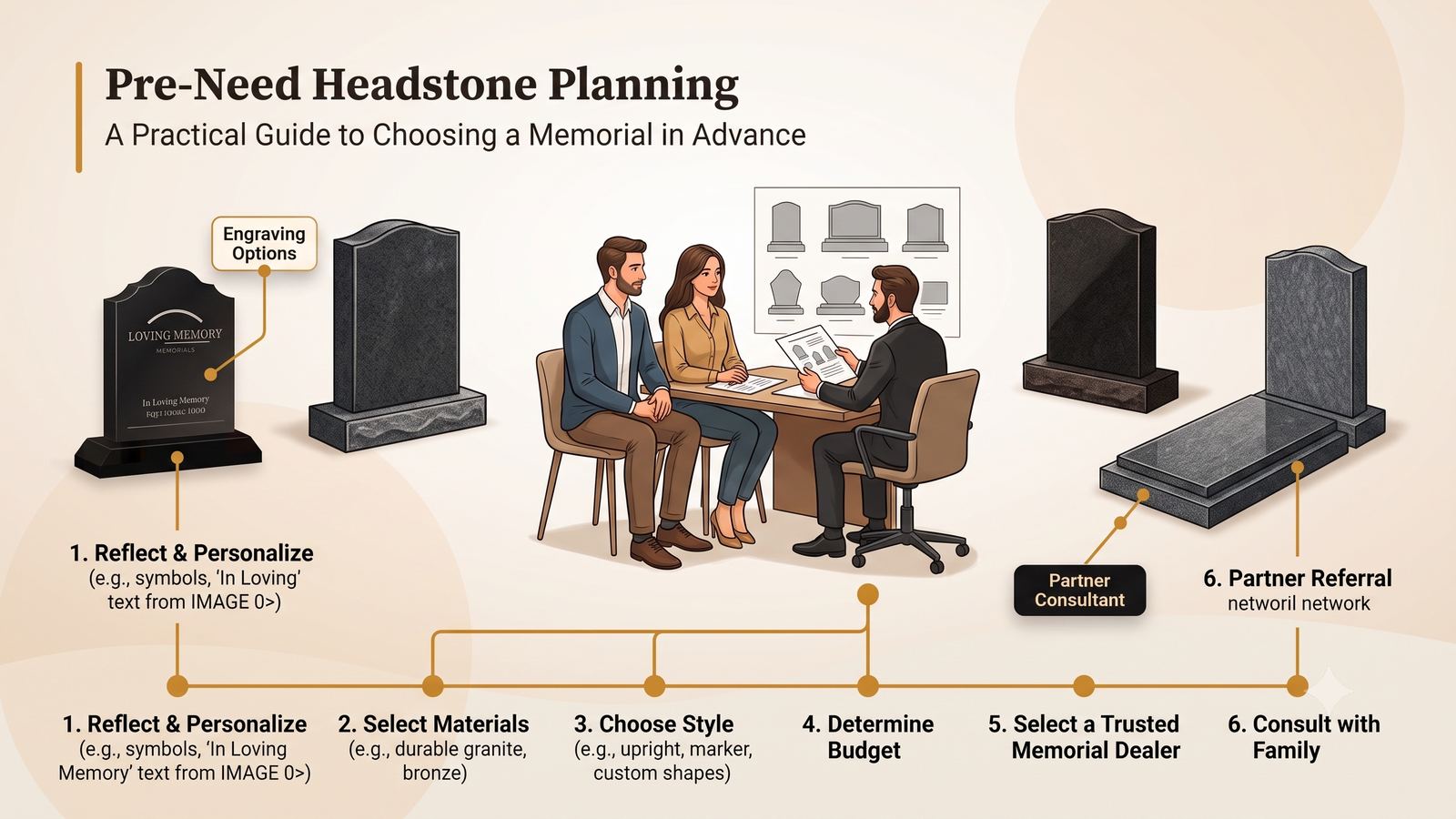
Most people don't think about a headstone until they're standing in a monument showroom a week after a funeral, grieving and trying to make a decision that will last for generations. Pre-need planning flips that order: you choose the memorial while you're still here to choose it.
It's a small industry secret that "pre-need" doesn't always mean "fully finished and paid for." It's a spectrum, and knowing where you want to land on it makes the whole process far less overwhelming.
What "pre-need" actually means
Pre-need headstone planning is any arrangement made before a death occurs, as opposed to "at-need" planning, which happens after. But pre-need itself covers a range of commitment levels, and it's worth knowing the difference before you talk to a monument dealer:
- Fully pre-purchased and pre-carved — the stone is cut, engraved (aside from the death date), and ready to install whenever it's needed.
- Designed and deposited, fabrication deferred — you lock in the stone type, size, layout, and wording with a dealer, put down a deposit, and the physical carving happens closer to when it's actually needed.
- Informal planning only — you've written down your preferences (material, epitaph, budget) so your family has a clear starting point, but nothing is purchased yet.
None of these is "more correct" than the others. The right level depends on how far in advance you're planning and how much certainty you want to lock in now.
Why families choose to plan ahead
The reasons tend to cluster around two things: emotional relief and financial control.
It removes a decision from a moment of grief. Choosing an epitaph, a stone color, or a design detail is hard to do well under time pressure and sorrow. Planning ahead means the person who knew their own wishes best — the one being memorialized — is the one who made the call.
It can prevent family disagreement. When several children or relatives are involved, differing opinions on wording, symbols, or spending can create real friction at an already difficult time. A pre-need plan settles those questions in advance.
It gives you time to compare, not just react. At-need buyers are often working within a tight cemetery deadline. Pre-need buyers can take weeks to compare granite colors, finishes, and dealers without pressure.
It can protect against rising material and labor costs. Granite pricing and shipping costs move over time, and a locked-in design agreed today isn't subject to whatever those costs look like in ten or twenty years — though this depends heavily on what your specific agreement covers, so ask directly rather than assuming.
What to decide now vs. what can wait
Not everything needs to be finalized on day one. A useful way to think about it:
Reasonable to lock in now:
- Stone material (granite, marble, or bronze)
- Color and finish
- Overall shape and size, within your cemetery's rules
- Layout of the inscription panel
- Any artwork, symbols, or a laser-etched portrait — see our laser etched portrait guide for how that works
- Most of the wording — name, dates you already know, and any epitaph or quote
Better left flexible until closer to the time:
- The exact date of death (obviously)
- Final cemetery section or plot, if that hasn't been purchased yet
- Full payment, if your dealer offers a deposit-and-defer structure
Talking through this split with your monument dealer up front avoids a common frustration: paying in full for a finished stone, then discovering the cemetery's rules have changed or the plot location shifted.
Where the stone actually goes in the meantime
This is the part pre-need guides often skim past, and it matters more than people expect. If you're not purchasing a fully fabricated, installed monument today, someone has to store the piece — or the design file and deposit — until it's needed.
Ask directly:
- Who holds the stone (or the deposit) — the cemetery, the monument dealer, or you? Get this in writing.
- What happens if the monument company is sold, closes, or changes ownership? A written agreement should specify how your arrangement transfers.
- Is there a storage or handling fee, and is it a one-time cost or ongoing?
- Does the cemetery allow a stone to be pre-installed with the date left blank, or does it need to stay off-site until needed?
None of these questions are awkward to ask — a reputable dealer will have clear answers already, because they get asked this regularly.
Confirming cemetery rules before you commit
Every cemetery sets its own rules on monument size, material, and design, and those rules can vary even between sections of the same cemetery. Before finalizing a pre-need design:
- Request the cemetery's current written monument regulations
- Ask whether those rules are likely to change (some cemeteries update size or material restrictions periodically)
- Confirm whether pre-approval drawings are required before fabrication begins
Our cemetery headstone rules guide covers this in more depth, since it's genuinely its own topic — worth reading before you finalize a design, not after.
Budgeting for a pre-need memorial
Cost still comes down to material, size, and how much customization the design calls for. If you haven't already, our granite headstone cost guide breaks down typical pricing by material and feature so you have realistic numbers to plan around, rather than guessing.
One point specific to pre-need: ask whether your dealer offers a payment plan or a one-time deposit-and-defer structure, and get clear on whether the final price is genuinely locked in or subject to change based on material costs at time of fabrication. Both models exist in this industry, and the difference matters for how much financial certainty you're actually buying.
Planning for a shared or companion memorial
If you're planning alongside a spouse or partner, a companion headstone — a single stone designed for two names and two sets of dates — is a common pre-need choice, since it lets both people agree on the design together rather than one person deciding for both. Our companion headstone buying guide goes into the layout options and considerations.
Key Takeaways
- Pre-need planning isn't all-or-nothing — you can lock in the design and material now while deferring full payment or fabrication until closer to when it's needed.
- The biggest practical question pre-need guides tend to skip is storage: get in writing who holds the stone or deposit, and what happens if the company changes ownership.
- Cemetery rules can change over time, so confirm current regulations before finalizing a design, not just at the time of ordering.
- Planning ahead mainly buys two things: time to compare options without pressure, and one less painful decision for your family to make during grief.
- A written agreement covering storage, price changes, and transfer of ownership protects your plan better than a verbal understanding, however trustworthy the dealer.
Next Step
If you're ready to start exploring materials and design options for a pre-need memorial, our design studio lets you plan shape, granite color and inscription at your own pace, and you can request a factory quote whenever you're ready — no pressure, no deadline.
Frequently Asked Questions
What is a pre-need headstone?
A pre-need headstone is a memorial marker chosen, designed, and often partially or fully paid for before a death occurs, rather than arranged afterward under time pressure.
Can you put your name on a headstone before you die?
Yes. It's common to have the name and birth date engraved in advance, leaving the date of death blank until it's needed.
Does buying a headstone early save money?
It can, since it may lock in current material and labor pricing rather than exposing the purchase to future cost increases — but this depends on the specific agreement, so confirm whether your price is truly fixed.
Who holds a pre-purchased headstone until it's needed?
This varies by arrangement — some cemeteries store the stone on-site, some monument companies hold it, and some require the buyer to arrange storage. Always confirm this in writing before finalizing your order.
What happens to my pre-need plan if the monument company closes or is sold?
A solid written agreement should specify how your arrangement transfers to a new owner or how your deposit is protected. Ask this question directly before signing anything.
Ready to get pricing for your granite monument?
Request pricing, factory specifications, and DAP delivery timelines from our team.