
Alkaline Hydrolysis and the Memorial Marker Choice
Learn how alkaline hydrolysis relates to cemetery memorials, urn placement and marker choice without assuming every operator accepts the same arrangements.
By Marwaa Team · Editorial standards · Published
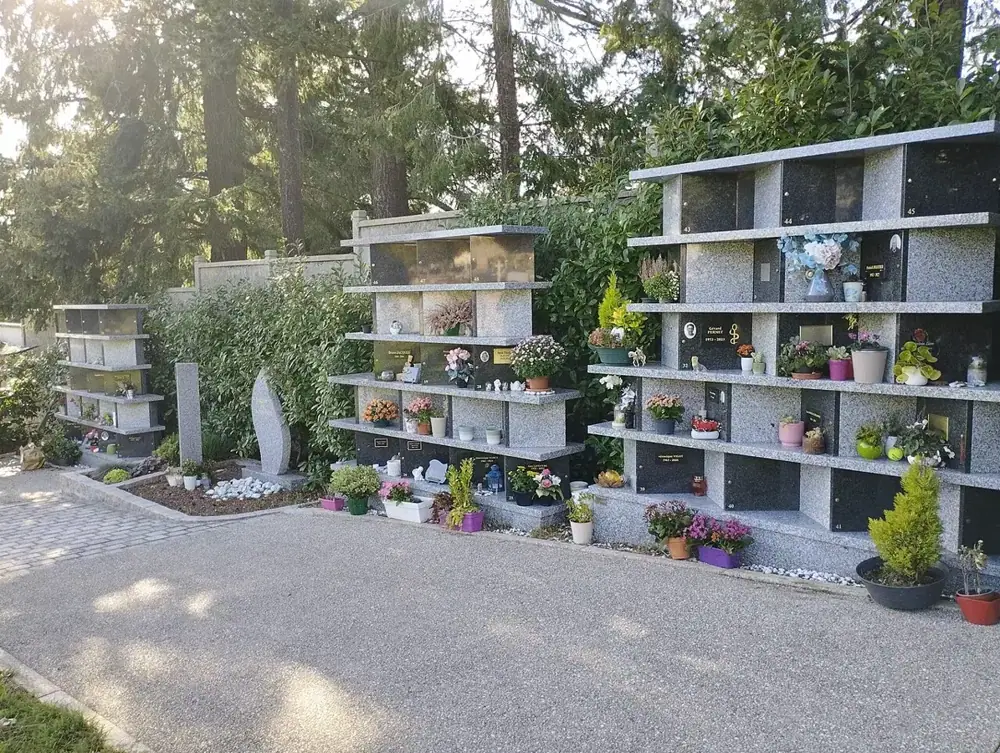
Illustrative stock photograph: Columbarium du cimetière de Garches.jpg by ManoSolo13241324 · CC0. Resized and converted to WebP. The photograph does not represent Marwaa’s work or a featured service location.
Alkaline hydrolysis does not require a special type of stone memorial. The marker decision depends on where the resulting remains will be placed and what that cemetery or host accepts. Confirm the disposition service, the intended container and the final placement first. Then choose a marker that accurately represents that place and meets its requirements.
What changes for memorial planning?
Alkaline hydrolysis is a disposition process, sometimes described as aquamation or water cremation. It is not a monument material or a cemetery section. A family may hear the process name and assume it comes with a particular memorial package, but those are separate services.
The Cremation Association of North America's explanation describes the process and resulting remains. This guide addresses the later memorial decision. It does not compare medical, environmental or legal claims about disposition methods.
Ask the provider what the family will receive and what choices must be settled before release. Do not select an urn compartment from a generic photograph. The actual container dimensions and the cemetery's accepted arrangement determine whether a particular space is suitable.
Will a cemetery accept the remains?
Acceptance needs an answer from the intended cemetery, not an assumption based on a neighbouring site. The availability of the process in a jurisdiction does not automatically establish that every cemetery, religious organisation or section accepts the proposed placement.
The VA green burial information expressly addresses aquamation within its own system. That is a useful primary example of an operator answering the question directly. It should not be stretched into a general rule for US or Canadian cemeteries.
When asking, use both the process name and the proposed final arrangement. Staff can then confirm acceptance of the remains and whether an urn, burial space, niche or other product has separate conditions. Keep the reply with the placement paperwork.
Which marker decisions remain the same?
The memorial still needs to fit its setting. Material, dimensions, finish and installation depend on the approved monument format and site. The production drawing should show the approved stone and inscription; it should not be used as evidence that the cemetery has accepted the disposition.
| Decision | Relevant information | Responsible conversation |
|---|---|---|
| Disposition process | Availability and required authorisation | Funeral or disposition provider |
| Final placement | Cemetery acceptance and space type | Cemetery office |
| Urn or container | Actual exterior dimensions and closure | Provider and cemetery |
| Memorial form | Accepted size, material and inscription | Cemetery and monument dealer |
A flat marker may be appropriate in one section while another uses niche plates or a shared monument. None of those forms is inherently the marker for alkaline hydrolysis. The article on cremation memorial options explains common physical forms without deciding site acceptance.
What if the remains will not be buried?
A memorial-only stone can provide a place to visit, but its wording should not imply an interment that did not happen. Ask the host whether a commemorative object is accepted independently of any burial. A private garden and a cemetery programme have different access and care arrangements.
The Mayo Clinic body donation programme describes its own final-disposition choices, including return or programme interment. Its arrangements apply to its donors. They illustrate why the provider's actual release and placement process matters more than a general label.
If no final location is decided, a portable keepsake can be considered separately from a permanent outdoor monument. There is no need to force an uncertain location into a stone inscription. Finalise the site's role before making an irreversible location claim.
What should a dealer receive?
Give the dealer the cemetery-approved memorial requirements and the exact intended function. A stone that houses an urn needs different product information from a marker that stands above a separate burial. The dealer should know which role the stone will perform.
Trade buyers can compare monument forms in Marwaa's products. Families should work through the local cemetery, funeral professional and monument dealer for acceptance and installation. Marwaa's manufacturer-exporter role does not include deciding whether a particular disposition is permitted.
If someone offers a package using unfamiliar terms, ask for a plain description of each service before approving it. A clear separation between the process, placement and memorial makes it easier to compare the actual choices without relying on a marketing name.
Key Takeaways
- Alkaline hydrolysis does not dictate a special granite marker.
- Ask the destination cemetery to confirm acceptance of the exact proposed placement.
- Choose a monument only after its function, container needs and host requirements are clear.
Frequently Asked Questions
Is aquamation the same as a memorial type?
No. It describes a disposition process. The memorial can take a form accepted by the final host or cemetery.
Can a standard granite marker be used?
A granite marker may be suitable where the cemetery accepts it. Approval depends on the section and arrangement, not just the disposition process.
Does a provider’s acceptance answer the cemetery question?
No. Ask both the disposition provider and the receiving cemetery about their respective responsibilities.
For the next part of this decision, read Cremation Headstones and Grave Markers: Your Options Explained.
Read More
- Cremation Headstones and Grave Markers: Your Options Explained
- Cremation Headstones with an Urn Compartment
A Note on This Guide
Process availability and destination acceptance change and vary by jurisdiction and provider. The cited VA and Mayo arrangements are specific examples; confirm the actual service and cemetery rather than applying them universally.
Published by Marwaa Team for Marwaa Memorials (marwaamemorials.com) · Published 2026-11-25 · Updated 2026-11-25 Marwaa Memorials is a factory-direct exporter of bulk granite monuments and headstones, shipping to monument dealers, funeral homes, and importers across North America.
Related guides
Cemetery Survey Markers Are Not Grave Markers
Book of Remembrance Entry or a Grave Marker?
A Family Headstone Decision Record: Agree Choices Without Losing Changes

When Snow Covers a Grave Marker: Plan the Visit

Temporary Grave Markers: What to Use Until the Headstone Arrives
