Monument Cycle Counts: Check Stock Without Guesswork
Use monument cycle counts to reconcile physical units, locations and reservations without silently treating every discrepancy as missing stock.
By Marwaa Team · Editorial standards · Published
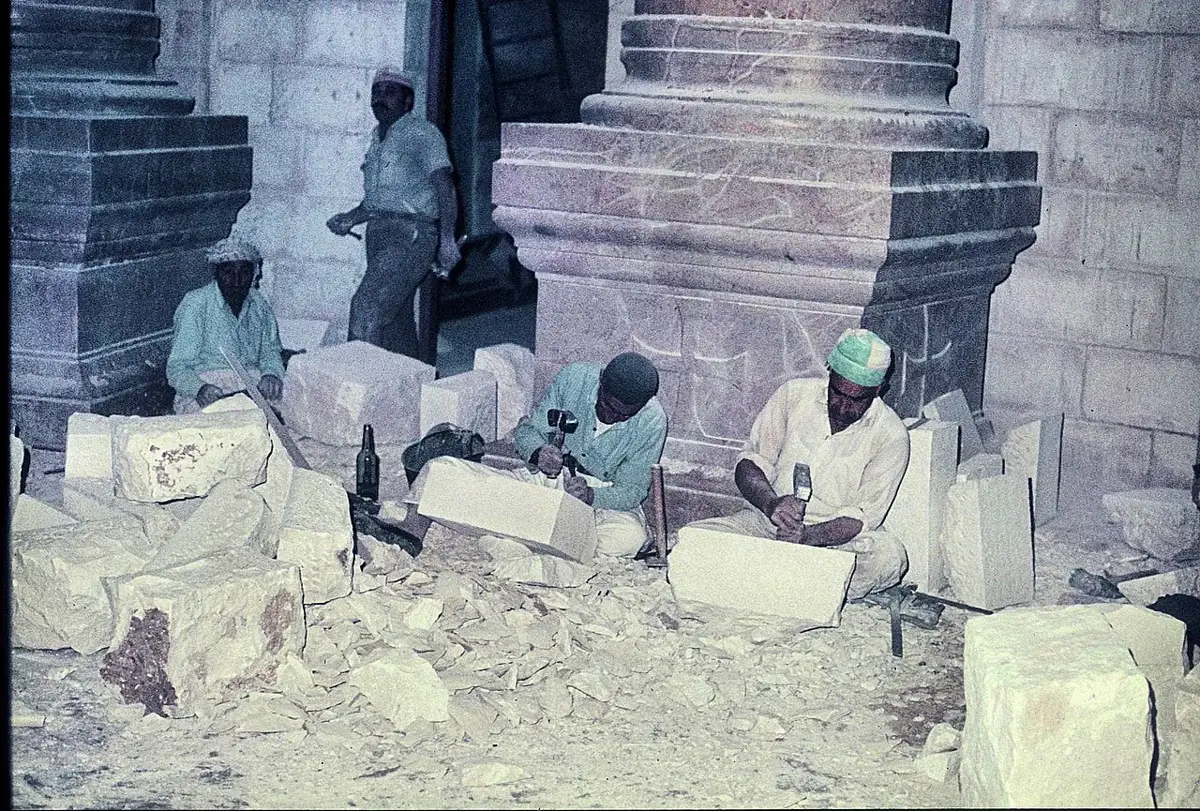
Illustrative stock photograph: 139255 jerusalem - stonemasonry PikiWiki Israel.jpg by רוני קניגסברג · CC BY 2.5. Resized and converted to WebP. The photograph does not represent Marwaa’s work or a featured service location.
Monument cycle counts are most useful when they answer where a particular unit is and whether the system describes it correctly. A numerical total alone can hide a tablet recorded twice, a base in the wrong location or a display piece counted as sale-ready. Start with a defined area and a small set of clear questions.
What should a monument cycle count check?
Check identity, location, quantity and status as separate items. A unit can be physically present but unavailable because it is reserved or held for review. Another item may be inbound and therefore should not appear as physically received just because an invoice exists.
Choose a counting method that fits the actual yard or showroom. Staff should use readable labels and safe access arrangements. Do not ask someone to shift, climb or reach between heavy memorial components just to complete a spreadsheet. Refer inaccessible identification questions to the responsible team.
Internal product codes remain useful here. The GS1 US field definitions distinguish the internal SKU field from other descriptive data. A count can use that product reference while still checking the identity of each physical unit.
Define the scope before staff start
Name the locations and product groups included. Record the count date and the point at which normal stock movements will be reconciled. If goods continue arriving or leaving during the count, the team needs a movement log so a correct transaction is not mistaken for a discrepancy.
| Count field | Entry to capture |
|---|---|
| Count scope | Location and product group |
| Product reference | Internal SKU and supplier mapping |
| Unit reference | Individual piece or component set |
| Recorded position | Expected location, quantity and status |
| Observed position | What staff can safely confirm |
| Difference | Identity, quantity, location or status issue |
| Resolution | Evidence, reviewer and dated adjustment |
Keep “not safely verified” as a valid result. An uncertain count should not be rounded into a confident number merely to finish the sheet. Record the reason and assign the next check to the right person.
Investigate before making an adjustment
A difference can come from an unrecorded transfer, a duplicate entry, a receipt posted too early or a misunderstanding of a component set. Check those possibilities before treating the item as lost. Preserve the original count and the evidence used to resolve it.
If a tablet and base are stocked separately, count them according to that structure. Do not create a second complete set merely because both components appear in different views. Staff should know whether they are counting products, components or assembled memorials.
The blank stocking guide discusses the purpose of holding unengraved products. A cycle count does not change that stocking strategy; it tests whether the physical items and their recorded states still agree.
Reconcile reservations at the same time
A count can confirm that a stone exists without proving it is available. Check whether a reservation still belongs to an active enquiry or accepted order. Ask the reservation owner about stale holds instead of clearing them as part of a quantity correction.
If the count reveals a mismatch between shop and supplier records, keep the two questions separate. Your team can confirm its own received stock, while the supplier must clarify an unreceived allocation or inbound quantity. A dealer spreadsheet cannot resolve the supplier's inventory by itself.
Keep adjustment authority limited and visible. A staff member may record the observation while another approves the change. The useful control is an explainable correction, not a requirement that every small difference generate excessive paperwork.
Turn repeated discrepancies into a practical improvement
After several counts, group the reasons for differences. Repeated location errors suggest a transfer-record problem. Repeated set/component confusion suggests the product structure needs clearer labels. That diagnosis is more useful than repeatedly editing quantities back to the expected total.
Try a revised label or movement step on one area, then compare the next count. Keep the change small enough that staff can explain what improved. Avoid claiming that a particular count schedule will eliminate errors; the right frequency depends on turnover and the way your shop works.
Use the dealer ordering calendar to place reviews around your own workload. The count record should leave the next salesperson with a clearer availability answer and the next receiving team with fewer uncertain references.
Key Takeaways
- A monument cycle count should verify identity, location and status as well as quantity.
- Investigate transfers and duplicate records before adjusting a discrepancy.
- A physical count does not automatically release stock reserved for another order.
Frequently Asked Questions
Should staff move stone to read a label?
Use the shop’s safe access and handling process. Mark an inaccessible reference for a suitable follow-up instead of improvising.
Can an inventory discrepancy mean a missing item?
It can, but transfers, duplicate entries and component confusion should also be checked.
Does counting an item make it available for sale?
No. Its reservation, condition and other status still need to be confirmed.
Next Step
For a trade enquiry that needs a supplier response, request a bulk monument quote with the relevant specification and open questions. The record in this guide helps describe the requirement; it does not place an order.
Read More
- Blank Headstones for Monument Dealers: Stocking Unengraved Stones
- Monument Dealer Ordering Calendar: When to Order for Peak Seasons
- Starting a Monument Dealership: A Practical Guide for New Dealers
A Note on This Guide
This is a stock-record workflow, not lifting or yard-safety instruction. Use your business’s actual physical access arrangements and adjustment authority.
Published by Marwaa Team for Marwaa Memorials (marwaamemorials.com) · Published 2026-11-21 · Updated 2026-11-21 Marwaa Memorials is a factory-direct exporter of bulk granite monuments and headstones, shipping to monument dealers, funeral homes, and importers across North America.
Related guides

Monument Stock Reservations: Track Holds and Release

Display or Sale Stock? Label Monument Inventory Clearly

Memorial Photos, Renderings and Stock Images: Label Them
Monument Dealer Cost to Serve: Count More Than Stone

Monument Shop Capacity: Plan Work, Not Just Order Counts