How to Import Granite Monuments: The Complete B2B Step-by-Step Guide for Monument Companies in USA, Canada and Europe [2026]
Step-by-step guide to importing granite monuments — HS codes, ocean freight, QC, customs clearance and everything you need to land your first container.
Direct importation of granite monuments is one of the highest-leverage procurement decisions a monument company can make — but only if the process is understood correctly. Done right, it eliminates distributor markups, gives you full control over product specifications, and builds a supply chain that scales with your business. Done wrong, it produces delayed shipments, customs problems, and costly product quality disputes.
This guide walks through every step — from writing your initial specifications to clearing customs and taking delivery — so your first container arrives with the confidence of an experienced importer behind it.
Why Direct Import Matters More Than Ever in 2026
Domestic granite monument distributors typically add 40–80% markup to imported product before it reaches a monument dealer. With continued inflation pressure on retail pricing and families increasingly comparing prices online, dealer margins have tightened. Direct import is how the best-run monument companies are protecting their profitability — and their price competitiveness.
Step-by-Step: How to Import Granite Monuments
Step 1: Write Your Product Specification Document
The most common first-time importer mistake is approaching exporters without clear written specifications. Before contacting any supplier, build a specification document covering these elements:
- Monument types: Which categories — upright, flat, slant, companion, bench, vases? Ranked by your actual sales volume.
- Dimensions: Standard North American sizes. Confirm your key cemetery accounts' specific requirements before finalizing.
- Granite colors: Absolute black, Barre gray, blue pearl? Specify with reference images and quarry name where possible.
- Finish requirements: Fully polished all sides? Polished front and back with rock-pitch sides? Sawn? Specify exactly in writing.
- Engraving status: Blank (unengraved) for local engraving is the North American standard. Confirm this is the default.
- Container type and quantity: 20-foot or 40-foot FCL? Mixed product or single SKU? State your preference upfront.
Step 2: Qualify Your Granite Monument Exporter
The distinction between a granite manufacturer and a granite exporter matters enormously. A manufacturer produces stone. An exporter has the foreign market knowledge, packaging expertise, export documentation capability, and product standards that successful international shipments require. Ask every prospective exporter:
- How long have you been exporting specifically to the USA, Canada, or Australia?
- Can you provide references from existing North American or European monument dealer customers?
- What are your standard packaging specifications for upright headstones?
- Do you supply blank (unengraved) stock as standard?
- What quality control steps happen before container loading and sealing?
- What export documentation package is included with each shipment?
- What are your FCL minimum order quantities and standard production lead times?
Step 3: Review Physical Samples Before Committing
No professional monument dealer should commit to a container without first reviewing physical material samples. When samples arrive, evaluate:
- Color consistency — Hold the sample in direct outdoor sunlight, not indoor lighting.
- Polish quality — Hold it at a shallow angle to light — waves, dull patches, and tool marks become visible.
- Edge and corner precision — Crisp, consistent edges indicate quality finishing equipment.
- Surface pitting — Any micro-pitting, voids, or mineral inclusions visible at an angle?
- Weight verification — A correctly spec'd piece should feel appropriately heavy for its dimensions.
Step 4: Confirm HS Code Classification and Import Duties
Before placing any order, confirm the HS code classification for your specific products and understand the applicable duty rates. Getting this wrong creates costly customs delays and potential duty re-assessment.
| HS Code | Description |
|---|---|
| HS 6802 | Worked monumental or building stone (except slate) — primary heading for polished granite monuments |
| HS 6802.93 | Granite specifically — standard CBP classification for polished granite monuments |
| HS 6802.99 | Other worked stone — occasionally applicable depending on specific CBP classification ruling |
Canadian importers should consult CBSA Memorandum D10-17-38 for official tariff classification of granite and marble products. Consult a licensed customs broker — the consultation cost is minimal compared to the risk of misclassification.
Step 5: Book Ocean Freight Through an Experienced Forwarder
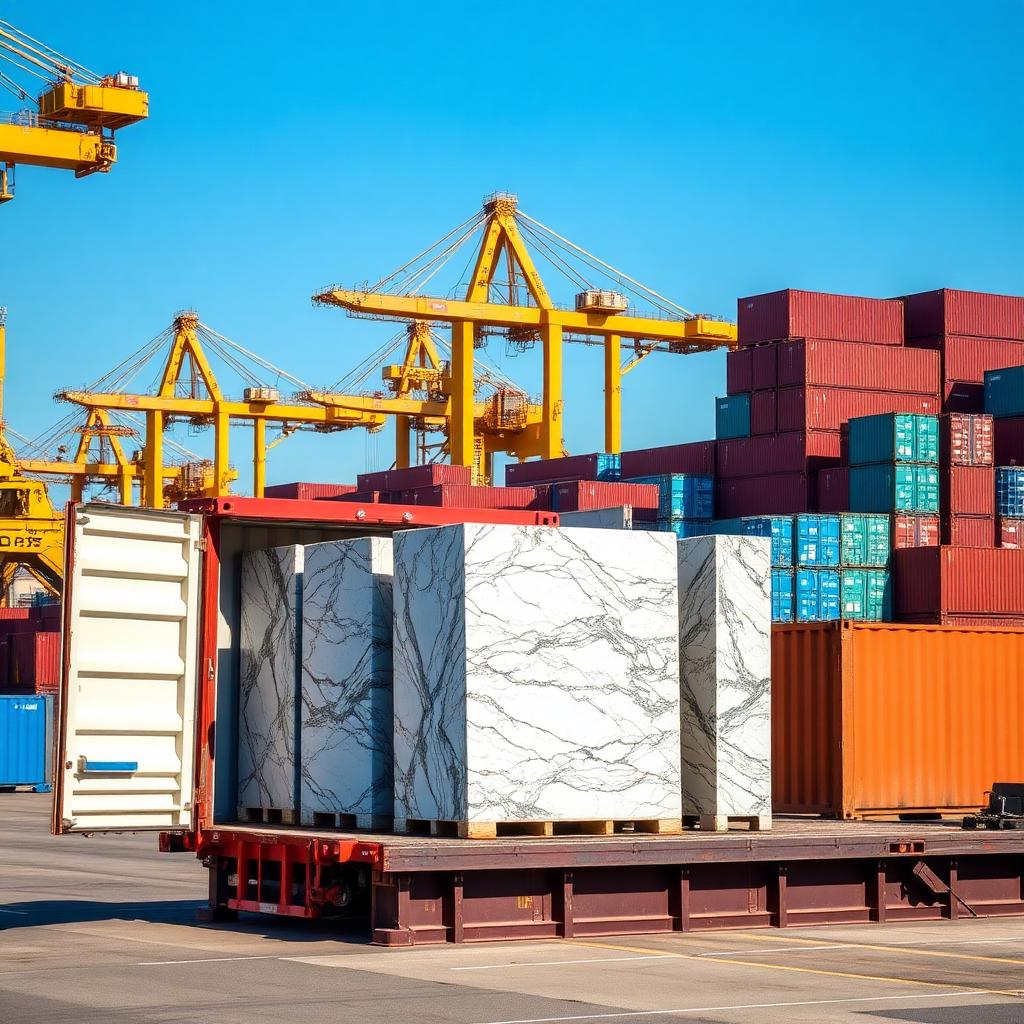
Granite is one of the densest commodities in ocean freight, creating specific logistics considerations:
| Logistics Factor | Details for Granite Monument Containers |
|---|---|
| 20-foot container max payload | Approximately 21,700 kg — granite loads approach this limit quickly |
| 40-foot container max payload | Approximately 26,500 kg — verify with your forwarder |
| South Asia → US East Coast | 25–35 days ocean transit |
| South Asia → US West Coast | 20–28 days ocean transit |
| South Asia → Canada East | 28–38 days ocean transit |
| South Asia → Australia | 20–30 days ocean transit |
| Port handling and inland delivery | Add 7–14 days post-arrival |
Total landed cost formula: FOB price from exporter + ocean freight rate + customs duty + port handling fees + inland delivery to your facility.
Step 6: Arrange Pre-Shipment Inspection
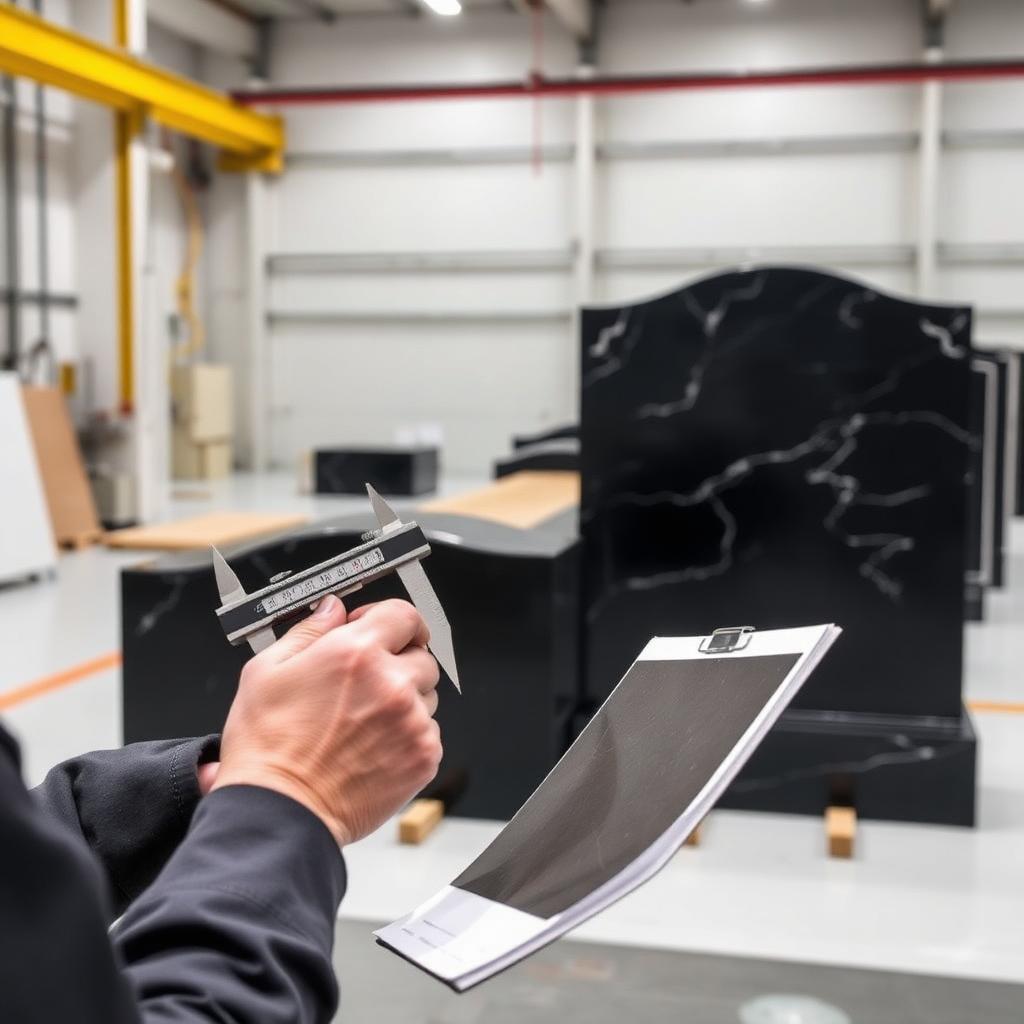
For containers above a certain value threshold, engaging a third-party quality inspection service before the container is sealed is standard professional practice. A pre-shipment inspection costs a few hundred dollars — a small fraction of the potential cost of a damaged or non-conforming container.
A comprehensive granite monument pre-shipment inspection covers:
- Dimension verification across all pieces against your written specification
- Color and finish quality check across the full production batch
- Quantity count independently verified against the packing list
- Packaging adequacy review: crating quality, foam lining depth, corner protection
- Random weight spot-checks against your specification thickness requirement
Step 7: Complete Customs Clearance and Receive Your Product
Your customs broker manages the formal clearance process. Your preparation responsibilities:
- Importer of Record (IOR) registration: US importers need a CBP Importer ID and Customs Bond. Canadian importers need a CBSA Business Number. Both are one-time registrations.
- Required documentation package: Commercial invoice, packing list, certificate of origin, bill of lading, HS classification.
- Port of entry selection: US — New York/Newark, Baltimore, Houston, Los Angeles/Long Beach. Canada — Halifax, Montreal, Vancouver.
- Random inspection risk: Granite monuments are not restricted goods, but CBP may examine containers at random. Accurate, complete documentation significantly reduces clearance time.
Direct Import vs. Domestic Distributor: The Full Comparison
| Factor | Direct Import from Exporter | Domestic Distributor |
|---|---|---|
| Unit cost | Factory FOB pricing | 40–80% distributor markup applied |
| Product specification control | Your written spec sheet | Distributor's fixed catalog |
| Color batch consistency | Verified pre-shipment | Variable, unverified |
| Total lead time | 7–11 weeks from order | 1–3 weeks from order |
| Working capital requirement | Container-level commitment | Per-unit purchase |
| Custom sizing availability | Available on order | Very limited |
| Long-term margin potential | Highest achievable | Compressed by distributor layer |
The tradeoff is clear. Direct import requires more planning — longer lead times, container-level purchasing, and import administration — but delivers significantly better economics for any monument company doing meaningful annual volume.
Building a Long-Term Import Relationship That Scales
The first container is always the hardest. Every subsequent container gets easier as the relationship, documentation processes, and logistics workflows become standardized. Monument dealers who build the most efficient import operations share these practices:
- Plan 4 months ahead. Order 3–4 months before you need stock to accommodate production and freight time.
- Consolidate your supplier relationships. One or two primary exporters consistently outperform five casual relationships.
- Share market intelligence with your exporter. Color trends, size changes, and volume projections improve product alignment.
- Inspect every incoming container. Catching quality issues on arrival protects your reputation and avoids costly replacements.
Frequently Asked Questions
What HS code is used for importing granite monuments into the USA?
Granite monuments typically classify under HS 6802.93 in the USA — worked granite in monumental or building stone form. Canadian importers should consult CBSA Memorandum D10-17-38 for official classification guidance. Always verify the specific sub-heading with a licensed customs broker before your first shipment.
Do I need an import license for granite monuments in the USA?
No. Granite monuments are not restricted or licensed goods in the USA or Canada. You need an Importer of Record registration with US Customs (CBP Importer ID plus Customs Bond) for the USA, and a CBSA Business Number for Canada. Both are one-time standard registrations, not per-shipment import licenses.
How many granite monuments fit in a 20-foot container?
The quantity depends entirely on monument type and dimensions. A 20-foot container of standard upright headstones holds a different quantity than flat markers or bench monuments. Your exporter provides a Container Load Plan (CLP) showing exact quantities, weight distribution, and product mix for review and approval before booking.
Can I mix granite colors and monument types in one container?
Yes. Mixed-product, mixed-color containers are common and allow dealers to stock across multiple product categories and price points without waiting for separate single-SKU orders. Discuss your preferred container mix with Marwaa Memorials when requesting your quote.
What documents are needed to clear granite monuments through US Customs?
Required documents: commercial invoice, packing list, certificate of origin, bill of lading, and HS classification documentation. Your exporter provides most documents as part of the standard shipment package. Your licensed customs broker handles the formal entry filing with CBP.
Ready to get pricing for your granite monument?
Request pricing, factory specifications, and DAP delivery timelines from our team.