
Handprint Memorials: Life-Size, Relief or Outline?
A small footprint may carry more meaning than a large decorative scene. Its value can lie in its exact size, an uneven toe mark or the fact that it is the only surviving impression. Those details deserve a clear design decision.
By Marwaa Team · Editorial standards · Published
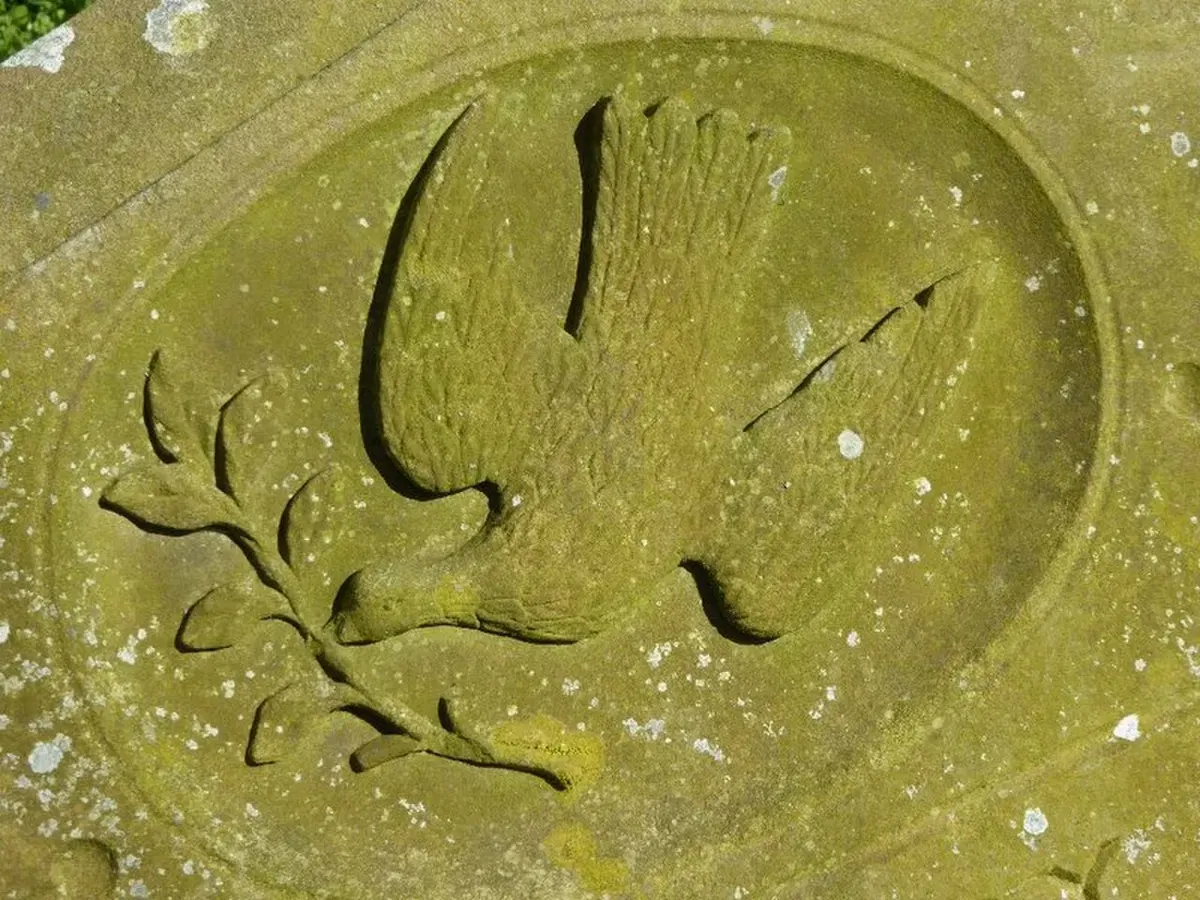
Illustrative stock photograph: Detail of a gravestone, Severn Stoke churchyard ^1 - geograph.org.uk - 4907426.jpg by Philip Halling · CC BY-SA 2.0. Resized and converted to WebP. The photograph does not represent Marwaa’s work or a featured service location.
Handprint memorials can preserve an actual hand or footprint at its recorded size, translate it into a raised form, or use an outline as a symbol. Choose which promise matters before changing the image. An ink impression, a photograph and a three-dimensional cast contain different information. A designer should explain what survives the translation and what has been interpreted rather than captured.
A small footprint may carry more meaning than a large decorative scene. Its value can lie in its exact size, an uneven toe mark or the fact that it is the only surviving impression. Those details deserve a clear design decision.
What does the source actually record?
An ink print records contact with a flat surface. It does not record the full shape of the hand. A cast can record volume, while a photograph records a particular view with its own perspective. Start by identifying which kind of source the family has.
Keep an unchanged copy. Ask the artist to distinguish missing detail from a mark that only looks untidy. A gap in an impression might be meaningful evidence, not something to fill automatically. If no personal print survives, a generic hand can still be a symbol, but it should not be presented as the person's actual impression.
Does life-size carry the meaning?
Life-size should refer to a known physical measurement, not the size of a picture on a phone. Ask whether a ruler or reliable original measurement exists. Enlarging an image for discussion does not establish the hand's real size.
If the size cannot be verified, describe it as a reproduction of the available print. That is more accurate than promising a precise physical record. Where size is known, compare the full inscription around it. A small print can remain small while the name is easy to find. It does not have to fill the available stone to have a clear purpose.
Should the print remain flat or become relief?
A flat image preserves the logic of an impression. Raised carving interprets the source through depth. Neither choice automatically preserves more truth. Turning a two-dimensional ink print into a fully modelled hand requires information the print may not contain.
Ask what the proposed relief represents: the edges of the ink, a simplified palm shape or an imagined volume. Do not ask a workshop to invent anatomical detail and then call it an exact cast. A genuine cast kept indoors may be shown through photographs while an outdoor memorial uses a clearly understood outline.
Which details are essential to keep?
Choose the features the family recognises before discussing the smallest marks. The whole outline, spacing of the toes or a particular touch between two hands may matter more than every ridge. Describe that priority in ordinary language.
The memorial professional can assess how the actual source will translate to the chosen surface and method. See the granite product context when discussing the object that would carry the design. A small line test does not decide the emotional importance of a feature; the family should explain that first.
How should the original be handled?
Do not send the only original impression without agreeing how it will be protected and returned. A copy may be enough for the initial design conversation. Keep the source, approved interpretation and return arrangements together.
If creating a new impression would involve a hospital, hospice or funeral provider, ask that provider about its own services and consent process. This article gives no body-casting instructions. A keepsake material should not be assumed suitable for permanent outdoor exposure simply because it has a stone-like appearance.
Compare the practical choices
| Choice | Question to settle |
|---|---|
| Known life-size print | Is the measurement reliable and worth preserving? |
| Enlarged flat image | Is the change in scale understood? |
| Raised interpretation | Which depth details are captured and which are invented? |
| Symbolic outline | Will it be described as a symbol rather than a personal record? |
A decision in practice
Imagine a family with an ink footprint on a hospital card. A first sketch enlarges it and fills an unprinted area beside one toe. The family prefers to keep both the known size and that irregular edge. With that request, the designer restores the source outline and moves a short epitaph elsewhere.
The result is deliberately quiet. A separate indoor cast, if one exists, remains a different object. The family approves the print as an image with a known source, without expecting the engraving to become a full anatomical model.
Key Takeaways
- An ink print and a cast preserve different kinds of information.
- Life-size requires a reliable measurement, not an on-screen size.
- Any invented depth or repaired detail should be identified before approval.
Frequently Asked Questions
Can an ink footprint become a true three-dimensional cast?
Not from the ink image alone. A modelled version interprets information the flat print does not record.
Must a small print be enlarged?
No. Keeping a known original size can be the main point of the design.
Does a stone-like keepsake belong outdoors?
Ask its maker about the actual material and setting; appearance alone does not establish suitability.
Next step
Read Infant and Children's Granite Memorials: Sizes, Symbols, and Options while shaping your discussion with the memorial professional. Families can use that discussion to identify a suitable local provider; dealers should confirm the actual supply scope before seeking a trade quotation.
Read More
- Infant and Children's Granite Memorials: Sizes, Symbols, and Options
- Fingerprint Memorial Artwork: A Privacy Checklist
Sources and context
A Note on This Guide
This guide concerns new memorial artwork and the interpretation of an existing print. It gives no casting, medical, installation or material-life instructions. The family and relevant providers should agree consent, source custody and site acceptance for the actual proposal.
Published by Marwaa Team for Marwaa Memorials (marwaamemorials.com) · Published 2026-11-25 · Updated 2026-11-25 Marwaa Memorials is a factory-direct exporter of bulk granite monuments and headstones, shipping to monument dealers, funeral homes, and importers across North America.
Related guides
Relief or Full-Round Memorial Sculpture?
Choosing a Headstone for a Small Plot
Headstone Letter Size Guide
Headstone Size for a Double Plot: Companion Dimensions Guide
Tree of Life on a Headstone: Meaning and Ideas
