
Family Tree Memorials: Show Kinship Without Confusion
A tree can hold family meaning without becoming a complete genealogy. The challenge is to show enough relationship to explain the memorial while avoiding a diagram that implies facts, exclusions or burial locations the family did not intend.
By Marwaa Team · Editorial standards · Published
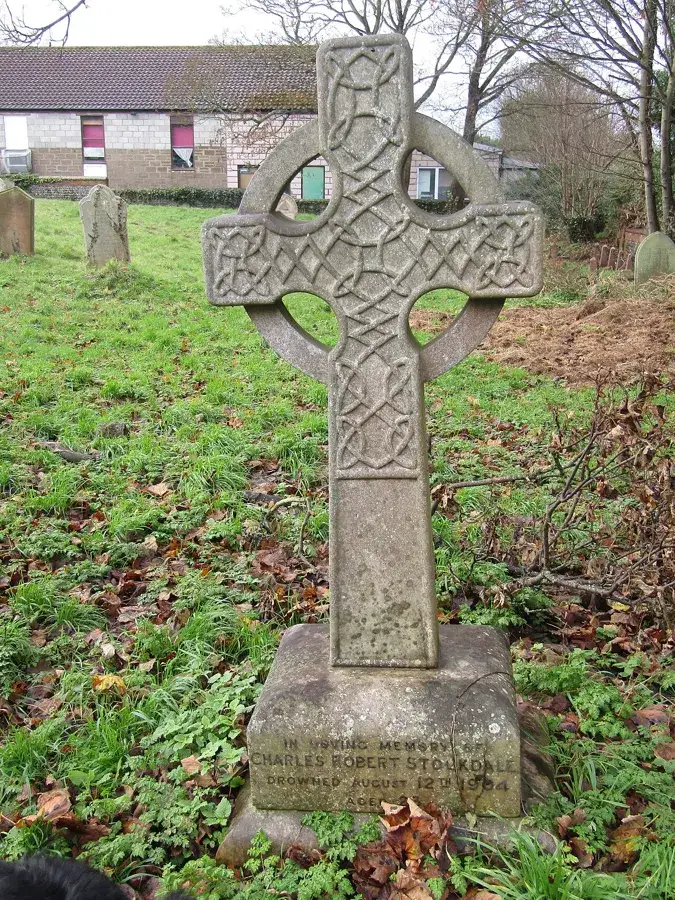
Illustrative stock photograph: -2021-12-12 Cross Headstone of Charles Robert Stockdale died 1907-08-12m Drowned, Cromer old cemetery, Holt Road, Cromer (1).JPG by Kolforn (Kolforn) I'd appreciate if you could mail me (Kolforn@gmail.com) if you want to use this picture out of the Wikimedia project scope. This file is licensed under the Creative Commons Attribution-Share Alike 4.0 International license. You are free: to share – to copy, distribute and transmit the work to remix – to adapt the work Under the following conditions: attribution – You must give appropriate credit, provide a link to the license, and indicate if changes were made. You may do so in any reasonable manner, but not in any way that suggests the licensor endorses you or your use. share alike – If you remix, transform, or build upon the material, you must distribute your contributions under the same or compatible license as the original.https://creativecommons.org/licenses/by-sa/4.0CC BY-SA 4.0 Creative Commons Attribution-Share Alike 4.0 truetrue · CC BY-SA 4.0. Resized and converted to WebP. The photograph does not represent Marwaa’s work or a featured service location.
A family tree memorial should make clear which relationships its lines represent and which people the memorial commemorates. It should not be mistaken for a burial register. Start with a verified, agreed set of names and a limited purpose, then choose a diagram that can be read without guessing. Missing branches and private living relatives need deliberate decisions rather than automatic inclusion.
A tree can hold family meaning without becoming a complete genealogy. The challenge is to show enough relationship to explain the memorial while avoiding a diagram that implies facts, exclusions or burial locations the family did not intend.
What is the diagram meant to show?
Choose a defined scope: descendants of one person, a particular household or the people remembered on this monument. Those are not the same group. Write that scope in a sentence before drawing connecting lines.
Avoid using the size or position of a name to imply closeness unless that is intentional. A tree diagram often creates a visual hierarchy even when every person matters equally. A simpler list or linked groups may communicate the chosen relationship more clearly. The memorial does not need to prove that the family has been completely mapped.
Which relationships can you state confidently?
Check the names and relationships against the family's accepted evidence. A drawing should not settle an unresolved historical question by making one connection look certain. If a relationship is uncertain, omit the disputed claim or choose an honest form that does not require it.
The National Archives provides genealogy charts as research tools. A permanent memorial has a different job: it needs a stable and understandable public account. Keep detailed research, competing possibilities and source notes in the family archive rather than compressing them into unexplained lines on stone.
How will different family relationships be represented?
Discuss blended, adoptive and chosen-family relationships in terms the family actually uses. Do not assume that a conventional diagram's symbols express those relationships respectfully or accurately. Ask what the people involved want made public.
If the design needs a legend, compare whether the legend will remain readable at the actual size. A graphic that needs a long explanation may be better kept in a booklet or digital archive. The permanent memorial can use a shorter dedication without losing the wider family story.
Which people are buried here?
A family tree can include people buried elsewhere or still living. Visitors may nevertheless read the monument as a record of everyone in the plot. Make the distinction clear in wording and arrangement where it matters.
Use the cemetery's actual records for grave identity. The existing family names and burial register guide handles that check. The tree itself should not become an informal substitute for a cemetery plan, nor should an omitted branch be taken to mean a person does not belong to the family.
How much can the stone usefully carry?
Start with the smallest diagram that serves the stated purpose. Use actual names and relationship lines in the full-size review. A designer can assess visual spacing, but the family must confirm what each connection means.
The catalogue helps compare the available form and inscription area. A private extended tree may remain in a separate record while the stone shows a limited, clearly labelled group. If future changes are expected, discuss that openly rather than leaving an unexplained empty branch that another person must interpret later.
Compare the practical choices
| Choice | Question to settle |
|---|---|
| Limited family group | Does a scope statement explain who is included? |
| Extended genealogy | Would an archive carry the detail more honestly? |
| Names on a plot memorial | Are remembrance and actual burial clearly distinguished? |
| Living relatives | Have public identity and preferences been considered? |
A decision in practice
A family proposes a tree containing four generations, including living relatives and people buried in different cities. On the first drawing, every name appears to belong to the same plot. The group changes the purpose to commemorating one couple and their family connections.
The stone uses a limited diagram with a clear dedication. Meanwhile, the extended research stays in the family archive. A cemetery record separately identifies the burials. The result avoids asking a visitor to treat one decorative tree as a complete statement of kinship and location.
Key Takeaways
- A family tree needs a defined scope before its lines are drawn.
- Kinship and burial location are different kinds of information.
- A permanent diagram should not disguise uncertain relationships as settled facts.
Frequently Asked Questions
Should every relative appear on a family memorial?
Only if that fits the agreed purpose and public information choices; completeness is not required.
Does a tree identify the people buried in the plot?
Not reliably. Use cemetery records and clear wording for that information.
Can an uncertain relationship be shown as a normal line?
Avoid presenting uncertainty as fact. Resolve the claim or choose a design that does not require it.
Next step
Read Family Monument vs Individual Markers: Planning a Family Plot while shaping your discussion with the memorial professional. Families can use that discussion to identify a suitable local provider; dealers should confirm the actual supply scope before seeking a trade quotation.
Read More
- Family Monument vs Individual Markers: Planning a Family Plot
- Family Memorial Names and Burial Records Compared
Sources and context
A Note on This Guide
This guide concerns visual kinship information on a new memorial. It is not genealogical certification or a determination of family, ownership or burial rights. Family preferences and cemetery identity records need their own confirmation.
Published by Marwaa Team for Marwaa Memorials (marwaamemorials.com) · Published 2026-11-25 · Updated 2026-11-25 Marwaa Memorials is a factory-direct exporter of bulk granite monuments and headstones, shipping to monument dealers, funeral homes, and importers across North America.
Related guides
Headstone Quotes About Trees
Tree of Life on a Headstone: Meaning and Ideas
Apple Tree on a Headstone: Meaning
Scientific Diagrams on Memorials: Literal or Inspired?
Pine Tree on a Headstone: Meaning
